




From gait to climbing: How to accurately "translate" the movement language of experimental animals?
gait analyzer
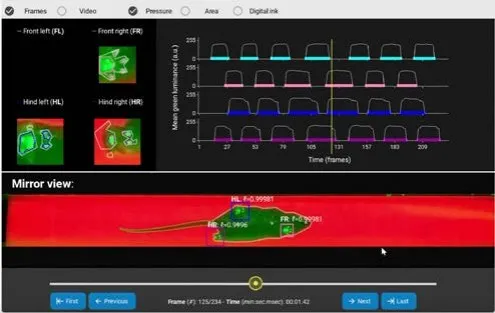
The gait analyzer uses high-resolution imaging technology and mirror reflection to simultaneously visualize an animal's paw prints, joints, and gait within a single field of view. Its adjustable lighting system ensures clear images of paw prints and joints. AI technology automatically detects and marks paws, distinguishing between the palm and the claw, eliminating the need for manual labeling or modification.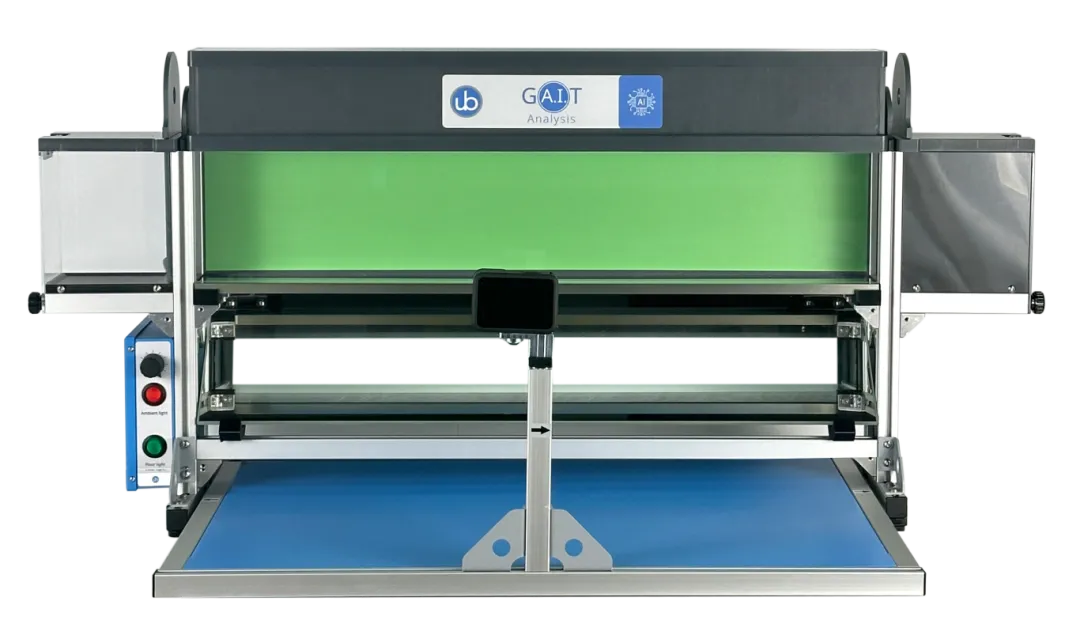
1. AI Detection Technology: The system uses advanced AI technology to quickly and accurately capture every detail of the mouse's paws, using thousands of frames of customized training data to ensure accurate gait feature recognition.
2. Multi-angle image acquisition: The walking platform is equipped with a 45° reflector, which can simultaneously capture the sole and side images of the foot, and cross-reference and verify them to make gait analysis more comprehensive.Professional cameras record high-definition images at high frame rates, clearly and accurately recording the movement characteristics of experimental animals;
3. Rich parameter indicators: The system provides up to 30 parameter indicators, covering stride length, swing time, plantar pressure, etc., like a "multi-functional physical examination instrument", which can comprehensively evaluate the exercise health status of experimental animals and is suitable for different research directions;
4. Intuitive and easy-to-use interface: The software interface is simple and intuitive, divided into panels for parameter settings, video acquisition, and gait analysis, making it easy to use. Users can freely set image acquisition, analysis settings, and analysis parameters, and pre-made parameter templates are provided, making experiments and analysis simple, intuitive, and fast.
02. Application Areas
1. Motor function recovery assessment: In animal sciatic nerve regeneration studies, gait analyzers are used to accurately evaluate neuromuscular recovery and provide data support for relevant treatment plans;
2. Disease model research: Kinematic analysis of semi-Parkinsonian animals can accurately detect changes in rat motor function, facilitating the exploration of disease mechanisms and the development of new treatments;
3. Special movement test: Filming, processing and analyzing the movement behavior of special animal models such as chronic fibromyalgia mice to provide objective evidence for studying the effect of drug intervention.
Gait analyzers allow us to observe the subtle details of animal movement on a horizontal surface. But what secrets of movement will we discover when we shift our focus from the horizontal surface to a rotating drum? This requires the use of the rotarod fatigue instrument, a classic instrument for assessing animal movement coordination and balance.
Rotarod fatigue tester
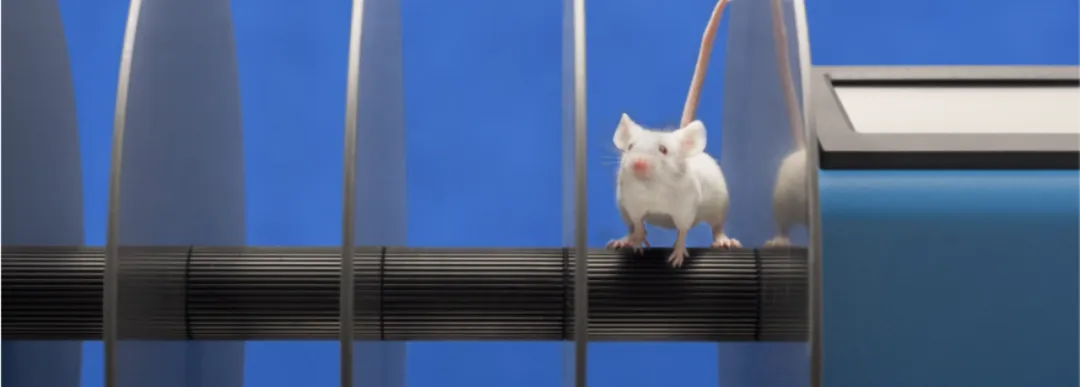
On a rotating drum, animals struggle to avoid falling. This simple yet challenging scenario is the core of the rotarod fatigue instrument's assessment of an animal's motor coordination and balance. The rotarod relies on animals' instinct to seek advantage and avoid harm. When placed on a rotating drum, animals run with the drum to avoid falling. The instrument measures the animal's fall time, speed, and other indicators to assess their motor coordination and balance.
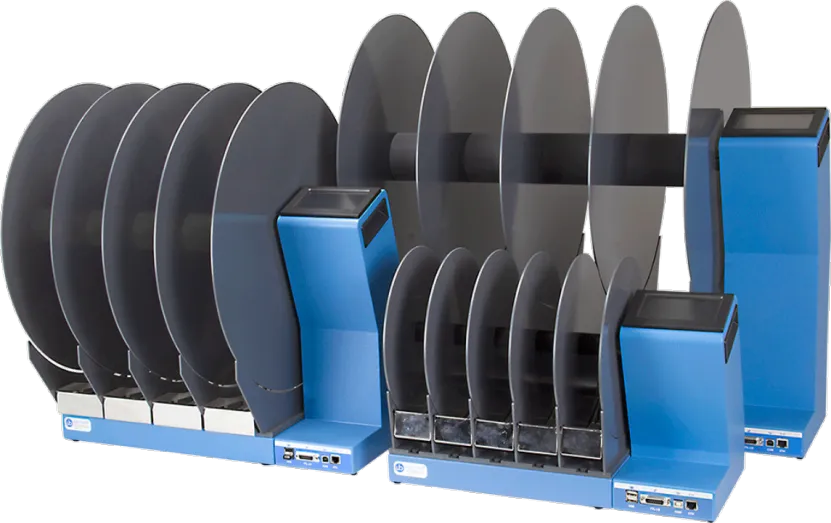
1. Multi-mode operation: It has constant speed mode and linear acceleration mode to meet different experimental needs. Experimenters can flexibly choose according to the research purpose;
2. Accurate data recording: It can accurately record the performance of animals on the rotating rod, providing a quantitative basis for experimental results;
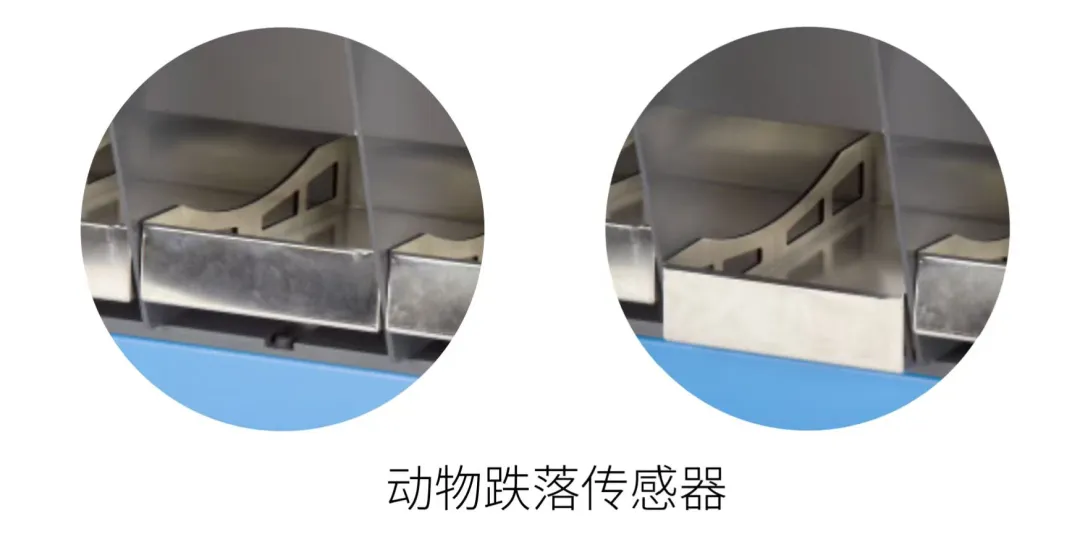
3. Animal welfare friendly: Stainless steel design is easy to clean and can prevent animals from escaping. It operates very quietly, providing a quiet experimental environment for animals and reducing animal stress reactions.
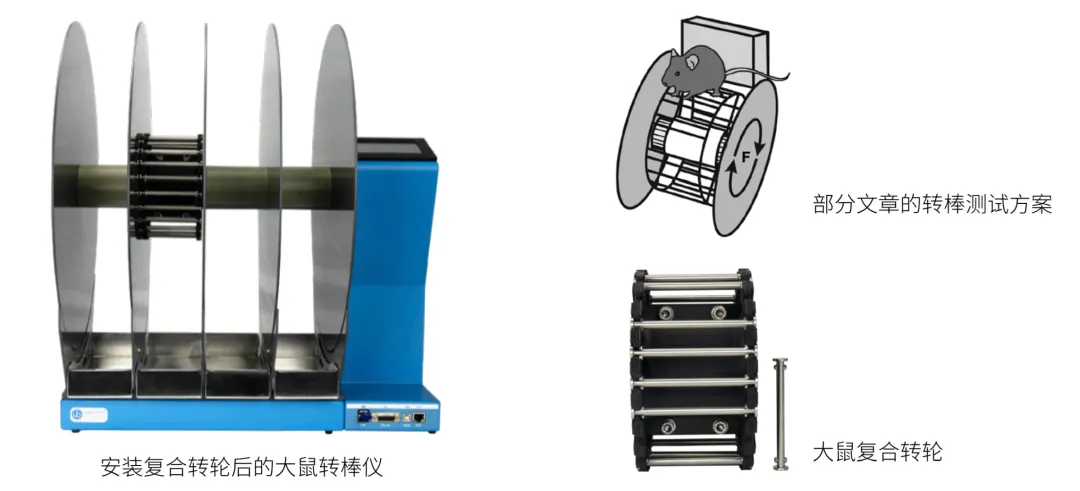
4. Function expansion: After installing a composite wheel on the basic rotating rod, the original uniform and continuous climbing surface can be converted into a stepped horizontal rod to change the complexity of the test.
02. Application Areas
1. Drug screening and evaluation: By comparing the falling time of animals before and after drug administration, we can screen drugs with potential effects or side effects on motor coordination and accelerate the drug development process;
2. Disease model research: Exploring changes in motor coordination and disease mechanisms in models of neurological diseases such as Alzheimer's disease and myasthenia gravis, as well as muscle-related diseases such as chronic fatigue syndrome;
3. Gene function research: Analyze the exercise capacity of transgenic or gene knockout mice, reveal the relationship between genes and energy metabolism and muscle function, and provide a powerful tool for genetic research.
03. Application Cases
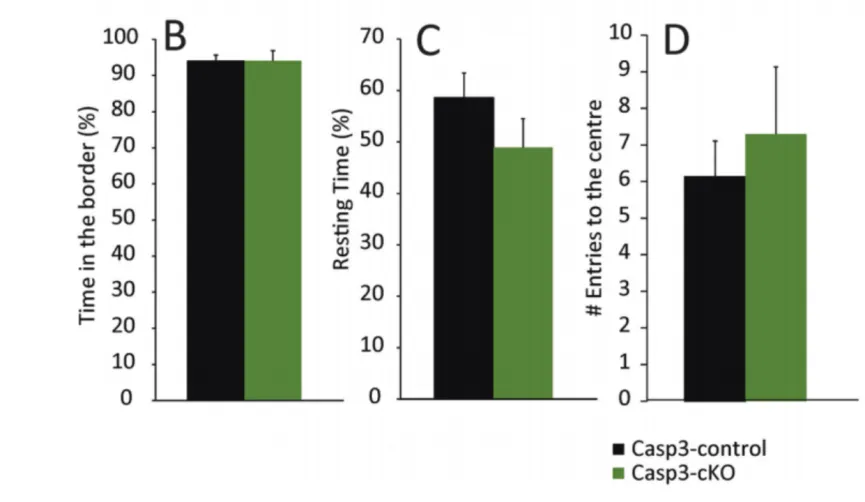
In the article "Microglial Caspase-3 is essential for modulating hippocampal neurogenesis", researchers used a ugo basile fatigue rotarod to test the mice, recording their exercise performance at a constant speed (5 rpm) and an acceleration mode (4 to 40 rpm within 5 minutes), and observing the number of falls and the latency to fall of the mice.
The results showed no significant difference in the rotarod test between Casp3 conditional knockout (Casp3-cKO) mice and control mice, indicating that Casp3 deficiency did not affect the mice's motor coordination and balance abilities. This suggests that Casp3 deficiency has no direct effect on the mice's motor function, thus eliminating the potential confounding of motor dysfunction in the experimental results.
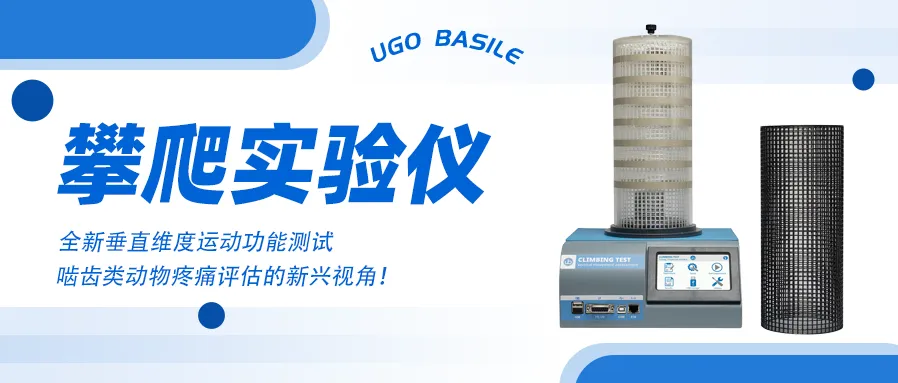
Whether it is a gait analyzer or a rotarod tester, animals are moving in one plane, but scientific research exploration is always multi-dimensional.Where do we go when we want to understand the ability of animals to move in vertical space?Next, let us enter the world of climbing tester and experience its unique style in vertical motion analysis.
Climbing tester
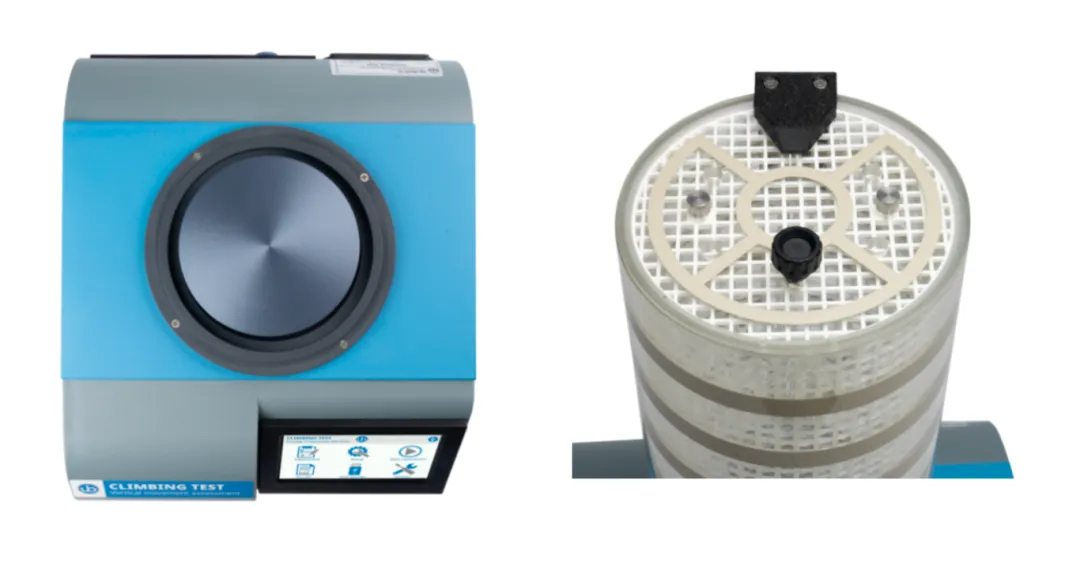
If traditional instruments such as gait analyzers focus on horizontal movement, then the climbing tester is a pioneer in vertical space exploration. The climbing tester has a high-sensitivity gravity sensor embedded in the bottom of the cylindrical test tube, which automatically triggers the timing the moment the mouse leaves the bottom; the 7-ring sensor array on the tube wall + 1 point on the top captures vertical displacement in real time, splitting the three-dimensional spatial movement into quantifiable "height-time" coordinates, realizing automatic recording with zero human intervention throughout the entire process.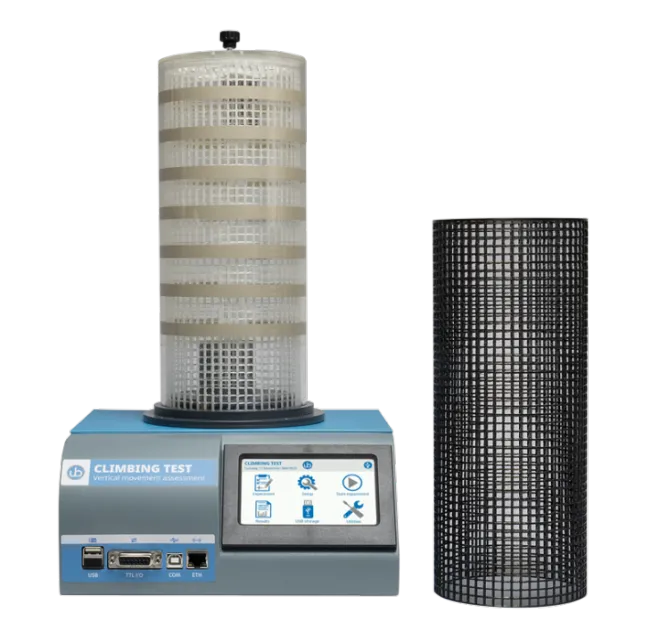
01. Features
1. Full-sensing 3D tracking: A 7+1 sensor array locks onto the mouse's climbing height at every point, accurately outputting six core metrics including maximum height, average height, and single climb time.2. One-button start and stop: put the animal in to start, take it out to stop;
3. High repetition, low stress: The cylinder is suitable for mice weighing 15–35 g, avoiding anxiety caused by small spaces;
4. Quick disassembly and easy cleaning: Magnetic base + bolt-free design, quickly remove the mesh wall, wipe with clean water to remove odors and prevent cross-influence.
02. Application Areas
1. Nerve injury repair assessment: In models such as sciatic nerve crush and spinal cord contusion, the recovery curve of climbing height and duration is used to quantitatively evaluate nerve regeneration and muscle strength reconstruction, providing a basis for the formulation of rehabilitation plans;
2. Neurodegenerative disease research: vertical kinematic analysis of Parkinson's and Huntington's disease model mice to detect bradykinesia and fatigue at an early stage, facilitating the exploration of pathogenesis and the development of intervention strategies;
3. Chronic pain drug efficacy evaluation: Observe the changes in climbing willingness and peak height in fibromyalgia and arthritis model animals to objectively reflect the efficacy of analgesics and provide data for dose screening and efficacy endpoint setting.
Numerous experimental approaches exist for studying the coordination of horizontal and vertical motion in animals. However, what tools are needed to further quantify an animal's athletic performance and fatigue levels? The answer lies in the small animal treadmill, which, through the lens of technology, can unlock the mysteries of exercise endurance and fatigue.
Small animal treadmill
When animals run on a treadmill with adjusted speed and slope, their athletic ability and fatigue level are being accurately quantified. The small animal treadmill utilizes the characteristics of animals moving under external stimulation. By adjusting parameters such as speed and slope, combined with electrical stimulation, it prompts animals to continue moving, records their movement data, and thus evaluates their athletic ability and fatigue level.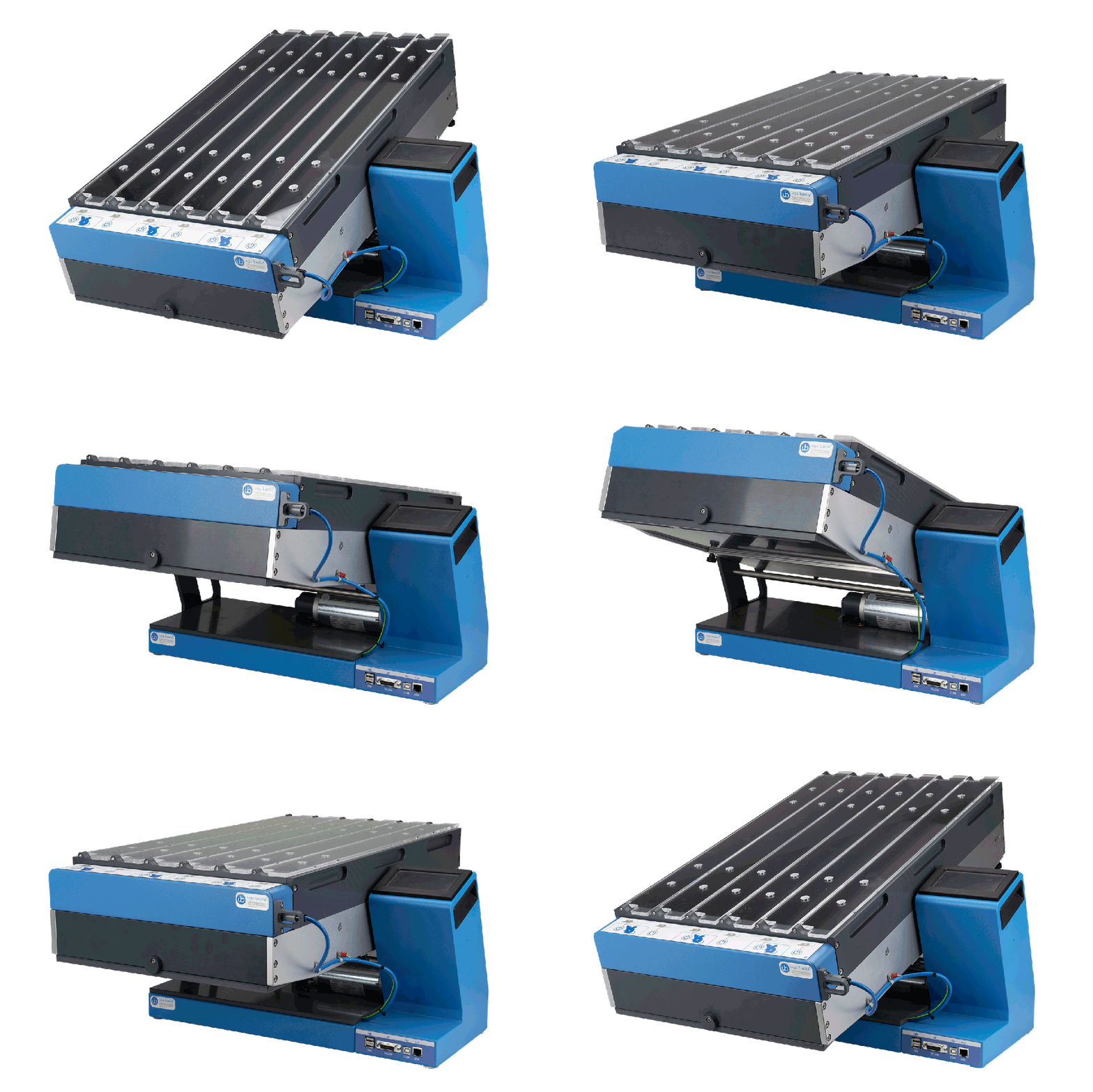
01. Features
1. Multi-mode operation: supports multiple motion modes such as constant speed and acceleration to meet different experimental needs;
2. Accurate data recording: High-precision sensors monitor animal movement parameters in real time and generate detailed statistical reports;
3. Humanized design: Equipped with an electric stimulation module to ensure animal movement, and silent operation to reduce animal stress response;
4. Modular operation: The touch screen control interface is intuitive and easy to use, allowing you to quickly set experimental parameters and export data.
02. Application Areas
1. Drug development: Compare the exercise endurance of animals before and after drug administration to screen for drugs with potential effects on exercise capacity;
2. Disease model research: exploring changes in motor function and disease mechanisms in models of neurodegenerative diseases and muscle-related diseases;
3. Gene function analysis: Analyze the exercise endurance of transgenic or gene knockout mice to reveal the relationship between genes and exercise function.
03. Application Cases
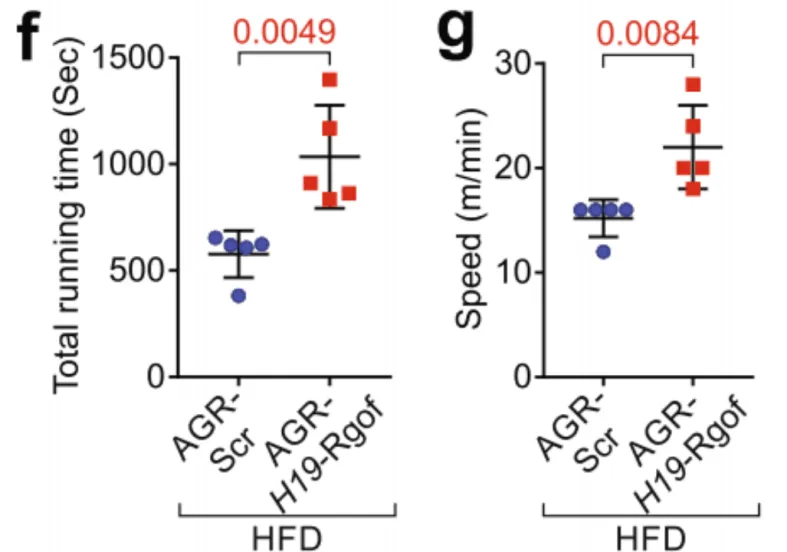
The article, "Functional significance of gain-of-function H19 lncRNA in skeletal muscle differentiation and anti-obesity effects," used a series of exercise tests on a Ugo Basile treadmill to assess the mice's exercise capacity and fatigue resistance. Through both run-to-exhaustion and sprint tests, the researchers found that mice treated with AGR-H19-Rgof demonstrated significant improvements in exercise performance and fatigue resistance. This suggests that AGR-H19-Rgof has potential applications in enhancing muscle performance and combating obesity.
Conclusion
From subtle changes in gait to the race against time on the rotating rod, to every upward climb in vertical space, Shanghai Yuyan "translates" complex motor behaviors into repeatable, comparable, and reliable data. This allows researchers to capture disease signals earlier, screen potential drugs more quickly, and more accurately verify rehabilitation strategies. In the future, Yuyan Instruments will continue to focus on precision and be driven by innovation, accompanying every researcher in exploring the infinite possibilities of the brain and muscles, and jointly advancing life science to a higher "dimensionality." Accurately locating different nuclei, tissues, or lesions within the brain allows for more precise injection, stimulation, and damage to the brains of experimental animals, allowing for accurate investigation of the impact of different brain structures on the physiological and pathological processes of animals.Recommended Reading
Ugo Basile Fatigue Rotarod: A Good Helper and Gold Standard for Testing Motor Coordination Function in Rats and Mice

Ugo Basile Climbing Tester | A New Vertical Motor Function Test: An Emerging Perspective on Pain Assessment in Rodents
Self-developed core creates extraordinary strength
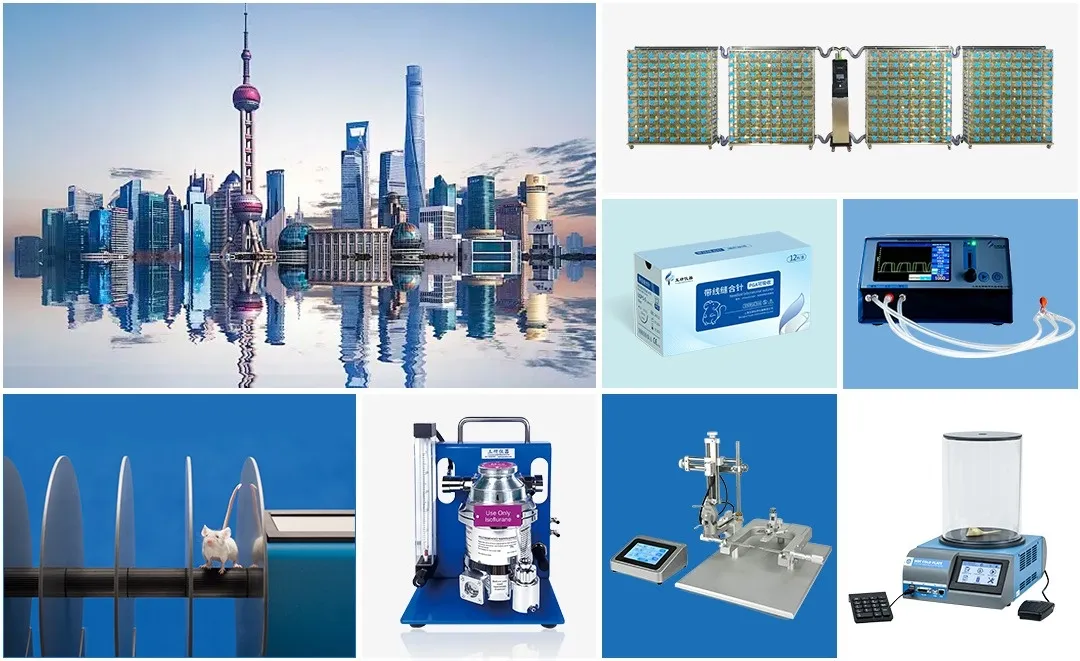
Shanghai Yuyan Scientific Instrument Co., Ltd., as a leading manufacturer of scientific research equipment in the industry, has been adhering to the core concept of "innovation-driven development and self-research to create high-quality products" for 15 years since its establishment in 2010. It is committed to the independent research and development and production of scientific instruments. Its current product line covers multiple scientific research and application fields such as experimental animal husbandry, physiological signal acquisition, and neuroscience research. Not only does it continuously optimize and upgrade conventional instruments, but it also dares to explore cutting-edge technologies and has launched a series of high-end scientific instruments with independent intellectual property rights.
The company's R&D personnel account for 40%, and it has a team of scientists in sensors, chip design, core algorithms, etc., and has professional teams to provide support in product implementation and operation, market and academic promotion, comprehensive product solution design and application. The company has service points covering the whole country and strong technical service capabilities. Its customers include Tsinghua University, Peking University, Zhejiang University, Shanghai Jiaotong University, University of Chinese Academy of Sciences, West China Hospital of Sichuan University, Northern Theater Command General Hospital and other first-class research institutions and hospitals at home and abroad.