


Experimental Tips | Three-Box Social Experiment: Decoding the Mouse's "Social Code"
In the study of autism spectrum disorder, accurately quantifying the social behavior of model animals is key to understanding the disease mechanism.The three-box social experiment system is a standardized behavioral assessment solution designed for this purpose.The experimental device consists of three connected transparent boxes (left box, middle box, and right box). By contrasting the stimulus container with the empty container, it simulates the novelty exploration and memory formation process in natural social scenes.
System composition
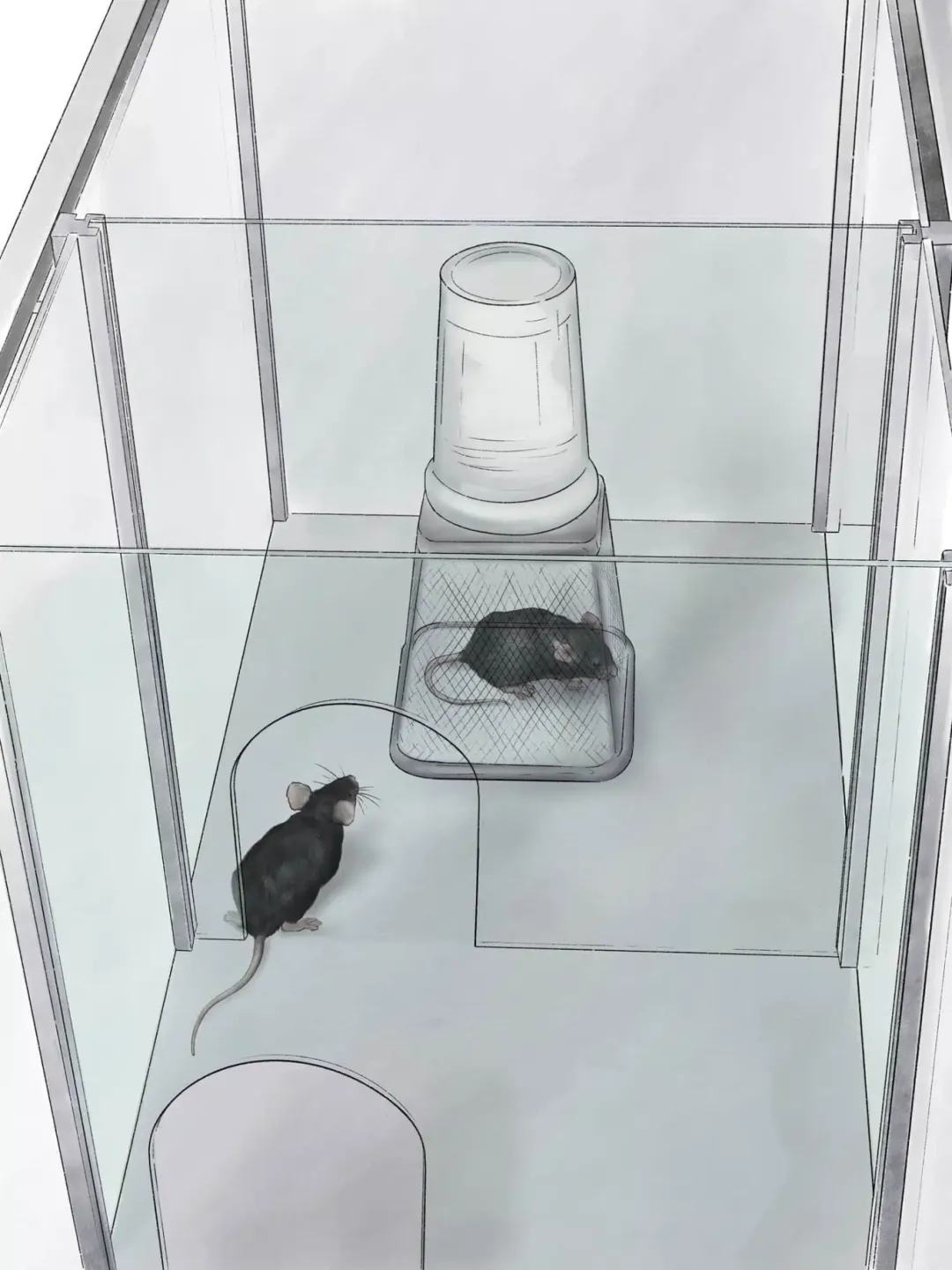
1. Experimental chamber: Usually a rectangular chamber, the interior is divided into three connected independent areas (left box, middle box, and right box) by partitions, and there are passages on the partitions for mice to move freely;2. Stimulus mouse container: two identical metal cages used to place stimulus mice (usually same-sex, unfamiliar, and healthy mice) as social objects;
3. Empty container: The container has the same appearance as the stimulus mouse container and serves as a control, with no mouse inside.
4. Video and analysis system: includes a camera (used to record the activity trajectory of mice in the three boxes) and supporting behavioral analysis software (which can automatically count data such as the mice's residence time in each area and the number of times they shuttled through the area).
How to use

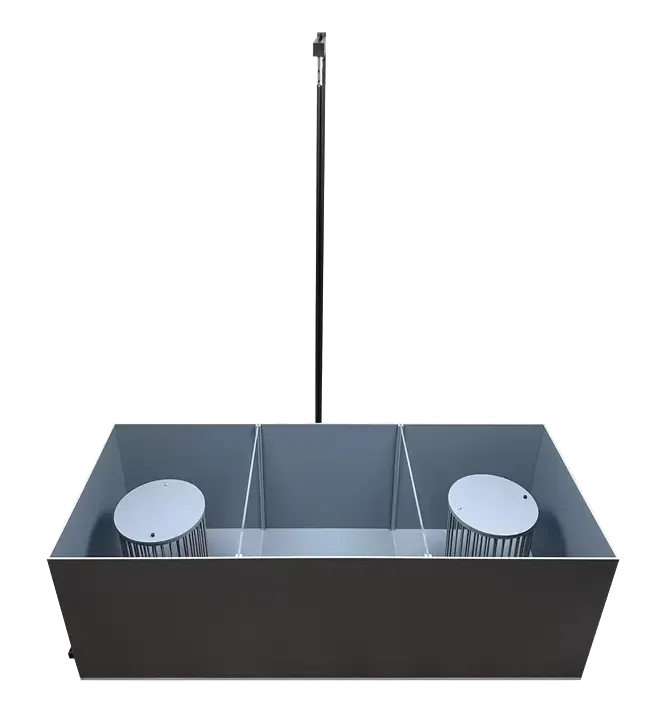
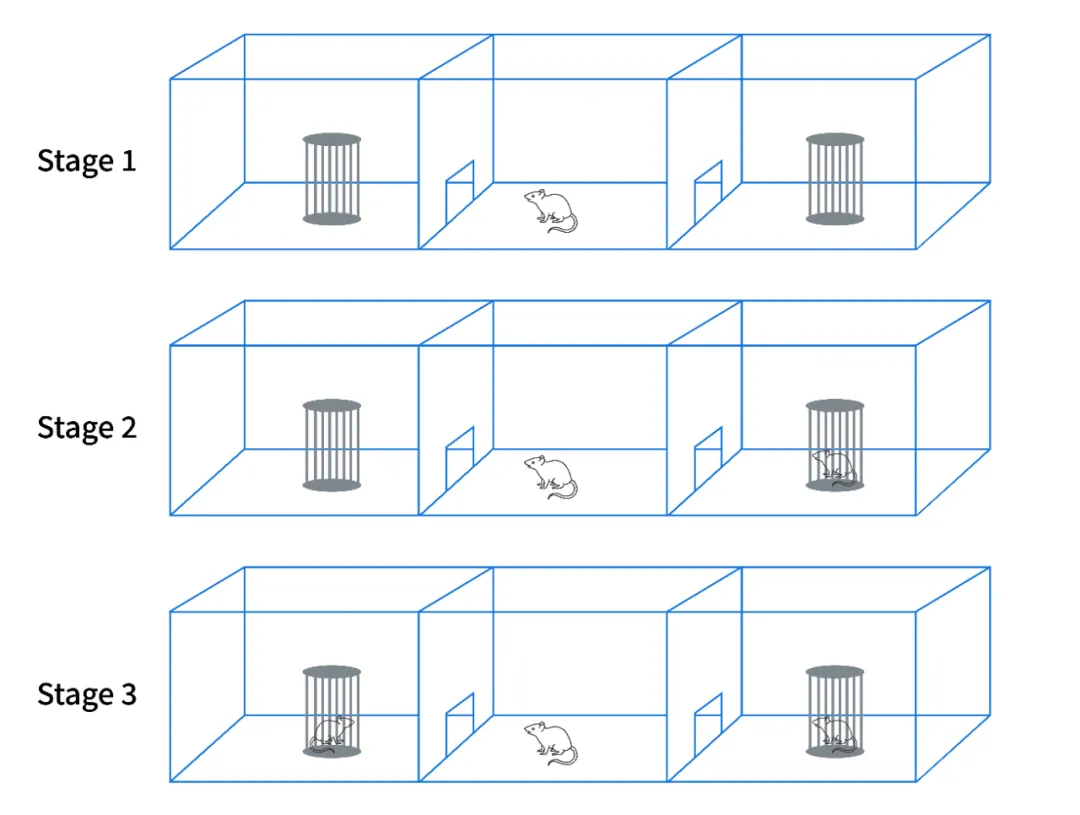
The experimental mice were placed in the middle box of the three-box apparatus and allowed to freely explore the entire box (left, middle, and right boxes). They were usually adapted for 10 minutes to eliminate the unfamiliarity of the environment.
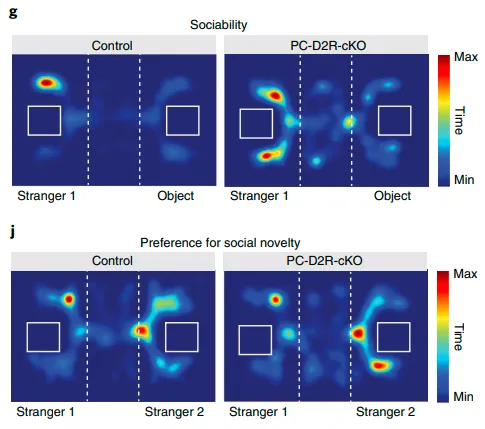
Place a container containing a stimulus mouse in one box (the left box, for example) and an empty container in the other box (the right box), leaving the middle box empty. Return the experimental mouse to the middle box, and record the time it spends in the left and right boxes over a set period of time (usually 10 minutes). If the experimental mouse spends more time in the box containing the stimulus mouse, it indicates normal social preference.
After a period of time, one of the empty containers was replaced with a new, unfamiliar stimulus mouse. The original stimulus mouse remained in the box as the familiar stimulus mouse. The time the experimental mouse spent in the boxes containing the familiar and novel stimulus mice was recorded. If the experimental mouse spent more time in the box containing the novel stimulus mouse, it indicated that it had social memory ability.
Core indicators
1. Social preference index: The ratio (or difference) of the time the experimental mouse spends in the area with the stimulus mouse to the time it spends in the area with the empty container. The higher the ratio, the stronger the social preference;2. Social memory index: The ratio (or difference) of the time the mouse spent in the novel stimulus area to the time it spent in the familiar stimulus area during the test phase. A high ratio indicates good social memory.
3. Auxiliary indicators: including the number of times the mouse shuttles between different areas, the length of time the mouse explores the container (such as the time it sniffs the container), etc., can help determine the mouse's activity ability and social interest.
Precautions
01. Selection of experimental animals1. The stimulus mouse must be of the same sex (to avoid sexual attraction interference), healthy, and of the same strain as the experimental mouse, with similar age and weight;
2. Before the experiment, the stimulus mice must be kept separately to prevent them from becoming familiar with each other and affecting the experiment.
02. Environmental Control
1. The experimental box must be clean and disinfected (to avoid interference from residual odors), kept quiet, and with appropriate lighting (usually low light to reduce stress on mice);
2. The experiment time was fixed (conducted at the same time period to avoid the influence of circadian rhythm), and the experimenter was kept away from the box as much as possible to reduce human interference.
1. During the adaptation phase, ensure that the mice are fully familiar with the environment; otherwise, they may become abnormal due to anxiety.
2. When changing the stimulus mouse or cleaning the container, avoid allowing the experimental mouse to see the operation process to prevent stress;
3. The sample size of each group should be sufficient (usually 8-12 animals per group) to reduce the impact of individual differences on the results.
04. Interpretation of the results
The total activity level of the mouse (such as the number of shuttle times) needs to be combined to make the judgment. If the total activity level is too low, it may be due to anxiety or health problems rather than abnormal social skills.
Literature Case
Gamma Oscillation Dysfunction in mPFC Leads to Social Deficits in Neuroligin 3 R451C Knockin Mice was published in the journal Neuron. This study aimed to investigate the neural mechanisms by which neuroligin NL3 gene mutations lead to social deficits in autistic mice.
01. Experimental steps
1. Behavioral experiments: A three-chamber social experiment was used to examine mouse social behavior. Wild-type mice and NL3 R451C knock-in (KI) mice were placed in three chambers, with a stranger mouse in one chamber and an empty container in the other. The time the mice spent in each chamber was recorded to assess their social preference. The empty container was then replaced with a new stranger mouse, and the mice's social preference for the new and old stranger mice was measured to determine their social novelty and to determine whether the KI mice had social deficits.
2. Electrophysiological Recording: Extracellular electrophysiological recording was used to record the firing activity of neurons in the medial prefrontal cortex (mPFC) of wild-type and KI mice, analyzing changes in neuronal excitability, as well as the firing frequency and phase encoding of neurons during social interactions.
02. Discussion of Results
1. Social deficits are associated with mPFC abnormalities: Results from a three-chamber social interaction experiment revealed that NL3 R451C KI mice exhibit social novelty deficits, i.e., a lack of preference for new, unfamiliar mice, suggesting abnormal social behavior. Electrophysiological recordings revealed decreased excitability of fast-firing inhibitory neurons in the mPFC of KI mice, as well as dysfunctional gamma oscillations. Furthermore, abnormalities in neuronal firing frequency and phase encoding were observed during social interactions, suggesting that mPFC dysfunction is closely linked to the social deficits seen in autistic mice.
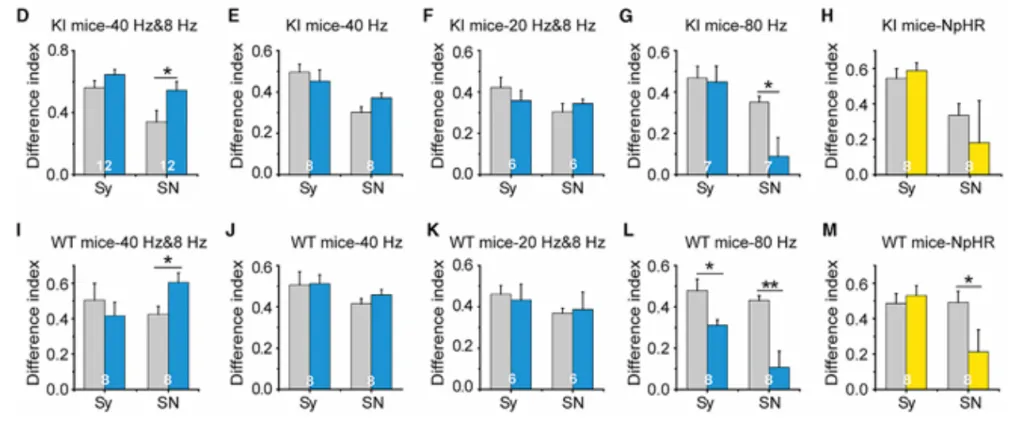
2. Optogenetic stimulation can improve social deficits: Optogenetic experiments have found that stimulating PV neurons in the mPFC at a specific frequency (40Hz nested within 8Hz) can positively regulate social behavior in mice and restore the social novelty preference of KI mice. This suggests that modulating the activity of PV neurons in the mPFC can reverse the social deficits in autistic mice, providing a potential intervention target and strategy for the treatment of social deficits in autism.
Yuyan Instruments Three-Box Social System for Rat and Mouse
Yuyan Instruments provides a professional three-chamber social experiment system, including experimental boxes, high-definition cameras, video tracking and analysis software, etc., which can accurately record the animal's behavioral trajectory and exploration time, automatically calculate key data indicators, and provide an efficient and reliable solution for three-chamber social experiments.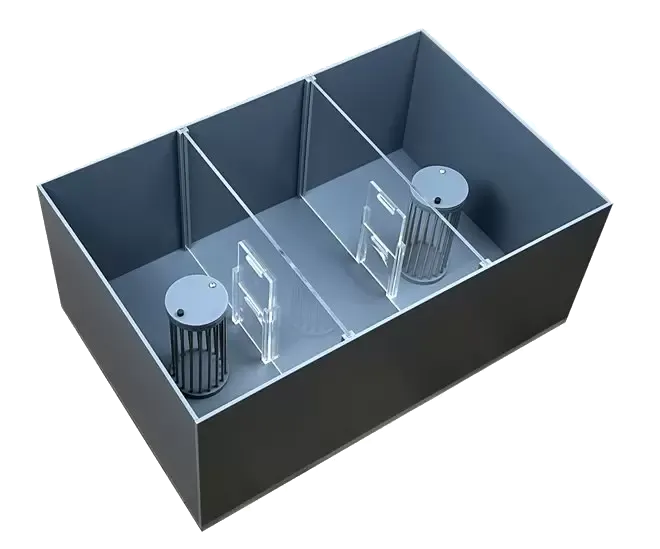
01. Product Features
1. Professional design, reliable results: Designed specifically for experiments with mice and rats, the test chamber is made of non-toxic materials and its dimensions are designed to conform to the morphological characteristics of experimental animals, meeting experimental requirements and ensuring accurate and reliable test results.
2. Video acquisition to reduce interference: The use of video camera technology realizes the automation of the experimental process, avoids the subjective errors introduced by manual observation and interference with experimental animals, and increases the authenticity of the experimental results;
3. Automatic tracking and analysis, accurate results: Using video tracking technology, it can automatically identify experimental animals, extract movement trajectories, and analyze experimental parameters, making the experimental results more objective and accurate.
Recommended Reading
Experimental Tips | New Object Recognition Experiment: Unraveling the Secrets of Cognition and Memory
Experimental Tips | A Powerful Tool for Assessing Anxiety Behavior in Small Animals: Interpretation of the Elevated Plus Maze Experiment
Experimental Tips | A Powerful Tool for Neuroscience Research: Open Field Experiment Operation Guide and Data Interpretation

Self-developed core creates extraordinary strength
Shanghai Yuyan Scientific Instrument Co., Ltd., as a leading manufacturer of scientific research equipment in the industry, has been adhering to the core concept of "innovation-driven development and self-research to create high-quality products" for 15 years since its establishment in 2010. It is committed to the independent research and development and production of scientific instruments. Its current product line covers multiple scientific research and application fields such as experimental animal husbandry, physiological signal acquisition, and neuroscience research. Not only does it continuously optimize and upgrade conventional instruments, but it also dares to explore cutting-edge technologies and has launched a series of high-end scientific instruments with independent intellectual property rights.
The company's R&D personnel account for 40%, and it has a team of scientists in sensors, chip design, core algorithms, etc., and has professional teams to provide support in product implementation and operation, market and academic promotion, comprehensive product solution design and application. The company has service points covering the whole country and strong technical service capabilities. Its customers include Tsinghua University, Peking University, Zhejiang University, Shanghai Jiaotong University, University of Chinese Academy of Sciences, West China Hospital of Sichuan University, Northern Theater Command General Hospital and other first-class research institutions and hospitals at home and abroad.