




Experimental Tips | New Object Recognition Experiment: Unraveling the Secrets of Cognition and Memory
Date:2025-08-05
Author:Yuyan Instrument
In the field of cognitive neuroscience, assessing animals' ability to recognize and remember objects is crucial for exploring learning and memory mechanisms, studying neurodegenerative diseases, and developing drugs. As a simple and effective behavioral experimental method, the Novel Object Recognition Test (NOR) has gradually attracted widespread attention among researchers.
The novel object recognition test, based on animals' natural tendency to explore novel objects, assesses cognitive and memory functions by comparing the time animals spend exploring familiar and novel objects. This test is simple to perform, low-cost, and minimally stressful for animals. It is widely used in learning and memory-related research, including in Alzheimer's disease (AD) and cognitive impairment.
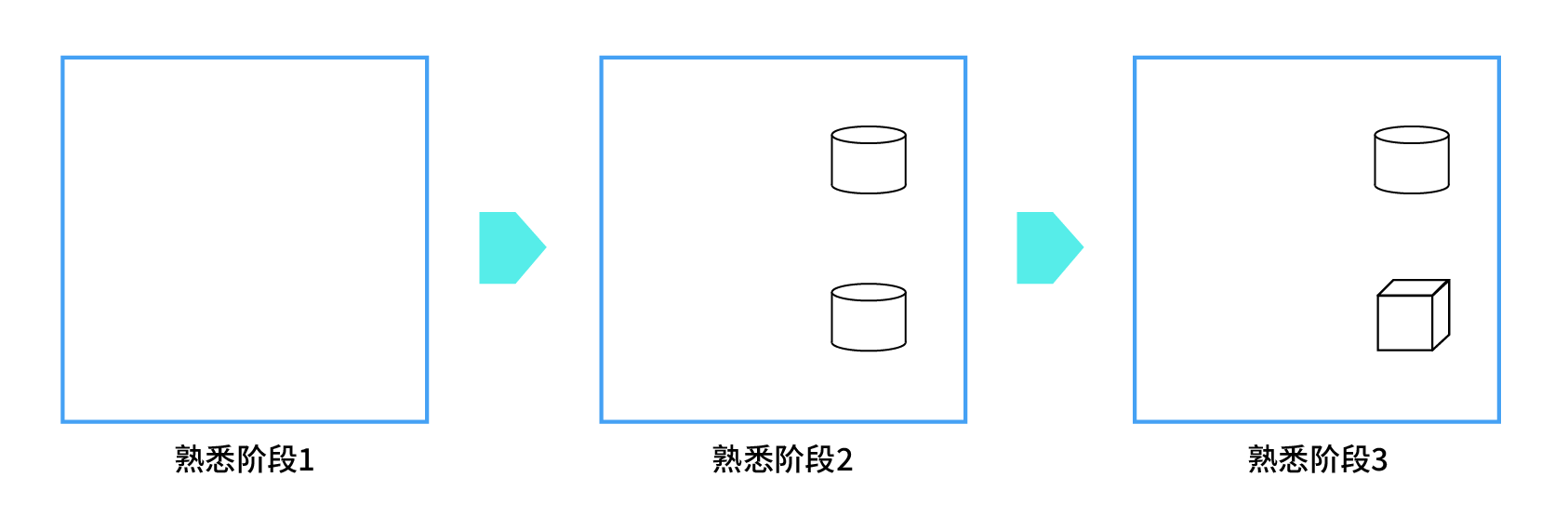
Environmental preparation: Choose a quiet, undisturbed experimental environment and ensure appropriate and uniform lighting. Use a dedicated experimental box with a moderately sized space that can accommodate two identical, symmetrically positioned objects. The shape, color, material, and other characteristics of the objects should be easy for the animals to identify.
Animal adaptation: Place the experimental animals in the experimental box for a period of time in advance to familiarize them with the experimental environment and reduce the impact of environmental stress on their behavior;
Animal placement: Gently place the animal into the experimental box, ensuring it faces the box wall and avoids direct contact with objects to reduce stress reactions during initial contact;
Free exploration: The animal is allowed to move freely within the experimental chamber, touching and exploring two familiar objects for a period of 5-10 minutes. During this period, the time the animal spends exploring each object is observed and recorded.
·Out-of-box treatment: After the exploration is completed, use a warming pad to maintain its body temperature if necessary, and then return it to the cage to rest.
Testing phase: Assessing cognition and memory
Environmental setup: Keep the experimental environment consistent with the familiarization phase. Replace one of the familiar objects in the experimental box with a novel object. The novel object should be significantly different from the familiar object in shape, color, material, etc., but not too abrupt to avoid causing excessive stress reactions in the animals.
Animal placement: Place the animal back into the experimental box, also ensuring it faces the wall.
Free exploration: Allow the animal to move freely within the experimental chamber, touching and exploring familiar and novel objects, typically for 5-10 minutes. Observe and record the time the animal spends exploring the familiar and novel objects.
Out-of-box treatment: After the exploration is complete, follow the out-of-box treatment methods from the familiarization phase.
Key data indicators and analysis
Exploration time: The duration of sniffing, licking, grasping, and other behaviors when an animal comes into contact with an object is recorded using a video tracking system or manual observation;
Preference Index: Calculate the animal's preference for novel objects using the formula: Preference Index = (Novel Object Exploration Time - Familiar Object Exploration Time) / (Novel Object Exploration Time + Familiar Object Exploration Time). A higher preference index indicates a greater interest in novel objects and potentially better cognitive and memory function.
Pitfall Avoidance Guide
Environmental control: The experimental environment should be kept quiet and free of interference, avoiding factors such as strong light and noise that may affect animal behavior. At the same time, the experimental box and objects should be kept clean to prevent residual odors from interfering with the animal's exploratory behavior.
Animal adaptation: Adequate animal adaptation training is one of the key steps to ensure reliable experimental results. Animals need to be familiar with the experimental environment in advance;
Variable control: Try to ensure that the basic characteristics of the experimental animals, such as gender, age, and weight, are consistent to reduce the impact of individual differences on the experimental results. In addition, during the experiment, mutual interference between animals should be avoided to ensure that the experiment on each animal is carried out independently.
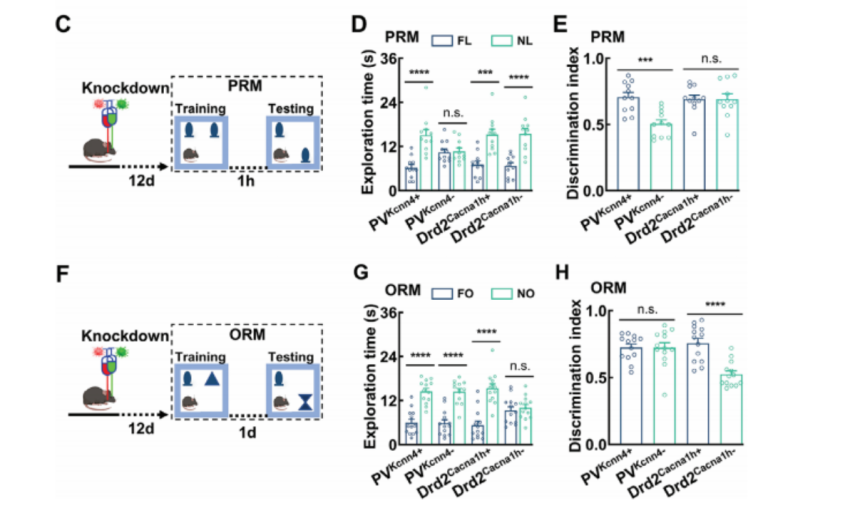
The study found that after knocking out the Cacna1h gene in Drd2 neurons, the performance of mice in the new object recognition task was affected, and they were unable to effectively distinguish between familiar objects and novel objects, indicating that Drd2 neurons play an important role in object recognition memory.
Smart Hardware
The experimental box is made of high-quality materials, with a stable structure, smooth inner wall, non-toxic and odorless, easy to clean and disinfect; the high-definition camera can record animal behavior from multiple angles to ensure clear video quality;
Precise algorithm
The video analysis software is based on advanced image recognition and behavior analysis algorithms, which can accurately identify the moment of contact and exploration time between animals and objects, automatically record key behavioral data, and reduce human errors; the 03 efficient data processing system supports simultaneous analysis of multiple videos, can quickly process large amounts of video data, greatly improve experimental efficiency, and shorten the research cycle.
The novel object recognition test, based on animals' natural tendency to explore novel objects, assesses cognitive and memory functions by comparing the time animals spend exploring familiar and novel objects. This test is simple to perform, low-cost, and minimally stressful for animals. It is widely used in learning and memory-related research, including in Alzheimer's disease (AD) and cognitive impairment.
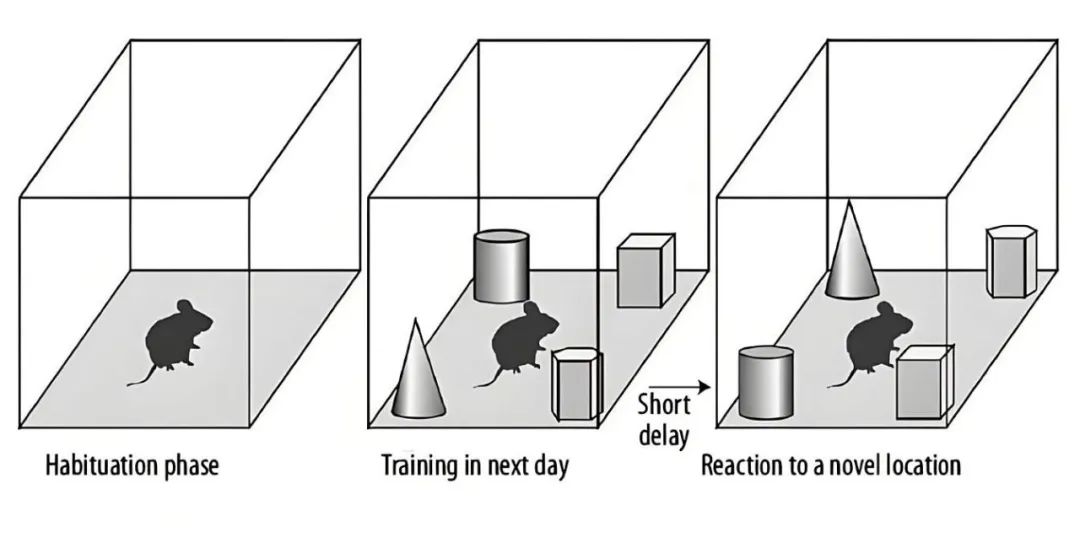
Experimental Principle
Animals are naturally curious about objects in their environment. When presented with novel objects, they tend to spend more time exploring them. Experiments are typically divided into two phases: a familiarization phase and a test phase. During the familiarization phase, animals are exposed to two identical familiar objects. During the test phase, one familiar object is replaced with a novel one. By comparing the time animals spend exploring the familiar and novel objects, a preference index is calculated, thereby assessing the animals' cognitive and memory abilities.Experimental process breakdown
Familiarization stage: establishing initial cognitionEnvironmental preparation: Choose a quiet, undisturbed experimental environment and ensure appropriate and uniform lighting. Use a dedicated experimental box with a moderately sized space that can accommodate two identical, symmetrically positioned objects. The shape, color, material, and other characteristics of the objects should be easy for the animals to identify.
Animal adaptation: Place the experimental animals in the experimental box for a period of time in advance to familiarize them with the experimental environment and reduce the impact of environmental stress on their behavior;
Animal placement: Gently place the animal into the experimental box, ensuring it faces the box wall and avoids direct contact with objects to reduce stress reactions during initial contact;
Free exploration: The animal is allowed to move freely within the experimental chamber, touching and exploring two familiar objects for a period of 5-10 minutes. During this period, the time the animal spends exploring each object is observed and recorded.
·Out-of-box treatment: After the exploration is completed, use a warming pad to maintain its body temperature if necessary, and then return it to the cage to rest.
Testing phase: Assessing cognition and memory
Environmental setup: Keep the experimental environment consistent with the familiarization phase. Replace one of the familiar objects in the experimental box with a novel object. The novel object should be significantly different from the familiar object in shape, color, material, etc., but not too abrupt to avoid causing excessive stress reactions in the animals.
Animal placement: Place the animal back into the experimental box, also ensuring it faces the wall.
Free exploration: Allow the animal to move freely within the experimental chamber, touching and exploring familiar and novel objects, typically for 5-10 minutes. Observe and record the time the animal spends exploring the familiar and novel objects.
Out-of-box treatment: After the exploration is complete, follow the out-of-box treatment methods from the familiarization phase.
Key data indicators and analysis
Exploration time: The duration of sniffing, licking, grasping, and other behaviors when an animal comes into contact with an object is recorded using a video tracking system or manual observation;
Preference Index: Calculate the animal's preference for novel objects using the formula: Preference Index = (Novel Object Exploration Time - Familiar Object Exploration Time) / (Novel Object Exploration Time + Familiar Object Exploration Time). A higher preference index indicates a greater interest in novel objects and potentially better cognitive and memory function.
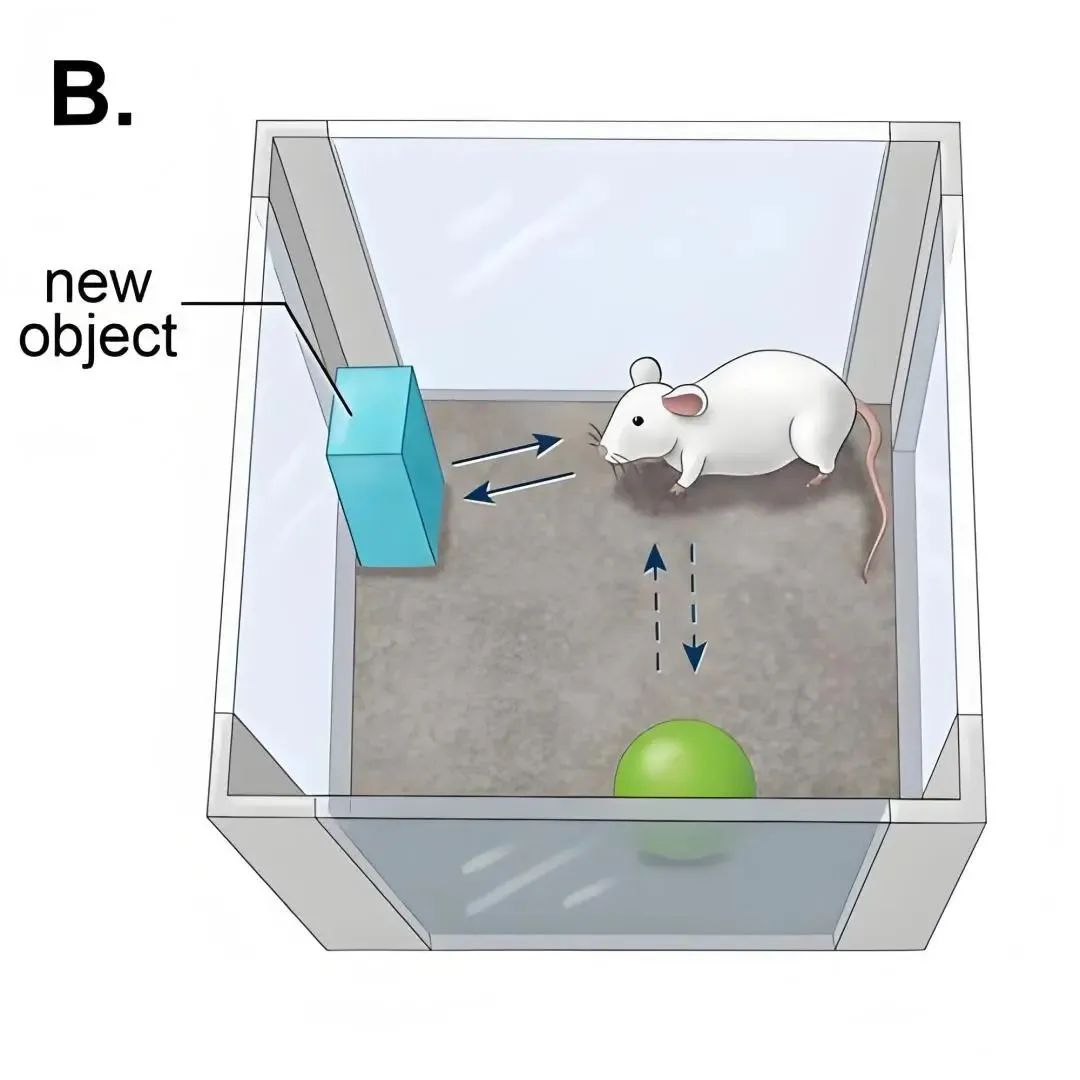
Pitfall Avoidance Guide
Environmental control: The experimental environment should be kept quiet and free of interference, avoiding factors such as strong light and noise that may affect animal behavior. At the same time, the experimental box and objects should be kept clean to prevent residual odors from interfering with the animal's exploratory behavior.
Animal adaptation: Adequate animal adaptation training is one of the key steps to ensure reliable experimental results. Animals need to be familiar with the experimental environment in advance;
Variable control: Try to ensure that the basic characteristics of the experimental animals, such as gender, age, and weight, are consistent to reduce the impact of individual differences on the experimental results. In addition, during the experiment, mutual interference between animals should be avoided to ensure that the experiment on each animal is carried out independently.
Literature Case
In the article "Cell-Type Specific Circuits in the Mammillary Body for Place and Object Recognition Memory," researchers used the Novel Object Recognition Test (NOR) to assess mice's object recognition memory. The experiment consisted of two phases: training and testing. During the training phase, mice were exposed to two identical objects; during the testing phase, a novel object replaced one of the familiar objects. By comparing the amount of time mice spent exploring the familiar and novel objects, a preference index was calculated to measure the mice's object recognition memory.The study found that after knocking out the Cacna1h gene in Drd2 neurons, the performance of mice in the new object recognition task was affected, and they were unable to effectively distinguish between familiar objects and novel objects, indicating that Drd2 neurons play an important role in object recognition memory.
Yuyan Instruments: Assisting in accurate experiments on new object recognition
Yuyan Instruments provides professional new object recognition experimental systems, including experimental boxes, high-definition cameras, video tracking and analysis software, etc., which can accurately record the animal's behavioral trajectory and exploration time, automatically calculate key data indicators such as preference index, and provide efficient and reliable solutions for new object recognition experiments.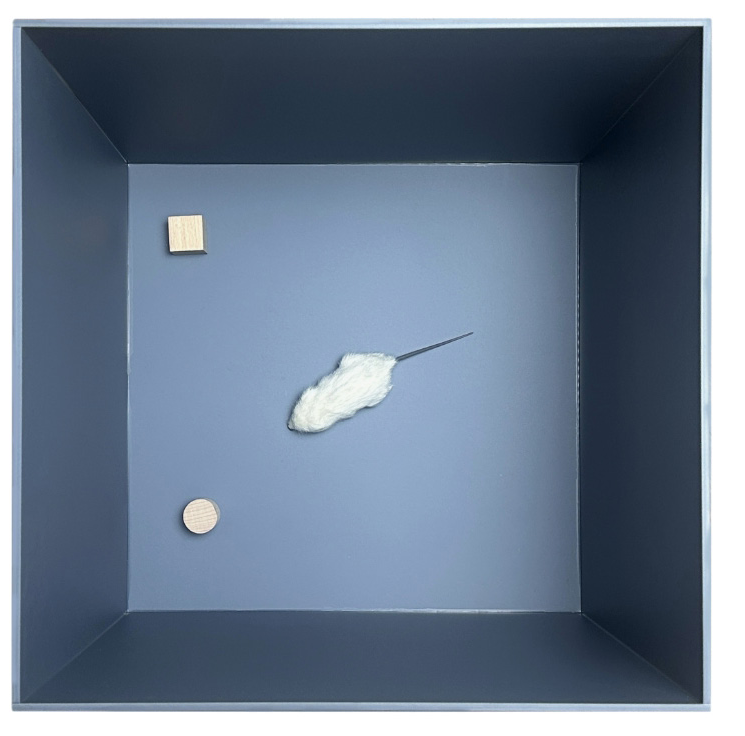
Smart Hardware
The experimental box is made of high-quality materials, with a stable structure, smooth inner wall, non-toxic and odorless, easy to clean and disinfect; the high-definition camera can record animal behavior from multiple angles to ensure clear video quality;
Precise algorithm
The video analysis software is based on advanced image recognition and behavior analysis algorithms, which can accurately identify the moment of contact and exploration time between animals and objects, automatically record key behavioral data, and reduce human errors; the 03 efficient data processing system supports simultaneous analysis of multiple videos, can quickly process large amounts of video data, greatly improve experimental efficiency, and shorten the research cycle.