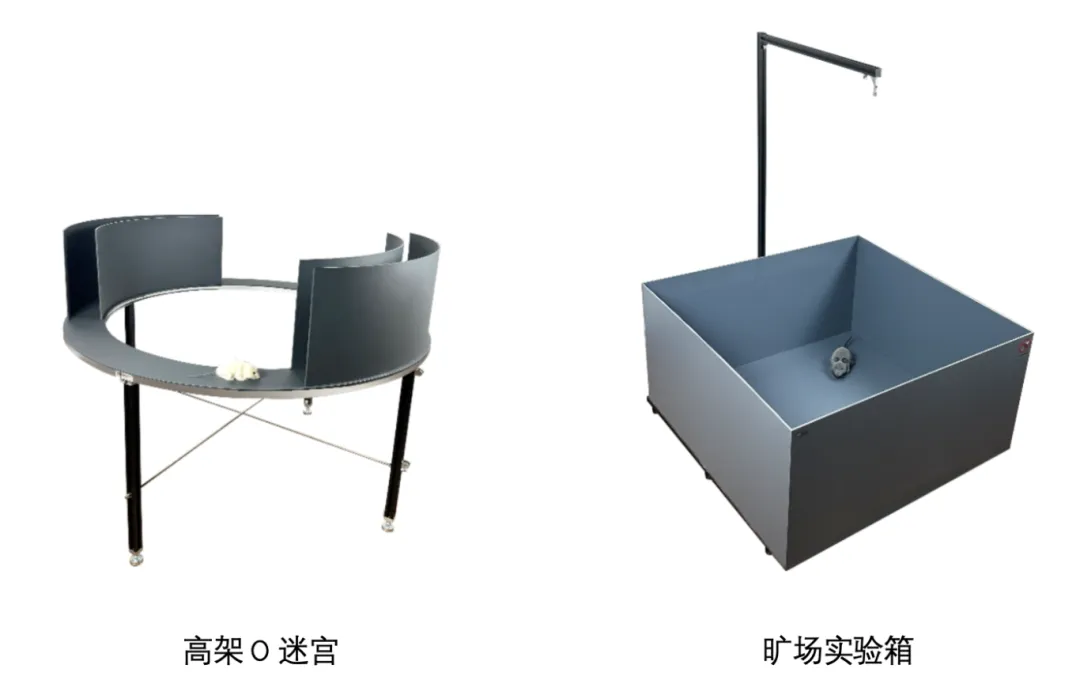




Experimental Tips | A Powerful Tool for Assessing Anxiety Behavior in Small Animals: Interpretation of the Elevated Plus Maze Experiment
Date:2025-07-15
Author:
In the field of neuroscience research, it is crucial to find a classic experimental method that can effectively assess the anxiety level of animals.As a commonly used behavioral experimental method, the Elevated Plus Maze (EPM) has become a powerful tool for studying anxiety behavior and related drug screening since its introduction in the 1970s.
The elevated plus maze simulates the natural behavioral preferences of rodents when faced with open and closed environments, providing researchers with a simple and effective means to observe and quantify anxiety-like behaviors in animals. This experimental method is not only simple and inexpensive, but also has high ecological validity and can closely simulate the behavioral responses of animals in their natural environments.
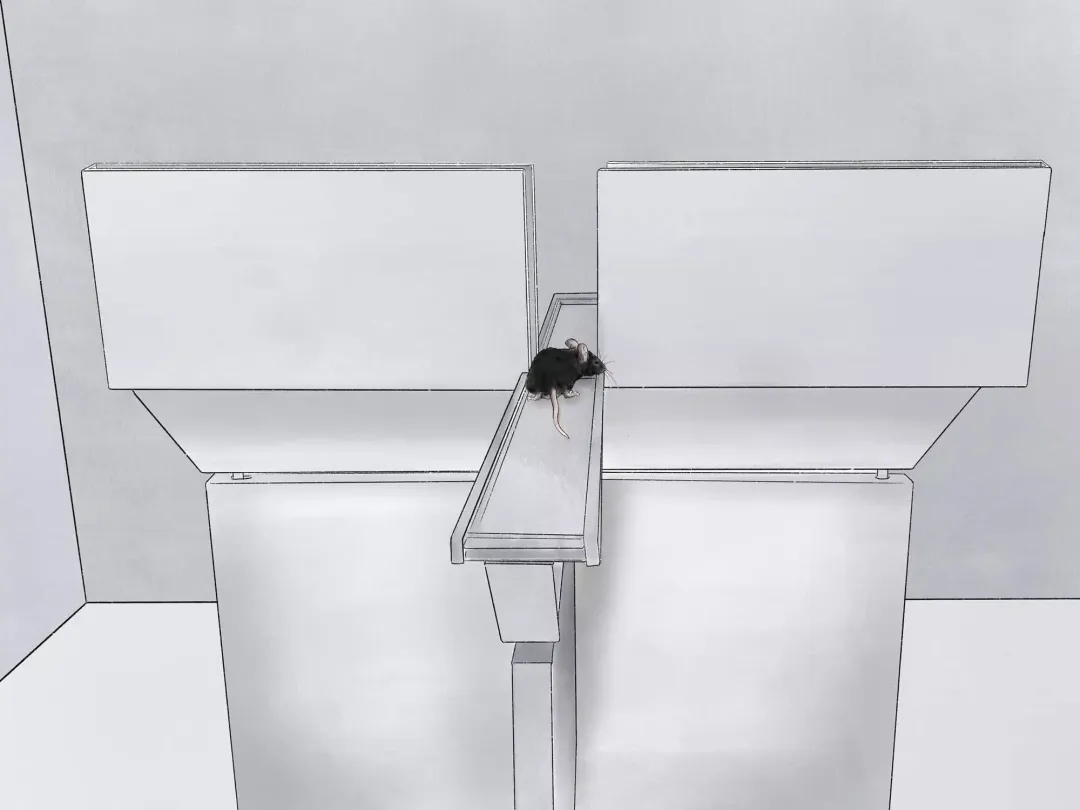
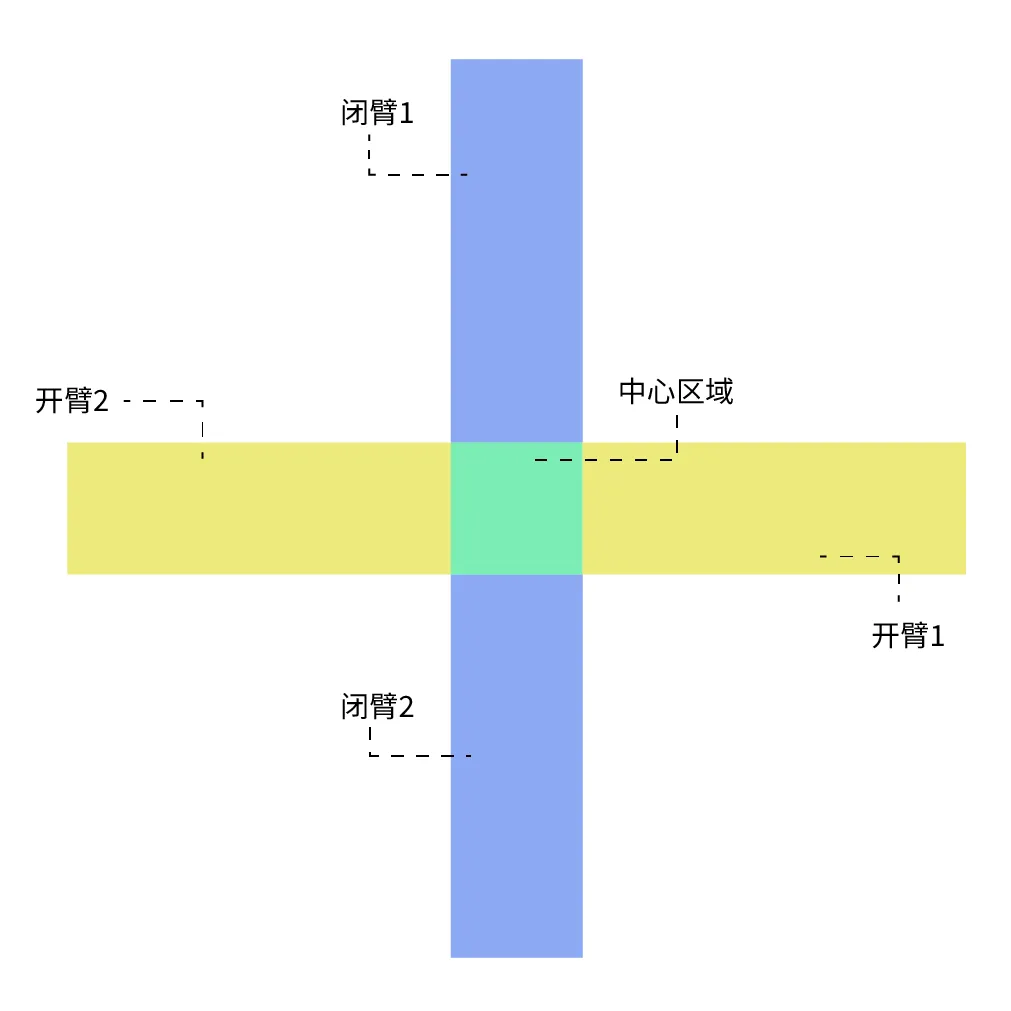
The elevated plus maze is cross-shaped, consisting of two open arms and two closed arms facing each other, with a central platform at the intersection. The entire apparatus is elevated to a certain height (typically 50-60 cm). When animals are placed on the central platform, they face a conflict between their desire to explore the open arms for more information and their fear of open spaces. Animals with lower anxiety levels tend to spend more time exploring the open arms, while animals with higher anxiety levels tend to stay in the closed arms and avoid the open areas.
1. Environmental requirements: Ensure that the laboratory environment is quiet, free of noise interference, and the light intensity is appropriate and constant;
2. Acclimation Time: Experimental animals should be allowed to acclimate to the experimental environment for at least 1 hour in advance to prevent them from becoming emotionally disturbed. Furthermore, animals in the same group should be of the same gender and age, and randomized to minimize interference from other variables.
02. Experimental Phase: Capturing Behavioral Characteristics of Anxiety
1. Hardware preparation: The elevated plus maze apparatus should be carefully cleaned before and after each experiment. Even if no stains are found visually, it should be wiped with an appropriate disinfectant to ensure a standardized odor environment for each test animal.
2. Environmental acclimatization: Before the experiment, place the animals in the test room at least 1 hour in advance to allow them to adapt to the temperature, humidity, and lighting conditions of the test environment. If the animals experience a major environmental change or other stressors during the transfer process, it is recommended to extend the acclimatization period appropriately;
3. Starting position: The experimental animal is usually placed on the central platform facing the open arm. The animal can also be placed in the closed arm according to experimental needs, but the starting position must be consistent to reduce the impact of different starting positions on the experimental results;
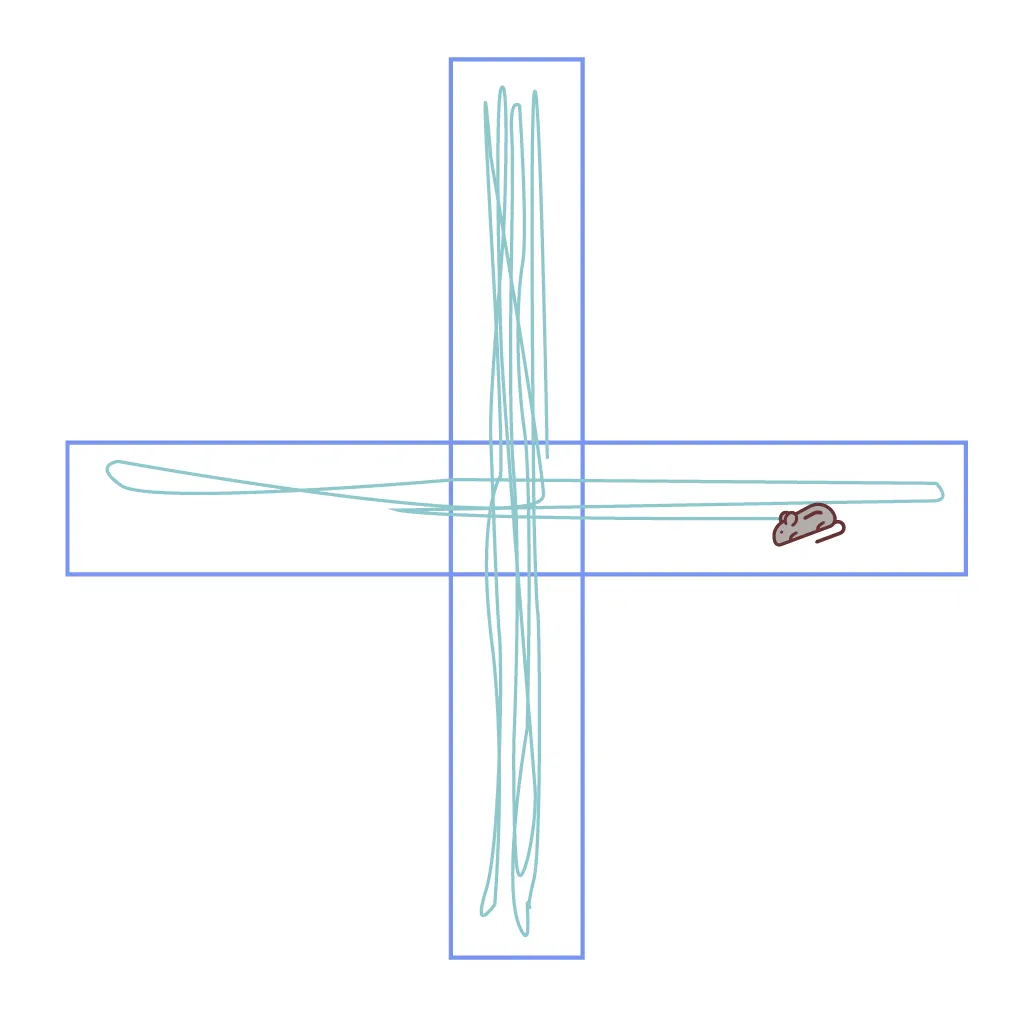
4. Data Collection: Record the animal's behavior in the maze, typically for 5-10 minutes. A video tracking system can be used to automatically record behavioral parameters such as the animal's time spent in the open and closed arms, number of entries, and number of crossings. Other behaviors can also be observed, such as grooming, standing, and jumping.
03. Data Analysis: Decoding Anxiety
1. Stay time analysis: Calculate the proportion of time the animal spends in the open and closed arms. Animals with lower anxiety levels generally spend more time in the open arms, while animals with higher anxiety levels spend more time in the closed arms.
2. Entry Analysis: Count the number of times the animal enters the open and closed arms. A higher number of entries into the open arms indicates a stronger exploratory behavior and a lower anxiety level; conversely, a lower number indicates a higher anxiety level.
3. Other behavioral analysis: Observe the animal's grooming, standing, jumping, and other behaviors in the maze. For example, frequent grooming may be related to anxiety, while standing may reflect the animal's alertness and desire to explore.
04. Notes
1. Animal acclimation: Adequate acclimation training of animals before the experiment is one of the key steps to ensure reliable experimental results. In addition, experimental animals must be screened to exclude those with obvious health problems or behavioral abnormalities;
2. Environmental control: It is crucial to maintain a quiet experimental environment with low lighting to avoid external noise and strong light causing additional disturbance and stress response to the animals;
3. Variable Control: Ensure that the sex and age of experimental animals are consistent to minimize the impact of these factors on experimental results. Also, pay attention to the circadian rhythm of experimental animals and try to conduct experiments during the animals' active periods.
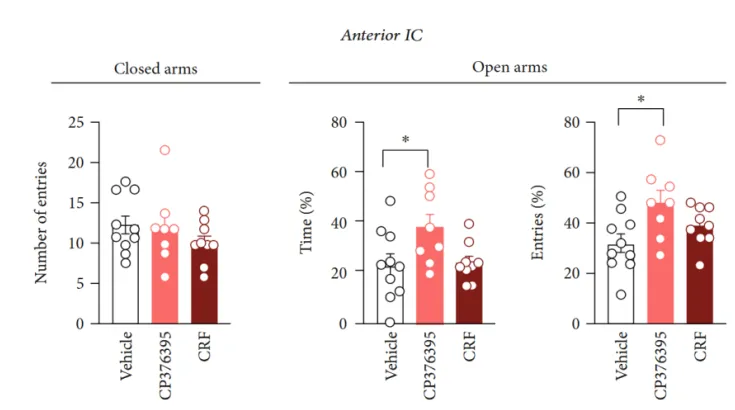
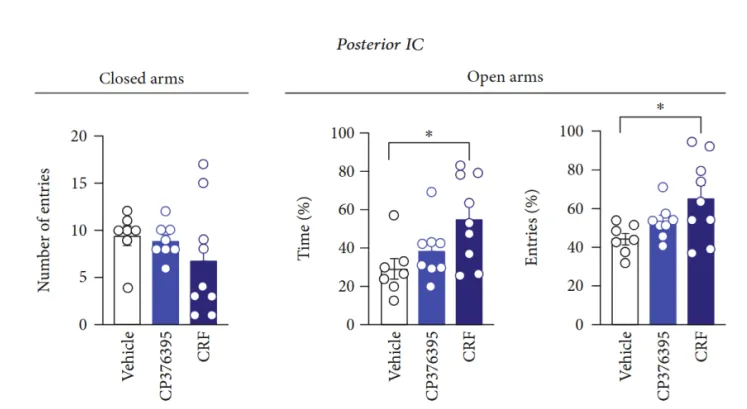
The researchers randomly divided 51 male Wistar rats into six groups and microinjected the CRF1 receptor antagonist CP376395, CRF, or saline (vehicle) into the anterior insular cortex (IC) or posterior IC. Ten minutes later, the rats were placed in the EPM and the number of times they entered the open and closed arms, as well as the time they stayed in the open arms, were recorded.
The results showed that anterior IC injection of CP376395 increased the time and number of times rats entered the open arm, while posterior IC injection of CRF increased the rats' exploration of the EPM open arm. This suggests that the CRF neurotransmitter system in different subregions of the insular cortex regulates anxiety-like behaviors differently, that CRF neurotransmitters in the anterior IC are involved in the expression of anxiety-related behaviors, and that activation of CRF receptors in the posterior IC may produce anxiolytic-like effects.
1. Data collection errors: Manual observation and recording of data are easily affected by subjective factors, resulting in insufficient data accuracy;
2. Low experimental efficiency: Traditional single-channel experimental systems are difficult to meet the needs of large-scale experiments, and experiments take a long time.
02. Yuyan Instruments: One-stop elevated plus maze solution
In the field of behavioral experiments, Shanghai Yuyan Scientific Instrument Co., Ltd., with its profound technical strength and rich industry experience, provides researchers with a comprehensive and efficient elevated plus maze experimental system with the following significant advantages:
1. Hardware Configuration
a. Professional maze design: The height, arm length, and width of the elevated plus maze have been rigorously optimized to fully align with the behavioral characteristics of rodents. This allows for maximum simulation of the animals' behavioral responses in their natural environment, enhancing the ecological validity of the experimental results.
b. High-quality material manufacturing: The maze device is made of high-quality materials to ensure a stable and durable structure, a smooth surface without burrs, and easy cleaning and disinfection, effectively avoiding cross contamination and ensuring the reliability of experimental results.
2. Data Collection and Analysis
a. High-precision hardware configuration: Equipped with high-definition cameras and professional video tracking systems, it can accurately capture the behavior trajectories and subtle movements of animals, providing accurate and clear image data for subsequent data analysis;
b. Intelligent data analysis software: Intelligent data analysis software can automatically identify and record various behavioral parameters of animals in the maze, such as residence time, number of entries, number of crossings, etc., and generate detailed data reports to provide researchers with comprehensive behavioral assessment results to help them better understand animal anxiety behavior.
The elevated plus maze simulates the natural behavioral preferences of rodents when faced with open and closed environments, providing researchers with a simple and effective means to observe and quantify anxiety-like behaviors in animals. This experimental method is not only simple and inexpensive, but also has high ecological validity and can closely simulate the behavioral responses of animals in their natural environments.
Experimental principle: Game between exploration and fear
Rodents generally have an instinct to explore new environments, but at the same time they have a natural fear and avoidance tendency towards open spaces.The elevated plus maze is based on this behavioral characteristic and assesses the anxiety level of animals by observing their time allocation and behavioral performance between the open and closed arms.The elevated plus maze is cross-shaped, consisting of two open arms and two closed arms facing each other, with a central platform at the intersection. The entire apparatus is elevated to a certain height (typically 50-60 cm). When animals are placed on the central platform, they face a conflict between their desire to explore the open arms for more information and their fear of open spaces. Animals with lower anxiety levels tend to spend more time exploring the open arms, while animals with higher anxiety levels tend to stay in the closed arms and avoid the open areas.
Detailed experimental process: step by step
01. Adaptation stage: reducing environmental stress1. Environmental requirements: Ensure that the laboratory environment is quiet, free of noise interference, and the light intensity is appropriate and constant;
2. Acclimation Time: Experimental animals should be allowed to acclimate to the experimental environment for at least 1 hour in advance to prevent them from becoming emotionally disturbed. Furthermore, animals in the same group should be of the same gender and age, and randomized to minimize interference from other variables.
02. Experimental Phase: Capturing Behavioral Characteristics of Anxiety
1. Hardware preparation: The elevated plus maze apparatus should be carefully cleaned before and after each experiment. Even if no stains are found visually, it should be wiped with an appropriate disinfectant to ensure a standardized odor environment for each test animal.
2. Environmental acclimatization: Before the experiment, place the animals in the test room at least 1 hour in advance to allow them to adapt to the temperature, humidity, and lighting conditions of the test environment. If the animals experience a major environmental change or other stressors during the transfer process, it is recommended to extend the acclimatization period appropriately;
3. Starting position: The experimental animal is usually placed on the central platform facing the open arm. The animal can also be placed in the closed arm according to experimental needs, but the starting position must be consistent to reduce the impact of different starting positions on the experimental results;
4. Data Collection: Record the animal's behavior in the maze, typically for 5-10 minutes. A video tracking system can be used to automatically record behavioral parameters such as the animal's time spent in the open and closed arms, number of entries, and number of crossings. Other behaviors can also be observed, such as grooming, standing, and jumping.
03. Data Analysis: Decoding Anxiety
1. Stay time analysis: Calculate the proportion of time the animal spends in the open and closed arms. Animals with lower anxiety levels generally spend more time in the open arms, while animals with higher anxiety levels spend more time in the closed arms.
2. Entry Analysis: Count the number of times the animal enters the open and closed arms. A higher number of entries into the open arms indicates a stronger exploratory behavior and a lower anxiety level; conversely, a lower number indicates a higher anxiety level.
3. Other behavioral analysis: Observe the animal's grooming, standing, jumping, and other behaviors in the maze. For example, frequent grooming may be related to anxiety, while standing may reflect the animal's alertness and desire to explore.
04. Notes
1. Animal acclimation: Adequate acclimation training of animals before the experiment is one of the key steps to ensure reliable experimental results. In addition, experimental animals must be screened to exclude those with obvious health problems or behavioral abnormalities;
2. Environmental control: It is crucial to maintain a quiet experimental environment with low lighting to avoid external noise and strong light causing additional disturbance and stress response to the animals;
3. Variable Control: Ensure that the sex and age of experimental animals are consistent to minimize the impact of these factors on experimental results. Also, pay attention to the circadian rhythm of experimental animals and try to conduct experiments during the animals' active periods.
Literature Case: Exploring the Story Behind Anxiety
The article "Pharmacological Manipulation of Corticotropin-Releasing Factor Receptors in the Anterior and Posterior Subregions of the Insular Cortex Differently Affects Anxiety-Like Behaviors in the Elevated Plus Maze in Rats" uses the elevated plus maze (EPM) to assess anxiety-like behaviors in rats.The researchers randomly divided 51 male Wistar rats into six groups and microinjected the CRF1 receptor antagonist CP376395, CRF, or saline (vehicle) into the anterior insular cortex (IC) or posterior IC. Ten minutes later, the rats were placed in the EPM and the number of times they entered the open and closed arms, as well as the time they stayed in the open arms, were recorded.
The results showed that anterior IC injection of CP376395 increased the time and number of times rats entered the open arm, while posterior IC injection of CRF increased the rats' exploration of the EPM open arm. This suggests that the CRF neurotransmitter system in different subregions of the insular cortex regulates anxiety-like behaviors differently, that CRF neurotransmitters in the anterior IC are involved in the expression of anxiety-related behaviors, and that activation of CRF receptors in the posterior IC may produce anxiolytic-like effects.
Experimental Pain Points and Solutions: The Leap from Traditional to Intelligent
01. Limitations of the traditional elevated plus maze test1. Data collection errors: Manual observation and recording of data are easily affected by subjective factors, resulting in insufficient data accuracy;
2. Low experimental efficiency: Traditional single-channel experimental systems are difficult to meet the needs of large-scale experiments, and experiments take a long time.
02. Yuyan Instruments: One-stop elevated plus maze solution
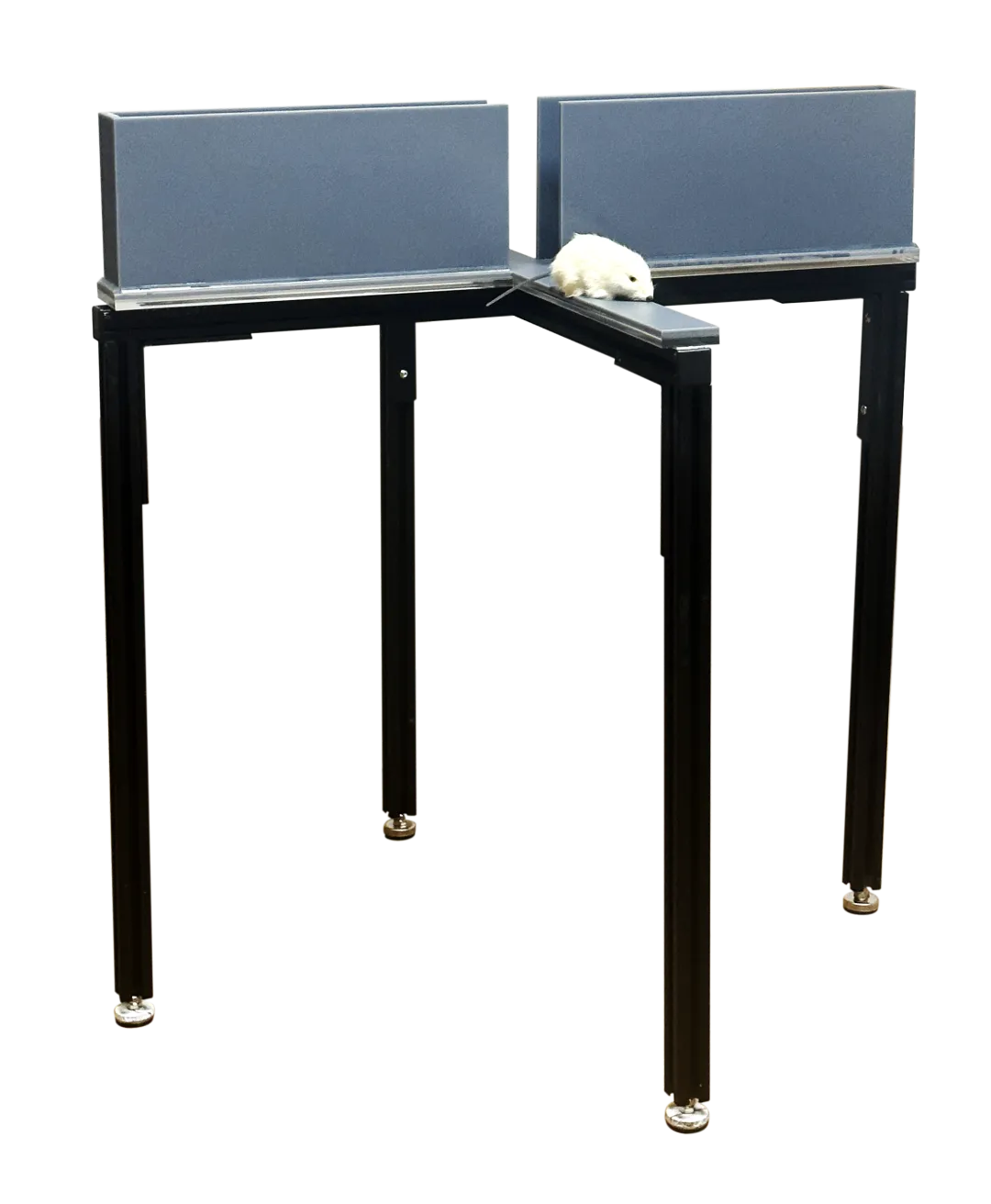
In the field of behavioral experiments, Shanghai Yuyan Scientific Instrument Co., Ltd., with its profound technical strength and rich industry experience, provides researchers with a comprehensive and efficient elevated plus maze experimental system with the following significant advantages:
1. Hardware Configuration
a. Professional maze design: The height, arm length, and width of the elevated plus maze have been rigorously optimized to fully align with the behavioral characteristics of rodents. This allows for maximum simulation of the animals' behavioral responses in their natural environment, enhancing the ecological validity of the experimental results.
b. High-quality material manufacturing: The maze device is made of high-quality materials to ensure a stable and durable structure, a smooth surface without burrs, and easy cleaning and disinfection, effectively avoiding cross contamination and ensuring the reliability of experimental results.
2. Data Collection and Analysis
a. High-precision hardware configuration: Equipped with high-definition cameras and professional video tracking systems, it can accurately capture the behavior trajectories and subtle movements of animals, providing accurate and clear image data for subsequent data analysis;
b. Intelligent data analysis software: Intelligent data analysis software can automatically identify and record various behavioral parameters of animals in the maze, such as residence time, number of entries, number of crossings, etc., and generate detailed data reports to provide researchers with comprehensive behavioral assessment results to help them better understand animal anxiety behavior.
More Anxiety Research Solutions