




Experimental Tips | Y-Maze Experiment: A Classic Method for Unlocking Animal Spatial Memory
What is a Y-maze?
The Y-MAZE EXPERIMENTAL SYSTEM is a behavioral testing method designed based on the natural exploratory desire of rodents. It is used to evaluate the spatial cognition, working memory and alternating behavior abilities of experimental animals.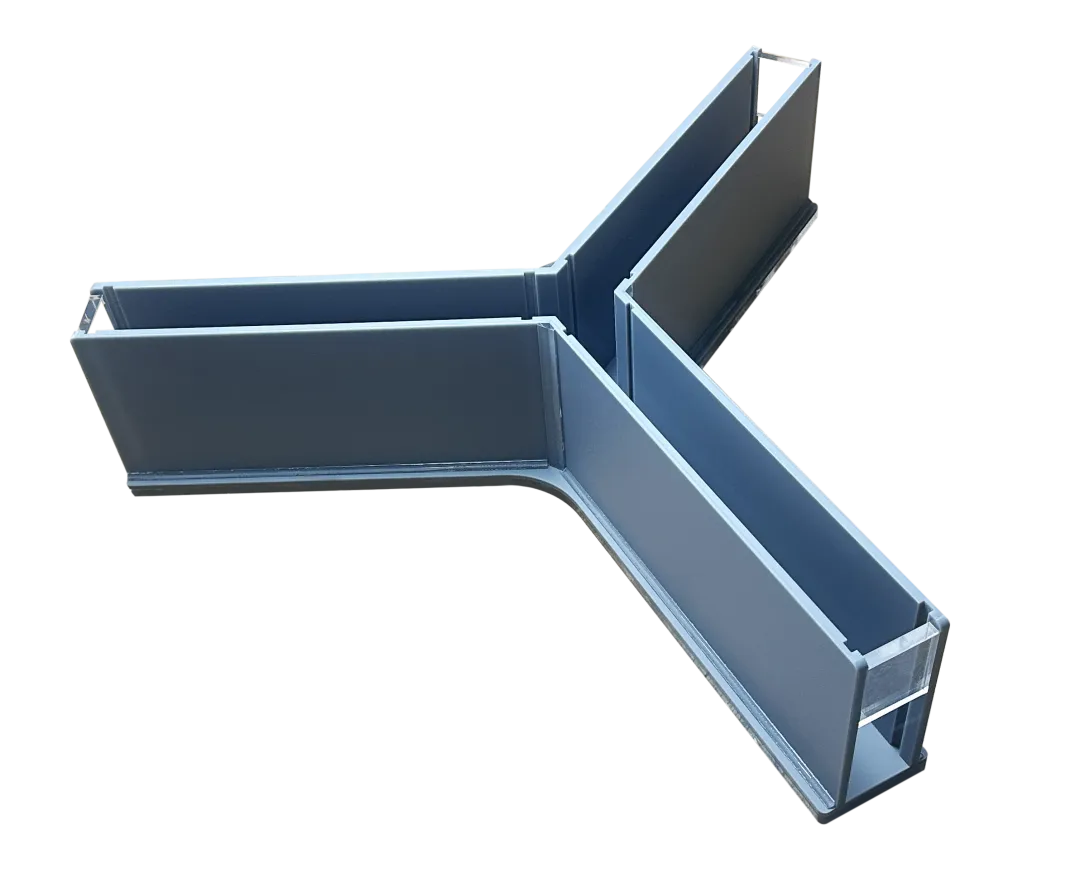
Compared with the T-maze, the core advantage of the Y-maze is that there is no need for manual guidance of the animal's direction - the animal can freely explore the three arms distributed in a "Y" shape (usually called arms A, B, and C), which is more in line with its behavioral state in the natural environment and effectively avoids the subjective errors caused by human intervention.
1. Neurological function research: the functions and regulatory pathways of specific brain regions, genes, or biomolecules in learning and memory;
2. Drug effect research: evaluate the effects of different drugs (such as sedatives, cognitive enhancers, etc.) on cognitive ability;
3. Related disease research: Evaluate cognitive function in animal models of neurodegenerative diseases or the effects of specific treatments on disease progression or recovery.
Experimental Principle
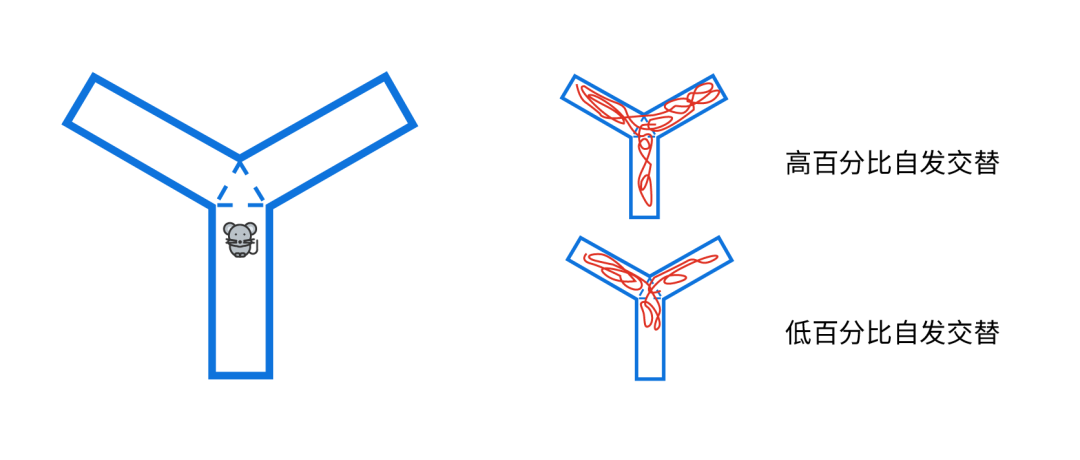
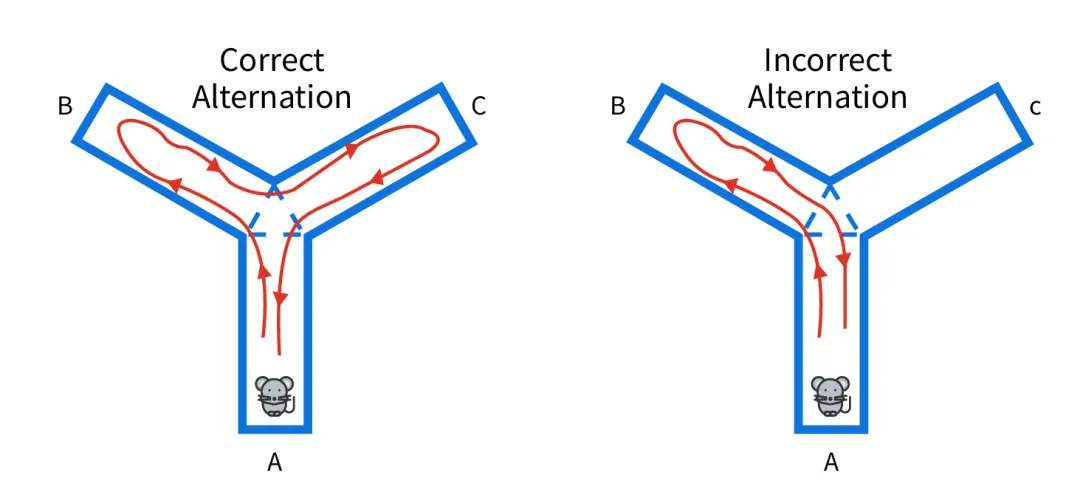
01. Spontaneous alternation experimentWhen a mouse is placed in any arm of the Y-maze, it will actively explore the other two unknown arms out of curiosity. Normal mice can remember the "last arm they explored" and are more likely to choose the new, unexplored arm later - this is called spontaneous alternation behavior. The core indicator of this behavior is the correct alternation rate = (actual number of alternations / maximum number of alternations) × 100%, where the maximum number of alternations = the total number of arms entered - 2. The actual number of alternations refers to the number of times the animal enters three different arms in a row, such as A→B→C or B→C→A.
02. Spatial Memory Experiment
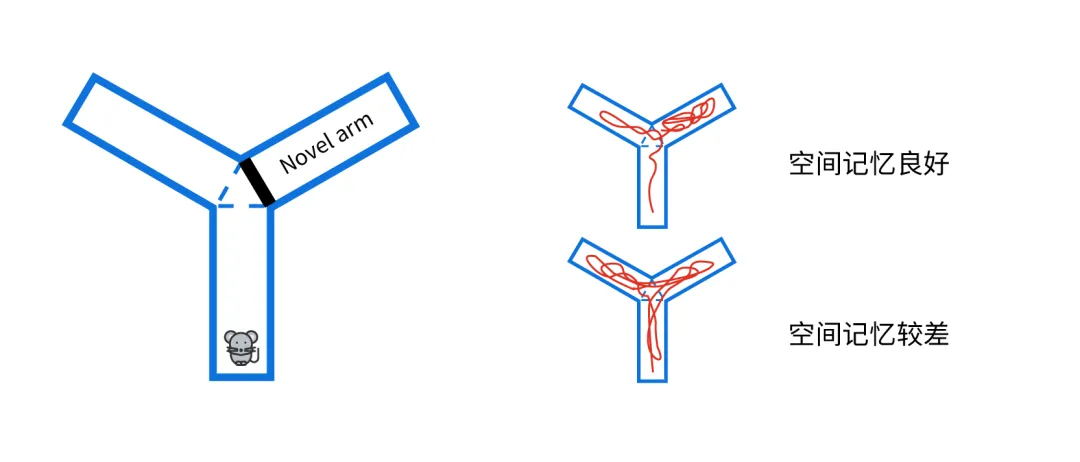
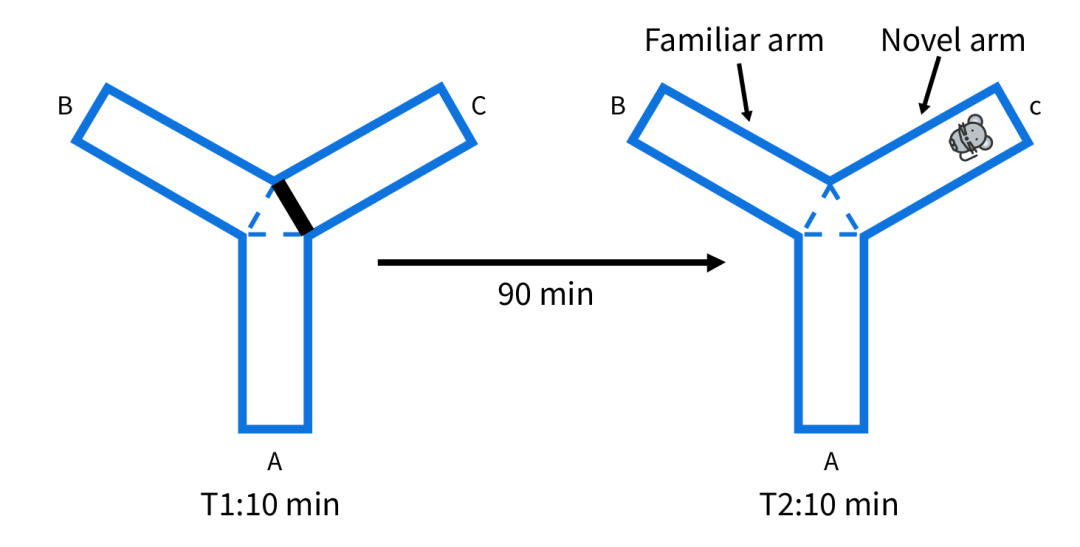
Mice are placed in a Y-maze with one arm blocked. When the blockage is removed, normal mice explore the novel arm more frequently. Comparing the number of entries into the novel arm with the number of entries into the other arms assesses the mice's spatial memory. Mice that show no preference for either arm exhibit impaired spatial memory, which is associated with impaired hippocampal function.
Experimental Procedure
01. Preparation stage1. Environmental Control: Choose a quiet room without strong or noisy sounds and maintain even lighting (to prevent light and shadow from affecting video recognition). The Y-maze arms should be wiped and disinfected with 75% alcohol to remove residual odors (animals are sensitive to odors, and residual odors will interfere with exploratory behavior).
2. Equipment debugging: Open the Yuyan video acquisition software, connect the high-definition camera, and install it directly above the maze, ensuring that it covers the three arms and the center area;
3. Animal preparation: For the experiment, select animals of the same age, weight, and gender and move them to the experimental room 1 hour in advance to acclimate them to the temperature.
02. Testing phase
1. Label the A, B, and C arms of the maze.
2. Place the mouse in a random starting arm of the Y maze, facing the center of the maze;
3. Start the video analysis software and begin 8 minutes of automatic tracking; the software will record the mouse's "arm entry trajectory," "number of entries into each arm," and "exploration time in each arm" in real time.
4. For the mouse to enter the arm, all four limbs must be inside the arm (the software can automatically identify this, eliminating the need for manual judgment). If the mouse does not move within 1 minute, gently tap the wall of the experimental chamber (do not touch the animal) to stimulate its movement.
5. After the test, remove the mouse, wipe the maze arm with a clean cloth (to remove hair and odor), and wait for the next mouse to be tested;
6. Correct alternation rate = (actual number of alternations/maximum number of alternations) × 100%
b. Spatial memory experiment
1. Label the A, B, and C arms of the maze.
2. Use a splitter to close one of the arms;
3. Place the animal face-up into one of the open arms, facing the center of the maze, and allow the animal to explore the maze undisturbed for 10 min.
4. After 15 minutes, place the experimental animals back into their cages;
5. After waiting for 1.5 hours, open all arms and allow the animal to explore freely for 10 minutes;
6. After the test, remove the animal, wipe the maze arm with a clean cloth (to remove hair and odor), and wait for the next animal to be tested;
7. Record the number of times the animal enters each arm and the time spent in each arm
Literature Case
In the paper "Chronic Supplementation with a Mix of Salvia officinalis and Salvia lavandulaefolia Improves Morris Water Maze Learning in Normal Adult C57Bl/6J Mice," the authors evaluated the effects of sage extract on spatial memory in mice using a Y-maze test. The study found that acute supplementation with lavender sage essential oil, sage water extract, and a mixture of both increased the time mice spent exploring the novel arm. This suggests that sage extract may rapidly enhance mice's ability to recognize spatial novelty by affecting neural pathways related to the hippocampus.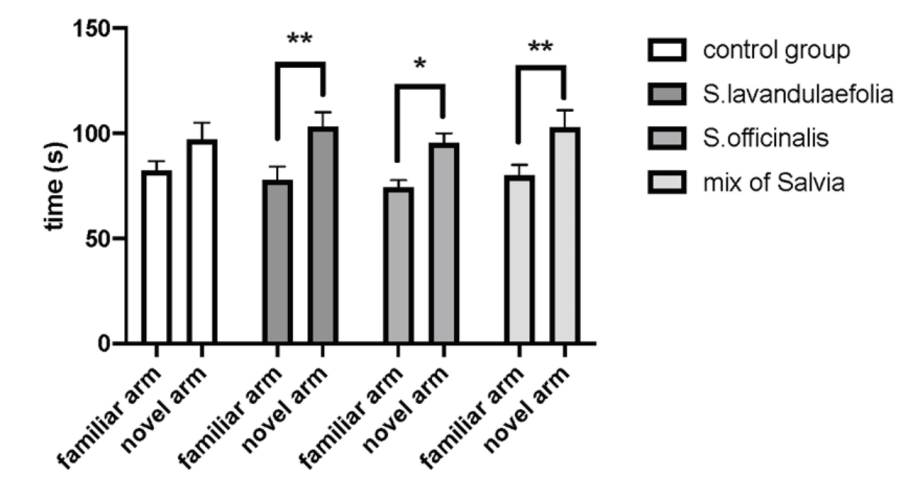
Yuyan Instruments Y-maze Experiment System
Yuyan Instruments' Y-maze experimental system provides a complete set of equipment, including a Y-maze, video acquisition equipment, and video analysis software. It can collect and record the behavior of animals during the experiment, obtain target parameters through behavioral analysis software, and objectively and reliably evaluate the spatial memory ability of experimental animals. The system includes three models: mouse type, rat type, and universal type for rats and mice.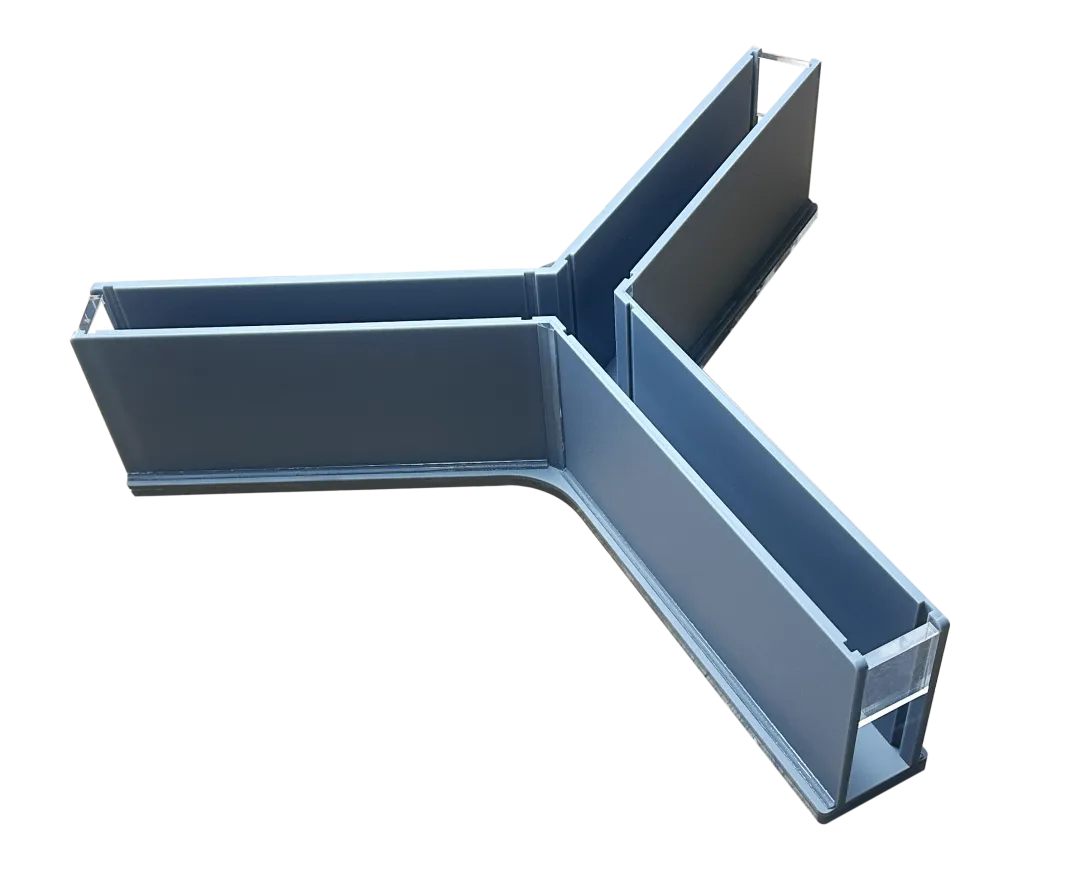
1. Design Structure Major
The size of the Y-maze strictly follows the experimental conditions and is designed specifically for experiments with mice and rats. It conforms to the morphological characteristics of experimental animals to ensure accurate and reliable test results.
2. Avoid human interference
The use of video camera technology realizes the automation of the experimental process, avoids subjective errors introduced by manual observation and interference with experimental animals, and increases the authenticity of the experimental results;
3. Automatic tracking and analysis
Using video tracking technology, it can automatically identify experimental animals, extract movement trajectories, and analyze experimental parameters, making the experimental results more objective and accurate;
4. Rich measurable parameters
Equipped with video analysis software, it can analyze and obtain various types of experimental parameters according to experimental requirements, such as the correct alternation rate in spontaneous alternation experiments, the correct rate of arm entry in spatial recognition, etc.