

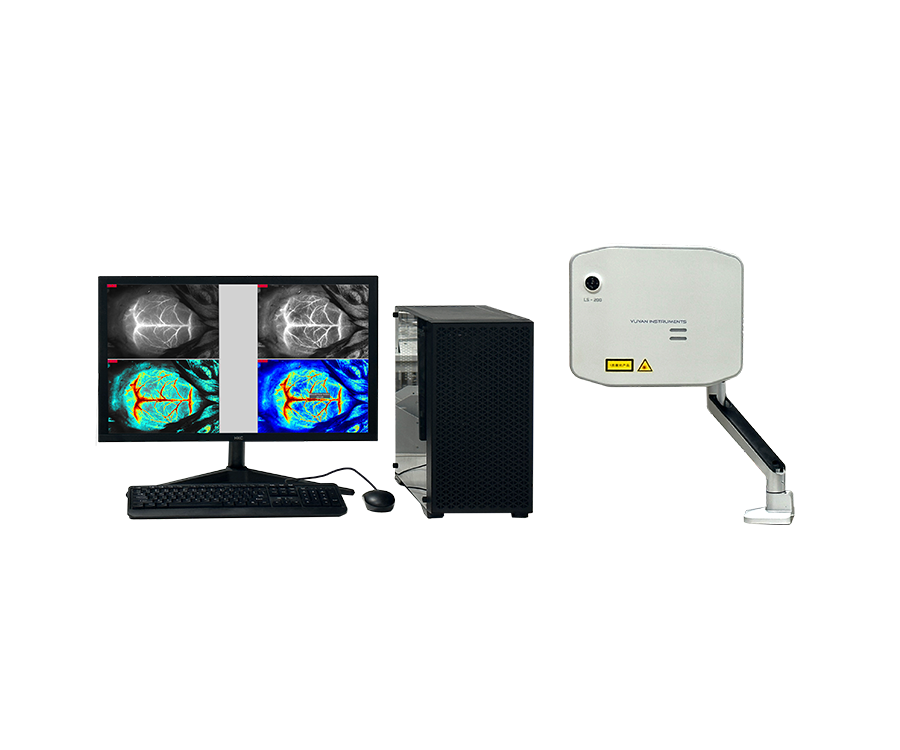
Laser speckle blood flow imager
Laser speckle blood flow imager is a non-invasive imaging device for monitoring microcirculation blood flow, which can evaluate the changes of tissue hemodynamics in real time and in the whole field. It is widely used in neuroscience, pharmacology and cardiovascular research, providing reliable imaging evidence for brain blood flow monitoring, drug effect evaluation and pathological model research.
 Phone Consultation
 Follow us
- Introduction
- Features
- More Recommendations
Introduction
Laser speckle flow imaging (LSFI) is a cutting-edge technique based on LSCI (LASER SPECKLE CONTRAST IMAGING). It measures particle velocity by analyzing how moving particles scatter coherent laser light. The system continuously captures images of the laser-irradiated area using CCD or CMOS cameras, then processes the data through laser speckle contrast analysis to generate contrast images. These images provide two-dimensional visualization of blood flow distribution.
The LS Series Laser speckle blood flow imager delivers a groundbreaking solution for clinical and biomedical research through its unique non-contact, high-resolution, and full-field rapid imaging capabilities. Operating without contrast agents, this system achieves millisecond-level temporal resolution and micron-level spatial resolution, enabling real-time monitoring of microvascular blood flow patterns and quantitative analysis. Utilizing laser speckle imaging technology with an expanded field of view, it ensures high-definition coverage across diverse subjects—from small animals (rats, mice) to large animals (pigs, dogs) and human subjects.
The LS Series Laser speckle blood flow imager delivers a groundbreaking solution for clinical and biomedical research through its unique non-contact, high-resolution, and full-field rapid imaging capabilities. Operating without contrast agents, this system achieves millisecond-level temporal resolution and micron-level spatial resolution, enabling real-time monitoring of microvascular blood flow patterns and quantitative analysis. Utilizing laser speckle imaging technology with an expanded field of view, it ensures high-definition coverage across diverse subjects—from small animals (rats, mice) to large animals (pigs, dogs) and human subjects.
Features
Ultra-high resolution display: 2048×1536 ultra-HD resolution, capable of displaying blood flow image details with spatial resolution at the micron level, meeting the functional requirements for real-time observation of microvascular blood flow distribution and relative changes in blood flow values.
Multi-scenario application: The wide-screen zoom adapts to animal experiments and clinical research, allowing observation of both blood flow in animals and skin surface perfusion in humans.
Continuous recording: Records continuously based on the set frame rate. A single output file is only 7 MB, meeting the continuous recording requirement.
Flexible ROI and TOI: Analyze blood flow in any time period, region, or volume, save all selected areas, and support online/offline analysis of ROI flow rate averages.
Gastrointestinal research: Observation of mesenteric vessels and blood flow imaging for monitoring mesenteric blood flow in the diagnosis and treatment of acute mesenteric ischemic diseases.
Laser speckle blood flow imager:Diagnosis of Facial Nerve Diseases Using Laser Speckle Flow Imaging Technology to Evaluate Facial Microcirculation Function, Including Blood Flow Velocity and Perfusion.
Episthemic electrophysiology: Diagnosing facial nerve disorders using laser speckle flow imaging to assess the function of facial microcirculation, such as blood flow velocity and blood perfusion.
Other studies: Burn level identification, lower limb blood flow measurement, spinal cord injury model, research on the mechanism of acupuncture and moxibustion in traditional Chinese medicine, etc.
Multi-scenario application: The wide-screen zoom adapts to animal experiments and clinical research, allowing observation of both blood flow in animals and skin surface perfusion in humans.
Continuous recording: Records continuously based on the set frame rate. A single output file is only 7 MB, meeting the continuous recording requirement.
Flexible ROI and TOI: Analyze blood flow in any time period, region, or volume, save all selected areas, and support online/offline analysis of ROI flow rate averages.
Product Composition
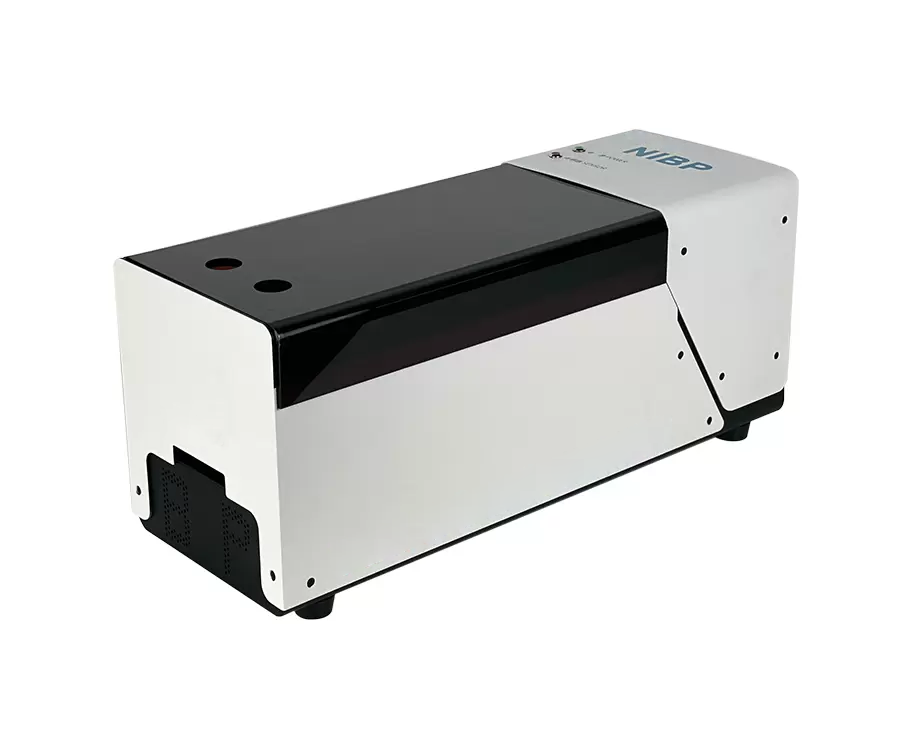
Laser speckle main unit, a processor for image and data analysis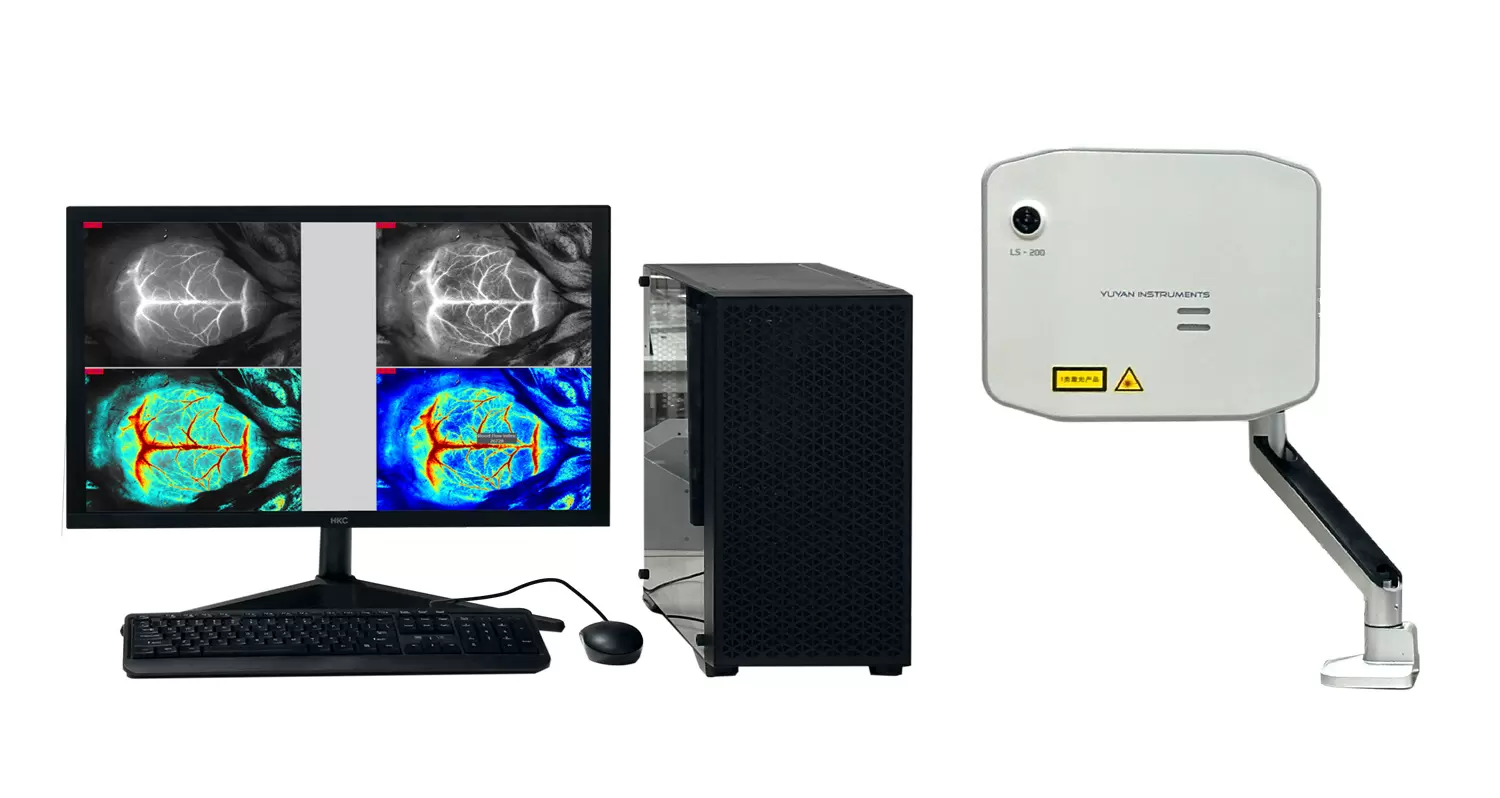
Application field
Neurological studies: Middle cerebral artery occlusion (MCAO) is a stroke model in animals. The normal condition, ischemia modeling, and recovery of blood flow after reperfusion in MCAO models can be observed using laser speckle flow imaging to investigate the pathogenesis and therapeutic approaches of stroke.Gastrointestinal research: Observation of mesenteric vessels and blood flow imaging for monitoring mesenteric blood flow in the diagnosis and treatment of acute mesenteric ischemic diseases.
Laser speckle blood flow imager:Diagnosis of Facial Nerve Diseases Using Laser Speckle Flow Imaging Technology to Evaluate Facial Microcirculation Function, Including Blood Flow Velocity and Perfusion.
Episthemic electrophysiology: Diagnosing facial nerve disorders using laser speckle flow imaging to assess the function of facial microcirculation, such as blood flow velocity and blood perfusion.
Other studies: Burn level identification, lower limb blood flow measurement, spinal cord injury model, research on the mechanism of acupuncture and moxibustion in traditional Chinese medicine, etc.
Basic technical parameters
| Project | LS-200 |
|---|---|
| Blood flow imaging speed | 50 fps |
| Blood flow monitoring range | 0~65535 PU |
| 3.45 μm/pixel | |
| Unit area pixel density | 8,400,000 pixel/cm² |
| Zoom factor | 10X |
| Imaging working distance | 10~50 cm |
| ROI quantity | 10 |