




Literature Express | Yuyan's pulmonary atomization device (IF=15.1) helps elastase nanocomplex eliminate lung cancer cells
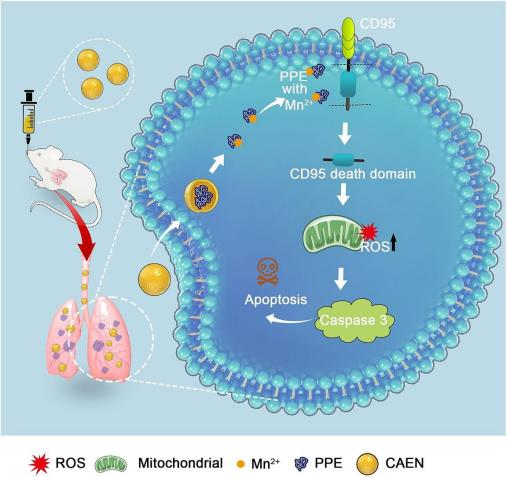
Recently, Lin Zhiqiang's team from the Peking University School of Basic Medical Sciences published an article titled "An elastase nanocomplex with metal cofactors for enhancement of target protein cleavage activity and synergistic antitumor effect" in the internationally renowned Chemical Engineering Journal (IF=15.1). Drawing on the way metal ions regulate protein function and activity, this study employed a metal cofactor-based approach, using pancreatic elastase (PPE, an ELANE homolog) as a model drug, to enhance target protein cleavage and antitumor effects. The authors developed and optimized an elastase nanocomplex (CAEN) with enhanced cleavage activity in vitro. Using the Yuyan pulmonary aerosol drug delivery device, CAEN was quantitatively targeted and delivered to the lungs of mice. CAEN prevented PPE degradation in the biological environment and effectively delivered it to tumor cells. By effectively cleaving the transmembrane protein CD95 (with higher specificity than free PPE), CAEN induced significant apoptosis in lung cancer cells.
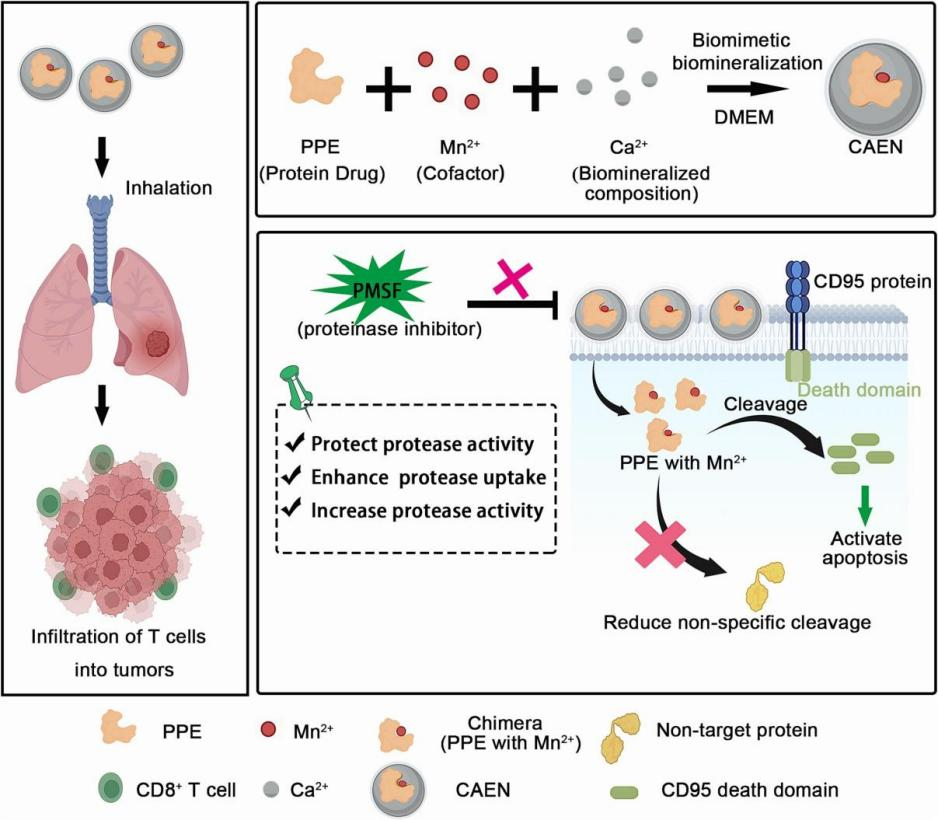
CAEN can protect and stabilize the activity of PPE protein
CAEN is primarily administered via non-invasive aerosol inhalation to deliver protein drugs to lung tissue, achieving lung-specific protein drug delivery (Figure 1). In tumor cells, the PPE and Mn2+ chimeras released from CAEN specifically cleave the tumor cell transmembrane protein CD95, leading to cell apoptosis. Furthermore, the released Mn2+ can effectively enhance the local immune response in lung tumor tissue.
Because blood contains numerous serine proteases, they may inhibit PPE activity in practical applications. To verify the serum sensitivity of CAEN, the authors conducted cytotoxicity studies in various cell lines using culture media with or without fetal bovine serum. The results are shown in the figure. The CAEN group exhibited significant cytotoxicity when tested in both serum-containing and serum-free media.
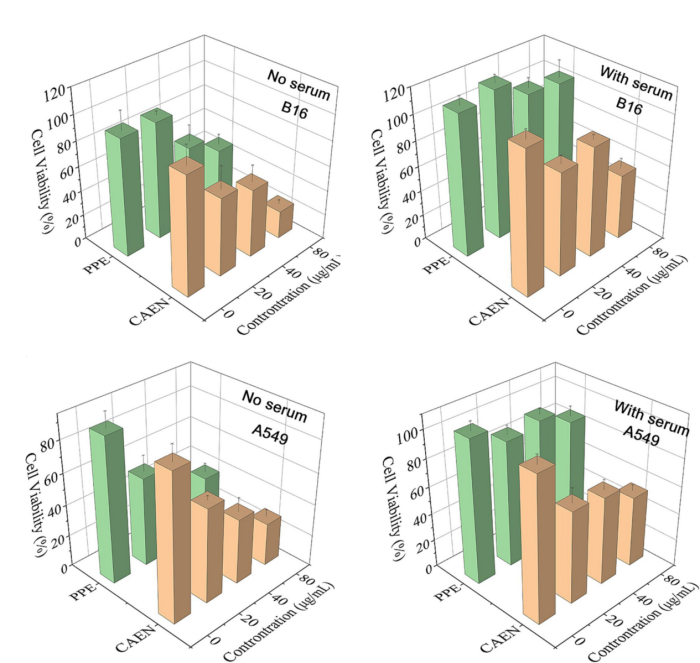
These experiments demonstrate that the designed CAEN can stabilize the activity of PPE, preventing it from being inhibited by protease inhibitors in serum, and achieving a complete anti-tumor effect. This strongly suggests that the metal ion mineralization modification strategy is a promising method for protecting PPE activity. The biomineralization of CAEN provides a nanoscale barrier for the effective activity of this functional protein in anti-tumor therapy.
CAEN can specifically cleave CD95 and promote tumor cell apoptosis
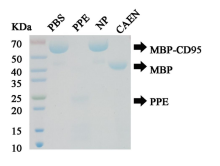
To verify the ability of different preparations to cleave CD95, the authors purified MBP-CD95 protein and performed cleavage experiments. First, the different preparations were incubated with MBP-CD95 for 30 minutes. The results are shown in Figure 3. The difference between the two groups is that the PPE group completely cleaved WBP-CD95, while the CAEN group selectively cleaved only CD95 protein. Therefore, the biomineralization complex of elastase and manganese ions can achieve specific cleavage of CD95 protein.
The authors conducted a cell apoptosis experiment on B16-F10 tumor cells. Flow cytometry results showed that the proportion of tumor cells undergoing apoptosis was the highest in the CAEN-treated group, indicating that CAEN has the ability to induce cell apoptosis.
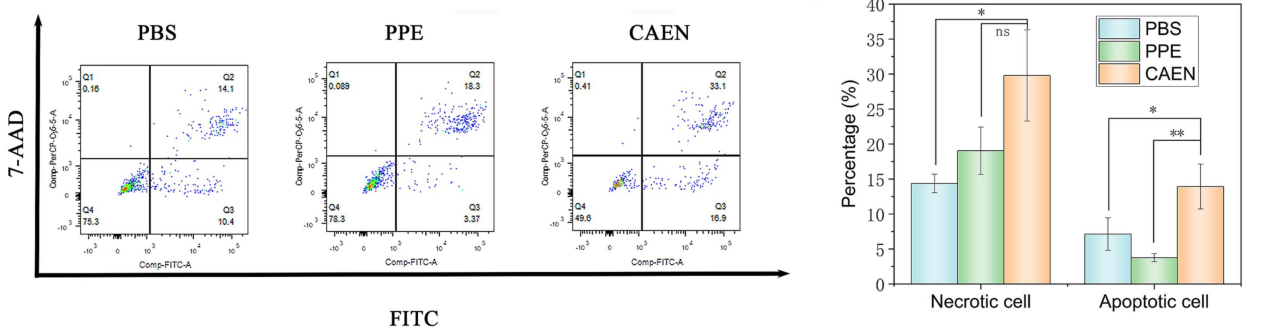
The above experiments highlight the potential of CAEN to cleave target proteins and its anti-tumor effects.
CAEN can improve drug delivery efficiency and lung retention time
Studies have shown that inhaled and delivered therapeutic agents can achieve better therapeutic effects on localized malignant tumor tissues and reduce the possibility of unrelated systemic effects compared to intravenous administration. In the article, the authors used the Yuyan Instruments lung atomization device (YAN-30012) to quantitatively deliver CAEN formulations to the lungs of mice.
To verify the successful drug delivery via the aerosol device, the authors used Coomassie Brilliant Blue (CBB) as an indicator to demonstrate that the drug effectively penetrated the mouse lungs. Figure 6 shows a significant amount of CBB in the mouse lungs, evenly distributed primarily in the trachea and bronchi. Therefore, pulmonary aerosol drug delivery has the potential to effectively achieve localized delivery of nanoparticles and tissue-specific treatment.
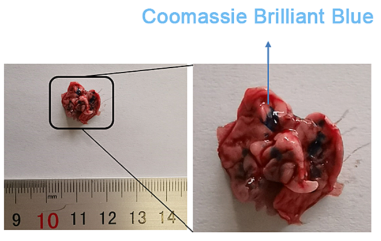
To examine the retention of CAEN in the lungs, the authors administered PPE and CAEN labeled with Cy7 fluorescent dye via pulmonary aerosolization and removed lung tissue for fluorescence imaging. The results showed that pulmonary aerosolization allowed CAEN to evenly penetrate the lungs.
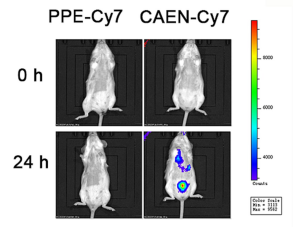
The authors also evaluated the transmucosal absorption of the different formulations into lung tissue following pulmonary aerosol administration. Twenty-four hours after inhalation of PPE-Cy7 and CAEN-Cy7, mice were sacrificed, and lungs were harvested for fluorescence imaging. As shown in the fluorescence imaging figure, a stronger and deeper fluorescence distribution was observed in the lungs treated with CAEN-Cy7, indicating that the mineralized nanoparticles exhibited excellent penetration and retention capabilities as a carrier, significantly improving the transmucosal permeability and retention of biomacromolecules.
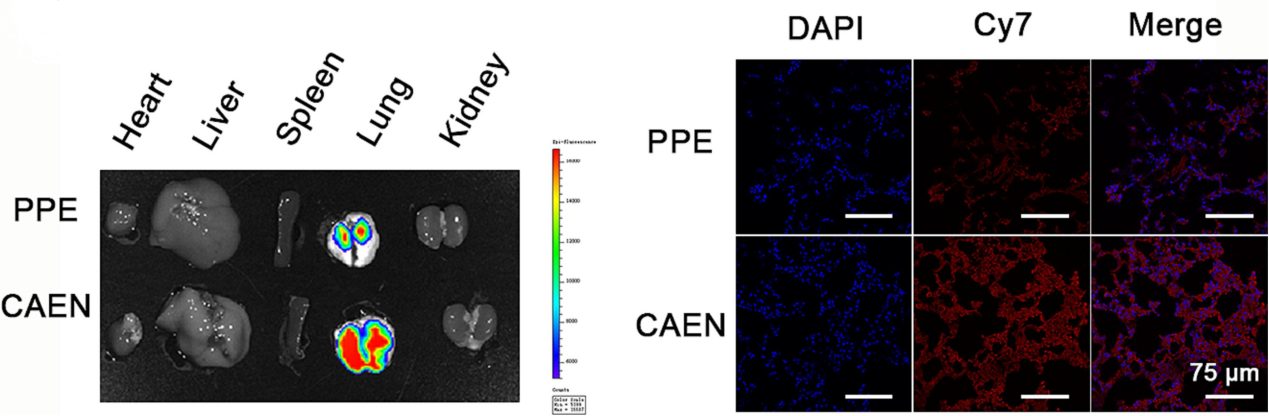
The above experimental results show that compared with free proteins, CAEN can improve cellular uptake efficiency and prolong the retention time of proteins in local tissues.
In vivo delivery of CAEN inhibits tumor growth
To validate the anti-tumor effect of CAEN, B16-F10 cells were injected into the tail vein of C57BL/6 mice to establish a lung cancer model. Local anti-tumor therapy was administered to the mice's lungs using a Yuyan pulmonary aerosol drug delivery device on days 5, 9, 13, and 17. On days 5, 13, and 21, the mice were dissected and their lung tissues were collected. Subsequently, the authors counted the number of metastatic lesions in the mouse lung tissue (Figure 10). The CAEN group maintained excellent therapeutic efficacy during anti-tumor treatment, with no significant metastases. However, the PPE group developed significant metastatic lesions, likely due to the inability of the PPE aerosol to effectively enter tumor cells, leading to degradation of elastic fibers on the lung tissue surface and promoting tumor cell metastasis.
H&E staining of tumor tissues showed that there were fewer cancer cells in the tissue sections of mice in the CAEN-administered group, while there were more cancer cells in the PBS and PPE groups.
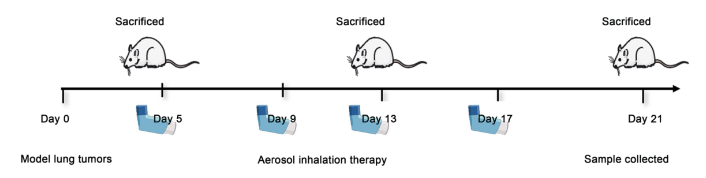
Schematic diagram of drug delivery to the lungs of mice
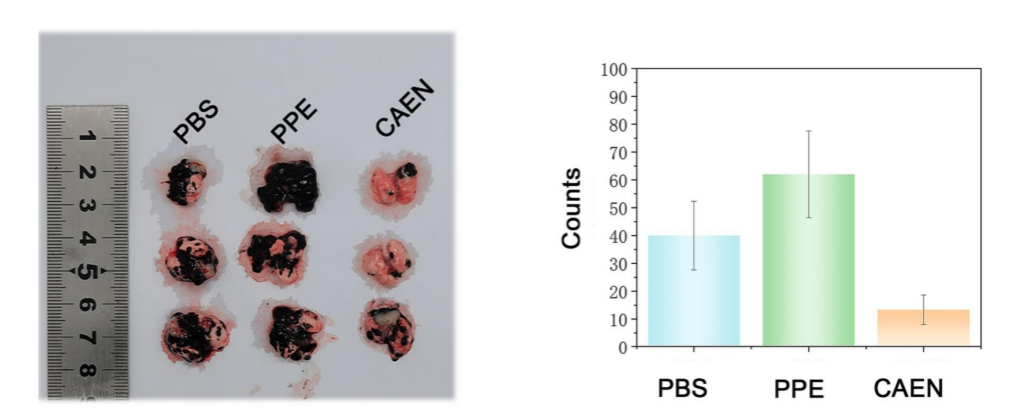
Lung tissue images and number of lung metastatic nodules in mice treated with PBS, PPE, and CAEN
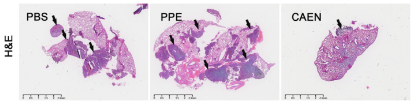
Histological examination of lung tissue metastases by H&E staining
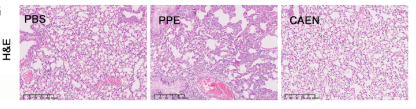
When healthy mice were treated with the same treatment, PPE-treated mice showed inflammatory damage to their lung tissue, while the CAEN- and PBS-treated groups showed no significant changes. PPE protein damage to lung tissue promotes tumor spread and metastasis, which explains why PPE-treated mice developed severe tumor lesions on day 21.
TUNEL staining confirmed that CAEN effectively induced cell apoptosis, among which the proportion of CD8+T cells in the CAEN group was the highest, suggesting that they were highly infiltrated in lung tumor tissues and were beneficial for killing tumor cells.
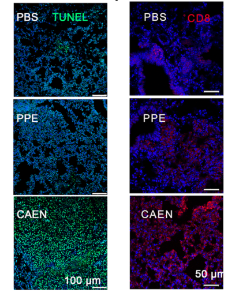
CAEN can achieve organ-specific delivery via pulmonary aerosolization, expanding the application range of PPE proteins. In animal experiments, CAEN, with the assistance of manganese ions, can significantly induce tumor cell apoptosis and activate local immune responses in tumor tissues.
in conclusion
Porcine pancreatic elastase (PPE), a novel anti-tumor protein drug, possesses a potent ability to induce tumor cell apoptosis. However, its inherent defects have limited its application in tumor therapy. In this study, the authors designed and prepared a cleavage-enhanced elastase nanocomplex (CAEN) containing Ca2+, PPE, and its cofactor (Mn2+) to specifically cleave the CD95 protein. CAEN not only effectively protects and stabilizes PPE protein activity but also exhibits potent anti-cancer activity against different cancer cell types. Using a Yuyan pulmonary aerosol drug delivery device, they achieved quantitative and precise targeted delivery of CAEN nanoparticles to the lungs of mice, achieving specific therapeutic effects in lung tissue. The release of metal ions from CAEN altered the internal environment of lung tumor cells, leading to elevated reactive oxygen species (ROS) levels and mitochondrial damage. Combined with the immune-stimulating properties of Mn2+, CAEN effectively inhibited tumor cell growth both in vitro and in vivo, demonstrating good biosafety. In summary, this study provides promising insights into the application of protein drugs in anti-tumor therapy.
Product Introduction
Yuyan Instruments' pulmonary atomization drug delivery device (Microsprayer Aerosolizer), also known as an intratracheal atomization drug delivery device, is a device specifically designed for small animals such as mice, rats, and guinea pigs, and can accurately perform intratracheal atomization drug delivery. A quantitative liquid can be atomized through an aerosol atomization micro-nozzle integrated in a stainless steel capillary cannula. The capillary cannula can penetrate deep into the animal to the bronchial bifurcation to achieve quantitative atomization into aerosol drug delivery in the trachea. Compared with traditional oral or injection administration, drugs can act directly on the lungs and are suitable for research on lung physiology, pathology, and pharmacology. According to the different states of administration, they can also be divided into liquid administration and dry powder administration.
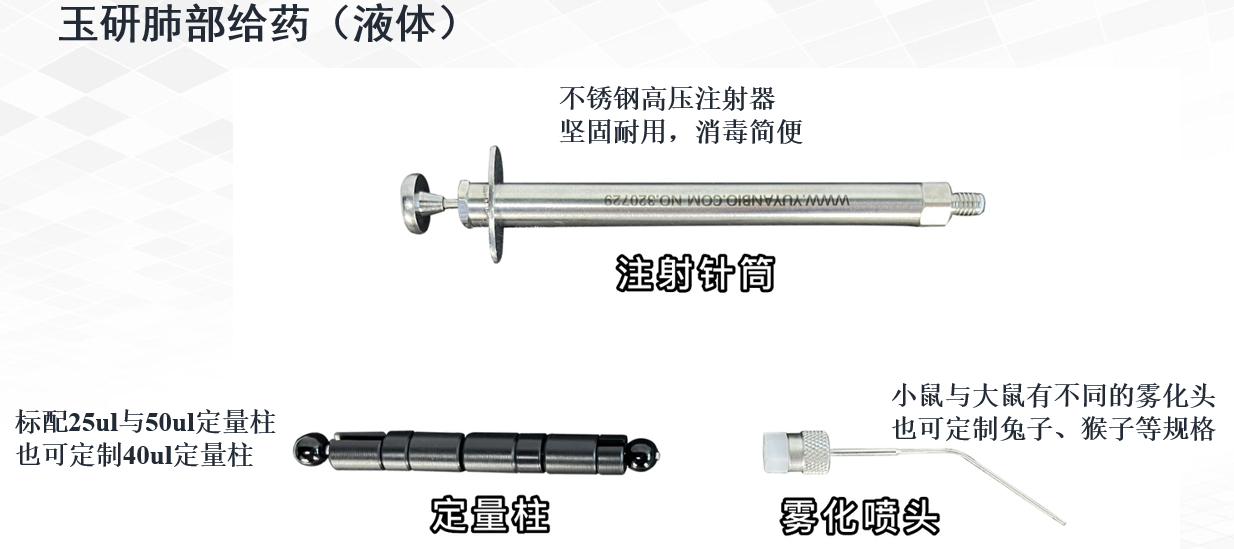
Suitable for small animals such as mice, rats, guinea pigs, rabbits, etc., and can also be made for large animals;
Direct administration into the trachea, no first-pass elimination, small systemic effect of the drug
The drug can be liquid or dry powder to meet different needs
Micro-precision drug administration, minimum drug dosage 25uL (liquid)
It can be used for the administration of solutions, small cell suspensions, homogeneous suspensions, low viscosity emulsions, dry powders, etc.
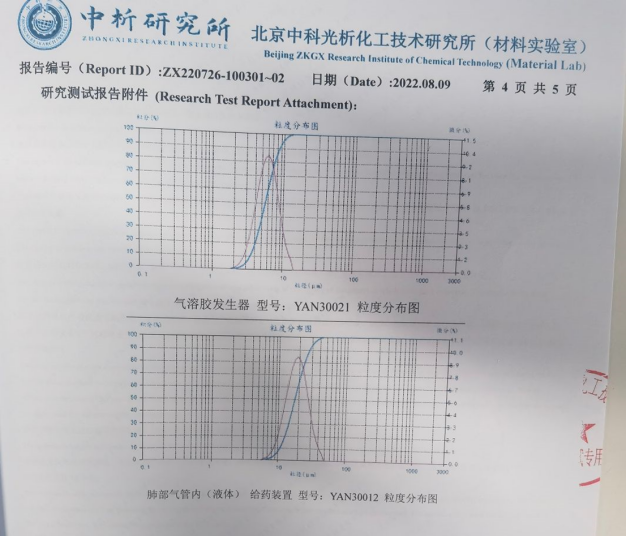
90% of the drug atomization diameter is less than 30um (liquid), which can be evenly distributed in large and small lung tissues
Easy to use, safe and stable, made of stainless steel, strong, stable and corrosion-resistant
It can be used in many fields such as inhalation toxicology, aerobiology, biohazard testing, inhalation immunity, inhalation therapy, drug research, environmental evaluation, hazard assessment and medical protection.
Yuyan Instruments' pulmonary atomization drug delivery device can provide a professional particle size distribution test report from the Chinese Institute of Chemistry. From the report, it can be seen that 90% of the drug atomization diameter is <30um (liquid).
Advantages of pulmonary aerosol drug delivery
1. Directly deliver drugs to the lungs or use the lungs as a medium to achieve the treatment of local or systemic diseases
2. Pulmonary administration can avoid the first-pass effect in the liver, reduce the dosage, and reduce adverse reactions
3. Pulmonary administration can quickly absorb drugs into the systemic circulation, maintain the biological activity of drugs, and is suitable for the administration of protein peptides.
4. Pulmonary drug delivery is a new and more effective method of drug delivery that promotes uniform distribution of drugs in the lungs. It only requires a single atomization and the dosage can be accurately controlled.
Yuyan pulmonary drug delivery device blockage removal device
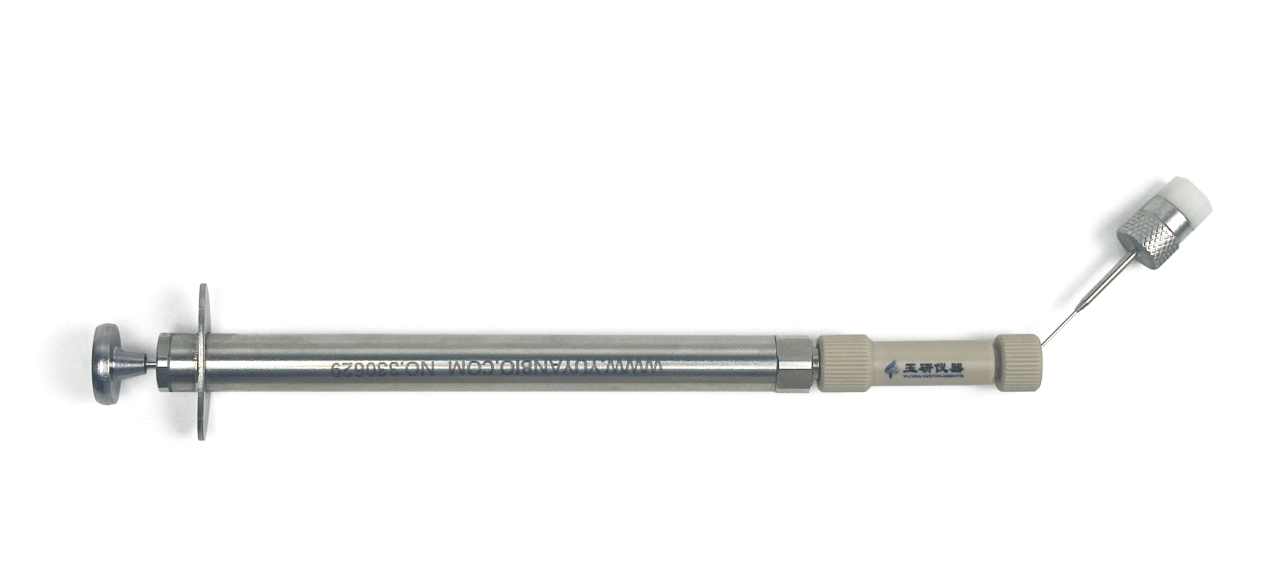
The blockage clearing device is the latest design of Yuyan Instruments. It is a tool used to clear blockages in the needle pipe of the pulmonary drug delivery device and to ensure that the pipes in the pulmonary drug delivery device are unobstructed.
Main Function: The blockage remover is designed to clear obstructions in the needle tube of a pulmonary drug delivery device, such as residual drug solution, adhered particles, or other impurities. This ensures that the drug can reach the lungs smoothly and achieve the desired therapeutic effect.
Prevent blockage: In addition to clearing existing blockages, the blockage remover can also be used for daily maintenance. Regular use can prevent the residual liquid from solidifying in the pipeline and prevent future blockage problems.
Easy to use: The blockage remover is designed as a handheld tool, which is easy to operate. Users can conveniently use it for daily equipment maintenance without complicated operations.
Easy to clean: Made of high-performance PEK (polyetherketone) material, it can be sterilized using common high-temperature and high-pressure steam or alcohol, making it easy to clean and disinfect, ensuring that no new contaminants are introduced during use.
Further Reading
Li, Cheng et al. “Broad neutralization of SARS-CoV-2 variants by an inhalable bispecific single-domain antibody.” Cell vol. 185,8 (2022): 1389-1401.e18. doi:10.1016/j.cell.2022.03.009
Peng, Boya et al. “Robust delivery of RIG-I agonists using extracellular vesicles for anti-cancer immunotherapy.” Journal of extracellular vesicles vol. 11,4 (2022): e12187. doi:10.1002/jev2.12187
Yue, Dayong et al. “Diesel exhaust PM2.5 greatly deteriorates fibrosis process in pre-existing pulmonary fibrosis via ferroptosis.” Environment international vol. 171 (2023): 107706. doi:10.1016/j.envint.2022.107706
Zhang, Mengjun et al. "Airway epithelial cell-specific delivery of lipid nanoparticles loading siRNA for asthma treatment." Journal of controlled release : official journal of the Controlled Release Society vol. 352 (2022): 422-437. doi:10.1016/j.jconrel.2022.10.020
Gu, Peiyu et al. “Protective function of interleukin-22 in pulmonary fibrosis.” Clinical and translational medicine vol. 11,8 (2021): e509. doi:10.1002/ctm2.509
Wu, Lan et al. “Poly(lactide-co-glycolide) Nanoparticles Mediate Sustained Gene Silencing and Improved Biocompatibility of siRNA Delivery Systems in Mouse Lungs after Pulmonary Administration.” ACS applied materials & interfaces vol. 13,3 (2021): 3722-3737. doi:10.1021/acsami.0c21259
Tian, Xidong et al. "Pulmonary Delivery of Reactive Oxygen Species/Glutathione-Responsive Paclitaxel Dimeric Nanoparticles Improved Therapeutic Indices against Metastatic Lung Cancer." ACS applied materials & interfaces vol. 13,48 (2021): 56858-56872. doi:10.1021/acsami.1c16351
Yang, Huilin et al. "Triptolide dose-dependently improves LPS-induced alveolar hypercoagulation and fibrinolysis inhibition through NF-κB inactivation in ARDS mice." Biomedicine & pharmacotherapy = Biomedecine & pharmacotherapie vol. 139 (2021): 111569. doi:10.1016/j.biopha.2021.111569
Su, Ruonan et al. “Venetoclax nanomedicine alleviates acute lung injury via increasing neutrophil apoptosis.” Biomaterials science vol. 9,13 (2021): 4746-4754. doi:10.1039/d1bm00481f
Xu, Yingying et al. "PEGylated pH-responsive peptide-mRNA nano self-assemblies enhance the pulmonary delivery efficiency and safety of aerosolized mRNA." Drug delivery vol. 30,1 (2023): 2219870. doi:10.1080/10717544.2023.2219870