




Cell | Small Animal Lung Aerosol Drug Delivery Shines Brightly: A Bispecific Single-Domain Antibody That Can Be Inhaled and Broadly Neutralizes SARS-CoV-2
It is well known that the effectiveness of current SARS-CoV-2 vaccines and therapeutic antibodies is limited by the emergence of viral variants and the limited spread of circulating antibodies to sites of respiratory viral infection.
On March 10, 2022, Ying Tianlei from the School of Basic Medicine of Fudan University and Shanghai Institute of Major Infectious Diseases and Biosafety, in collaboration with Sun Lei from the Institute of Biomedical Sciences of Fudan University and Wu Yanling from the School of Basic Medicine of Fudan University, published an article titled "Broad neutralization of SARS-CoV-2 variants by an inhalable bispecific single-domain antibody" in the journal Cell.
The article identified two highly conserved regions on the Omicron variant RBD that are recognized by broadly neutralizing antibodies. At the same time, the author team designed a bispecific antibody that can simultaneously and synergistically bind to these two regions on a single Omicron variant RBD. Animal experiments have shown that this bispecific antibody can be effectively delivered to the lungs by inhalation and exhibits excellent neutralization breadth and therapeutic effects in a mouse model of SARS-CoV-2 infection. Importantly, this study also deciphered a rare and highly conserved cryptic epitope within the S trimer interface, which may be instructive for the design of broadly protective SARS-CoV-2 vaccines and therapeutic drugs.
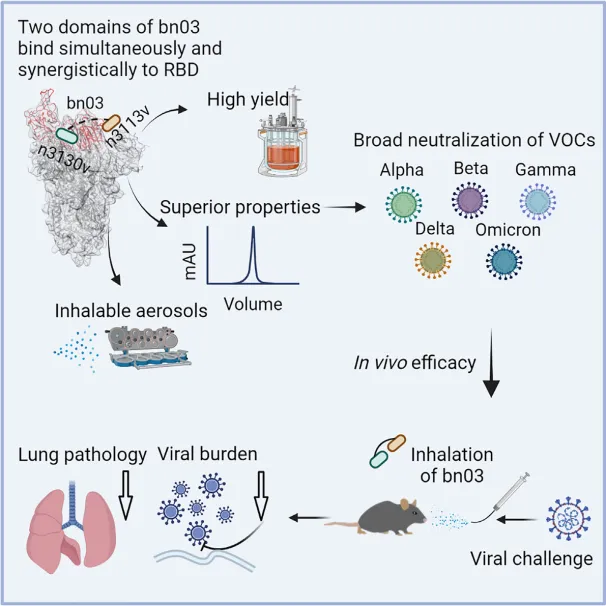
In this article, the author team designed a bispecific antibody that can be effectively delivered to the lungs by inhalation and showed excellent efficacy in a mouse model of SARS-CoV-2 infection.
The research team first discovered that the Omicron virus is most susceptible to escaping antibodies targeting its head RBM. They further discovered that despite numerous mutations in the Omicron RBD, two regions remained largely immune to immune escaping: one located in the outward-facing lateral region and the other hidden within the trimer. The team then concatenated two fully human nanobodies (n3113v and n3130v) targeting these two conserved regions through a linker of appropriate length, generating a small bispecific, fully human nanobody (bn03). This bispecific antibody potently binds to and neutralizes all prevalent mutants.
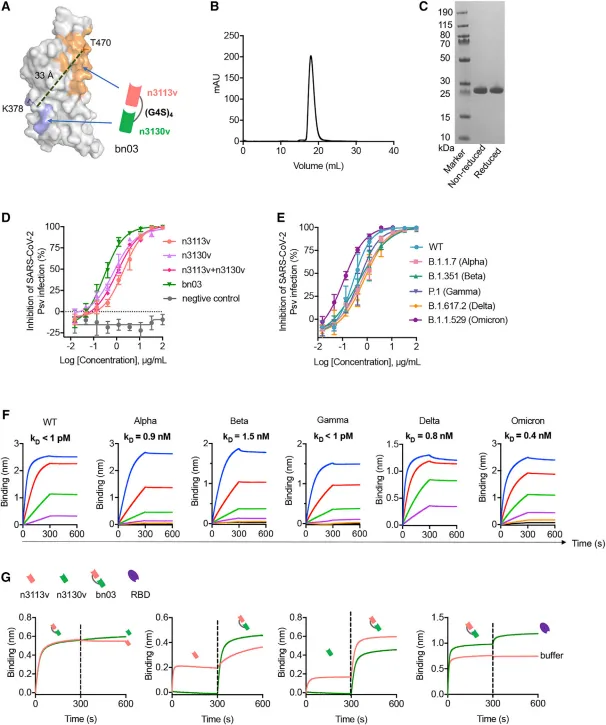
Mechanistically, researchers used cryo-electron microscopy to reveal that a single trimeric S protein can simultaneously bind to three bn03 bispecific antibodies. Furthermore, the binding of 3130v exposes more flanking epitopes, allowing n3113v to better bind to the RBD. Importantly, the n3130v epitope is hidden within the trimer, and none of its binding sites are mutated in the most frequently mutated strains of the novel coronavirus, making it the broadest-spectrum epitope discovered to date.
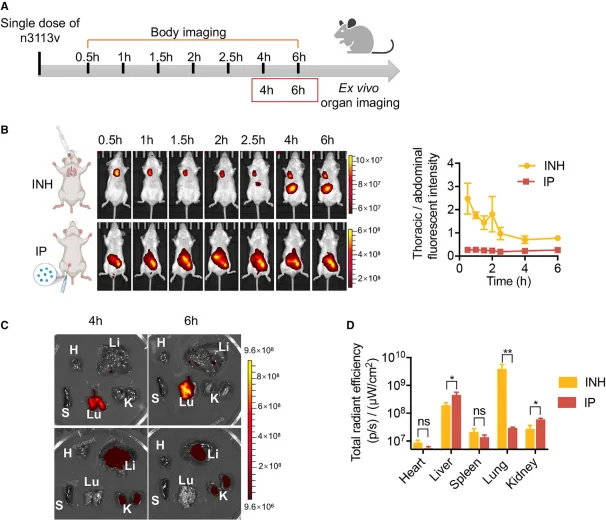
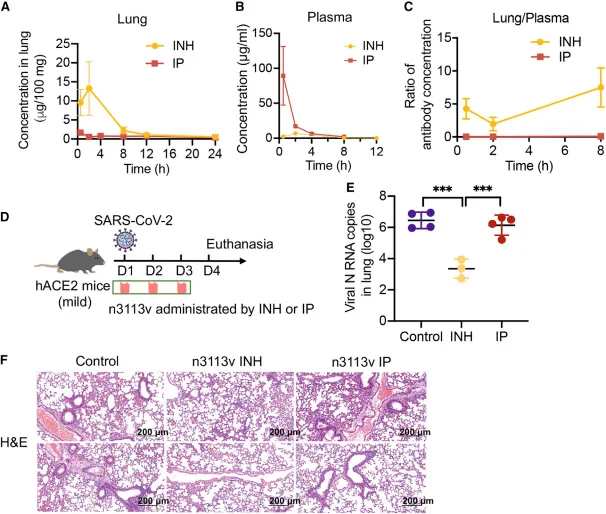
According to previous literature, nanoantibodies can be used to treat lung diseases by inhalation due to their small size and high stability. So next, the authors explored whether single-domain antibodies could be delivered by inhalation. First, for in vivo imaging, they coupled the single-domain antibody n3113v with fluorescent DyLight 800. n3113v was delivered to BALB/c mice by nebulized inhalation of INH or intraperitoneal injection of IP (Figure 5A). Nebulized inhalation used a pulmonary nebulizer drug delivery device (Yuyanbio) reported in the literature, which can quantitatively and evenly administer the reagent to the mouse lungs in the form of a fine mist spray. Bioimaging of mice at different time points showed that INH can effectively deliver single-domain antibodies to the chest cavity, while in the IP group, most of the antibodies were retained in the abdominal cavity (Figure 5B).
Finally, they found that the fully humanized nano-antibody bn03 can be effectively administered via aerosolization, without affecting the activity of the antibody and causing degradation or aggregation. In both mild and severe models of SARS-CoV-2 infection in hACE2 humanized mice, aerosolized inhalation of the antibody significantly reduced viral titers in the mice's lungs and improved lung pathology.
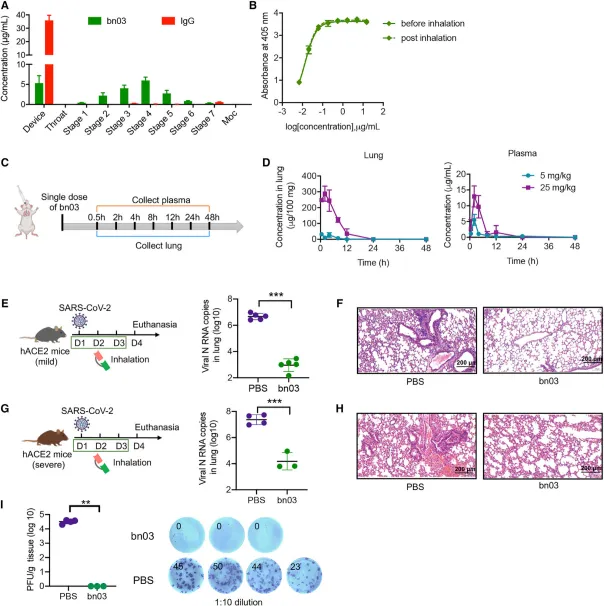
The studies presented here demonstrate that single-domain antibodies can be effectively delivered to the lungs via inhalation and effectively treat lung diseases. Single-domain antibodies derived from fully human sequences may have better safety and clinical efficacy than camel-derived nanobodies. The bispecific single-domain antibody bn03 is able to simultaneously and synergistically bind to two different epitopes on a single RBD of the SARS-CoV-2 Omicron variant. Its small molecular size (27 kDa) is not only inhalable, but also enables bn03 to penetrate deep into the trimer interface of the spike protein to target highly conserved cryptic epitopes. The findings presented here not only provide a possible treatment for COVID-19, but also provide guidance for the development of inhalable nanobodies.
The article published by the above research team mainly studied the process of effectively delivering antibodies to the lungs through aerosol inhalation, using the lung aerosol nebulization drug delivery device of Yuyan Instrument Co., Ltd.

Yuyan Instruments' microsprayer aerosolizer, also known as an intratracheal drug delivery device, is specifically designed for small animals such as mice, rats, and guinea pigs, enabling precise intratracheal drug delivery. Compared to traditional oral or injection delivery methods, it allows drugs to directly reach the lungs, making it suitable for research on pulmonary physiology, pathology, and pharmacology. Depending on the delivery method, it can be categorized as either liquid or dry powder.
Features
* Suitable for small animals such as mice, rats, guinea pigs, rabbits, etc., and can also be customized for large animals;
* Direct administration into the trachea, no first-pass elimination, small systemic effect of the drug;
*Micro-dosage, minimum drug volume 25μL (liquid);
*The drug properties are liquid aerosol or dry powder to meet different needs;
*Can be used for drug delivery of solutions, small cell suspensions (diameter less than 15μm), homogeneous suspensions, low-viscosity emulsions, dry powders, etc.
*90% of the drug atomization diameter is less than 30μm (liquid), and can be evenly distributed in the lung tissue of mice and rats;
*Easy to use, safe and stable, made of stainless steel, strong, stable and corrosion-resistant;
*Can be used in many fields such as inhalation toxicology, aerobiology, biohazard testing, inhalation immunity, inhalation therapy, drug research, environmental evaluation, hazard assessment and medical protection.
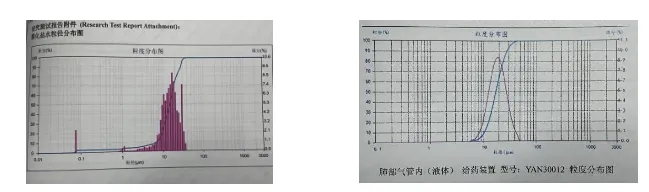
At the same time, Yuyan Instruments' pulmonary nebulizer drug delivery device can provide a professional particle size distribution test report from the Chinese Institute of Chemistry. From the report, it can be seen that the particle size distribution of Yuyan Instruments' pulmonary nebulizer drug delivery device is highly consistent with that of similar products imported from abroad (discontinued).
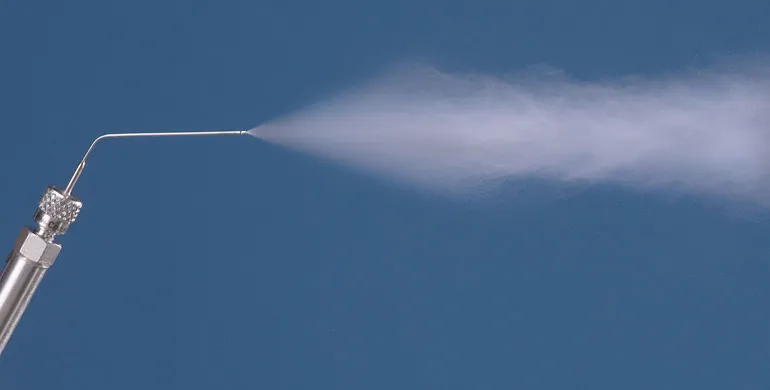
Atomization effect display
Pulmonary inhalation drug delivery offers advantages such as high local lung drug concentrations, no first-pass effect, and rapid drug absorption. Currently, pulmonary inhalation drug delivery has become an important method for treating lung diseases and promoting the absorption of large-molecule drugs. Compared with traditional medication routes such as oral administration and injection, pulmonary inhalation drugs can directly reach the affected area. Its action is relatively direct and has a rapid effect, while also reducing systemic toxicity, improving safety and effectiveness, and aligning with the principles of precision medicine.
Advantages of pulmonary inhalation drug delivery
*The drug can directly reach the lesion site in the lungs, which is targeted and effective;
* Pulmonary administration can avoid the first-pass effect of drugs in the liver and improve bioavailability;
*Good absorption effect of pulmonary drug delivery, which can reduce the dosage and related toxic side effects;
* The reactions of enzymatic and chemical degradation in the lungs are low, so the degree of drug destruction is small.
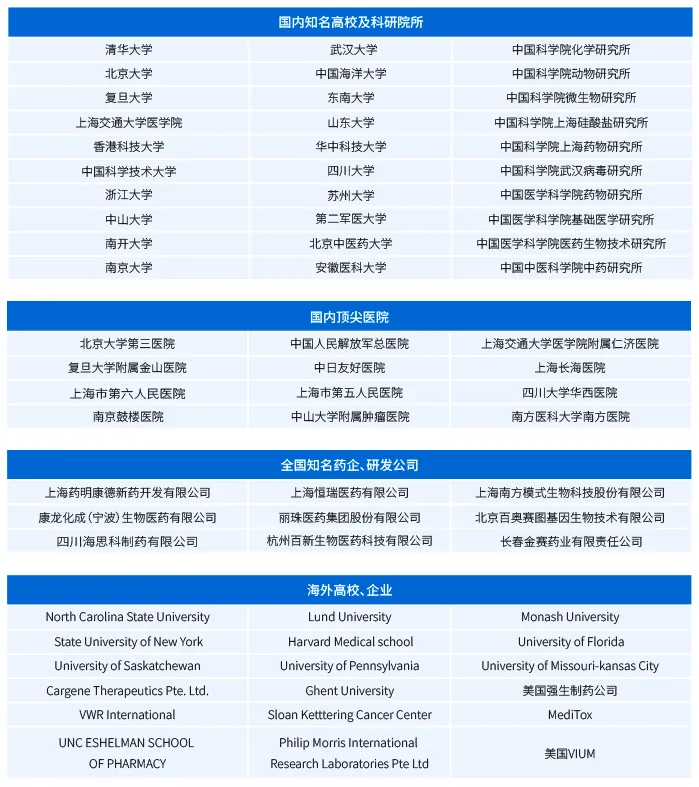
User List
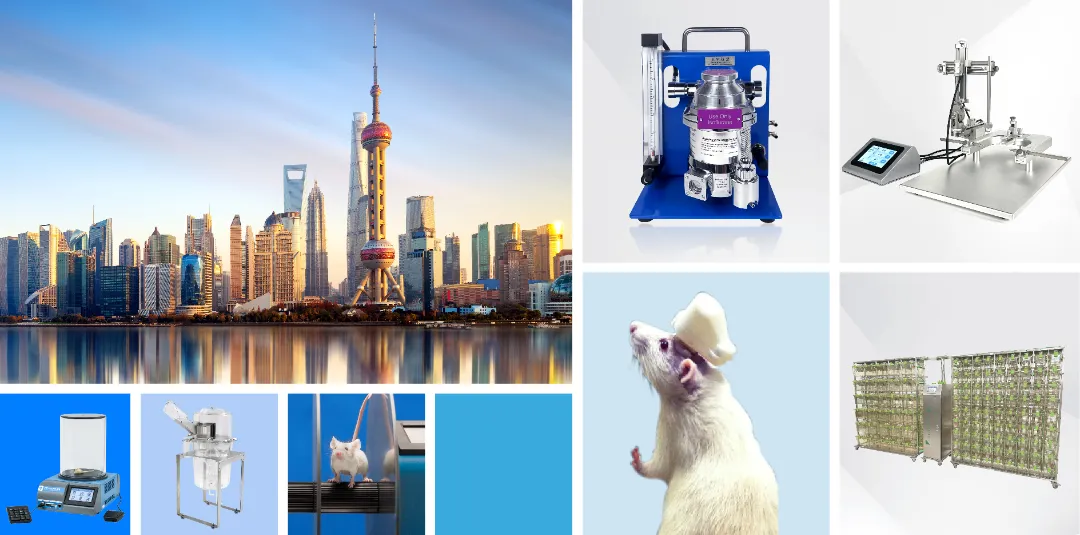
Shanghai Yuyan Scientific Instrument Co., Ltd. was established in 2010. It is a high-tech enterprise integrating R&D, production and sales. It specializes in serving the fields of basic medicine and life sciences, and provides domestic scientific researchers with advanced research equipment, technical means and professional services.
Yuyan Instruments relies on a professional service team and a prudent scientific research attitude as its standard. It works tirelessly to create a dedicated laboratory instrument supply and service system.At present, the company's products mainly focus on animal research, covering multiple fields such as physiology, pharmacology, toxicology, neuroscience, etc.For more product information, please call 021-35183767.
- Prev: Literature Express | Yuyan Pulmonary Drug Delivery Device Empowers Tetrahedral Nanomedicine for Precision Treatment of Acute Lung Injury
- Next: Literature Interpretation | Good news for myocardial infarction patients with IF=10.7!A domestic team discovered a new target for inhibiting ischemia-reperfusion injury