



Literature Interpretation | Good news for myocardial infarction patients with IF=10.7!A domestic team discovered a new target for inhibiting ischemia-reperfusion injury
Cardiovascular and cerebrovascular diseases are common diseases that pose a serious threat to human health, especially to the health of middle-aged and elderly people over 50 years old. They are characterized by high morbidity, high disability and high mortality rates. Even with the most advanced and complete treatment methods, more than 50% of cerebrovascular accident survivors are unable to take care of themselves completely. Every year, 15 million people die from cardiovascular and cerebrovascular diseases worldwide, ranking first among all causes of death.

Clinical treatment for cardiovascular disease primarily relies on surgery and medication. Surgery can rapidly restore blood supply to the ischemic myocardium. However, the sudden loss of blood supply can lead to an increase in collateral blood volume, and revascularization can trigger the activation of myocardial ischemia-reperfusion injury (MI/RI), a major cause of myocardial infarction. MI/RI is a key factor affecting the treatment efficacy of coronary artery disease, and its pathogenesis is complex. MI/RI can trigger an inflammatory response, damaging the living tissue surrounding the infarct, disrupting mitochondrial membrane potential, and leading to the formation of reactive oxygen species (ROS).
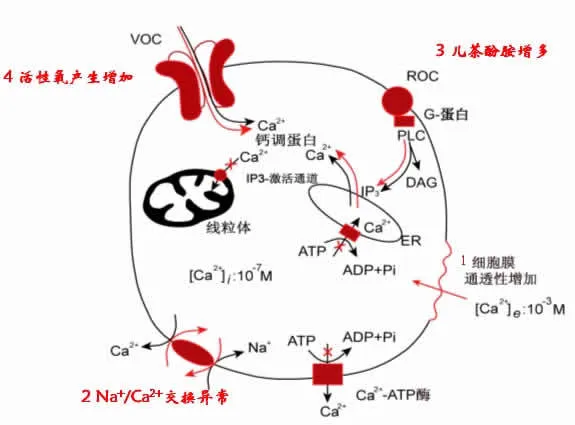
Clinically, a variety of approaches are available for the treatment of MI/RI, including anti-inflammatory, antioxidant, ischemic preconditioning, and pharmacological preconditioning. Vitamin C and E supplementation in patients after coronary artery surgery can significantly reduce MI/RI by reducing oxidative stress. However, many anti-inflammatory and antioxidant drugs are limited by factors such as pharmacokinetics. Therefore, further research is urgently needed to fully understand the molecular basis of this disease, identify drug targets for the treatment of MI/RI by regulating inflammation and oxidative stress, develop therapeutic drugs, and formulate treatment strategies.
Discovery of a new circular RNA
Exploring and discovering new circular RNAs is one approach to developing innovative drugs for the diagnosis and treatment of myocardial ischemia-reperfusion injury (MI/RI). Recently, a research paper titled "circMIRIAF aggravates myocardial ischemia-reperfusion injury via targeting the miR-544/WDR12 axis" by Yin Lianhong's team at Dalian Medical University was published in the internationally renowned journal Redox Biology. Their study, through microarray screening and analysis, identified a circular RNA associated with hypoxia-reperfusion injury (H/RI) in AC16 cells, identifying hsa_circRNA_104852 and naming it circMIRIAF.
An article published in Redox Biology by Yin Lianhong's team from Dalian Medical University
Predicting possible targets
Establishment of AC16 cell H/RI modelThe authors first validated the effectiveness of the H/RI model in AC16 cells. Cell viability, LDH release, microscopic morphology, and ROS hypoxia were measured. qPCR was also used to measure IL-1β, IL-6, TNF-α, and ICAM-1 levels, all of which showed elevated levels. Therefore, the H/RI model conditions for AC16 cells were established, with 24 hours of hypoxia and 1 hour of reoxygenation.
Expression patterns of circular RNAs in H/RIAC16 cells
After the model was established, the authors sequenced AC16 cells and identified a total of 13,406 circular RNAs. A hierarchical clustering heat map of differentially expressed RNAs (H/RI) between the control and model groups was obtained (see Figure 1).
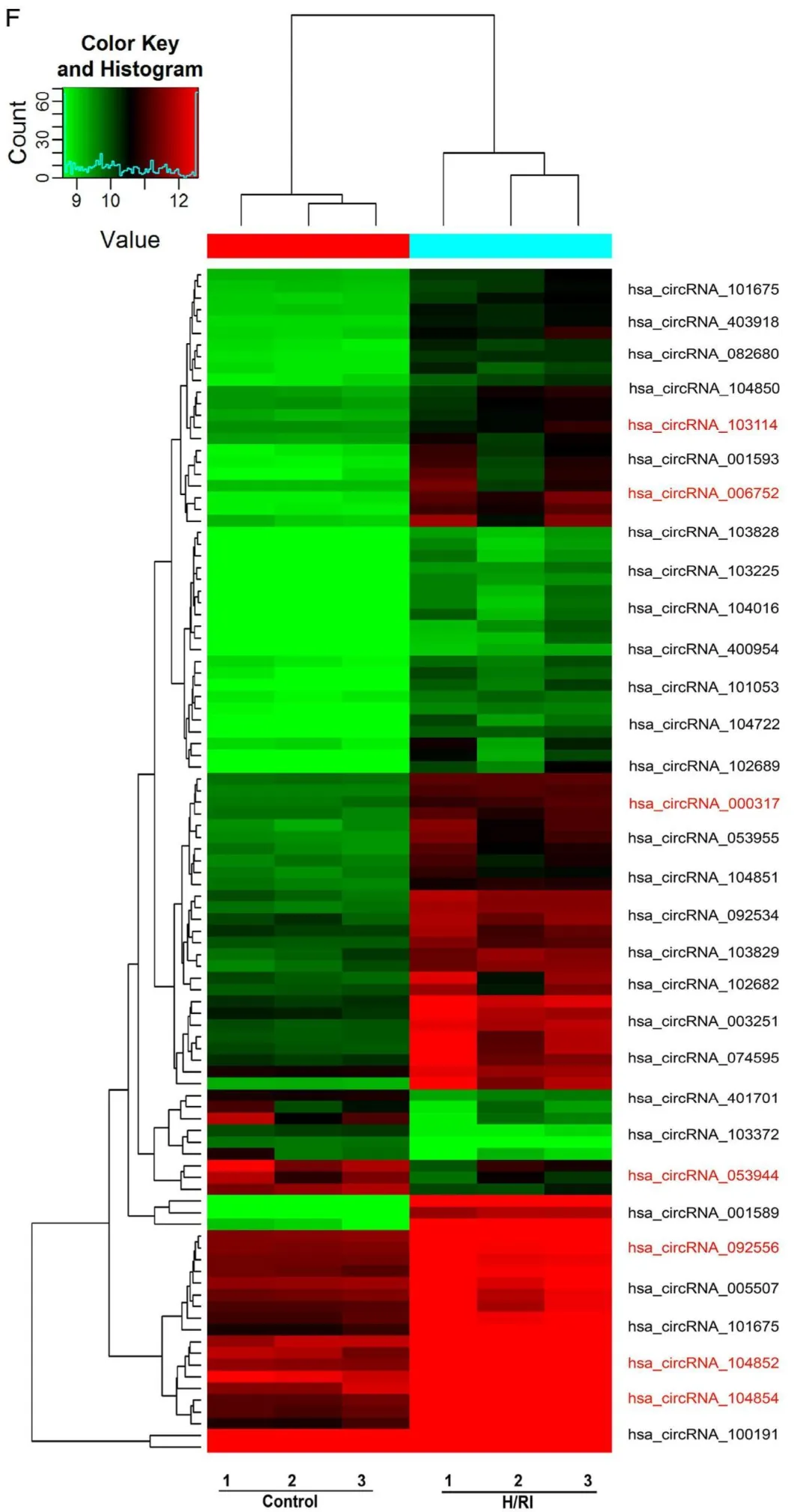
circMIRIAF is highly expressed in H/RIAC16 cells
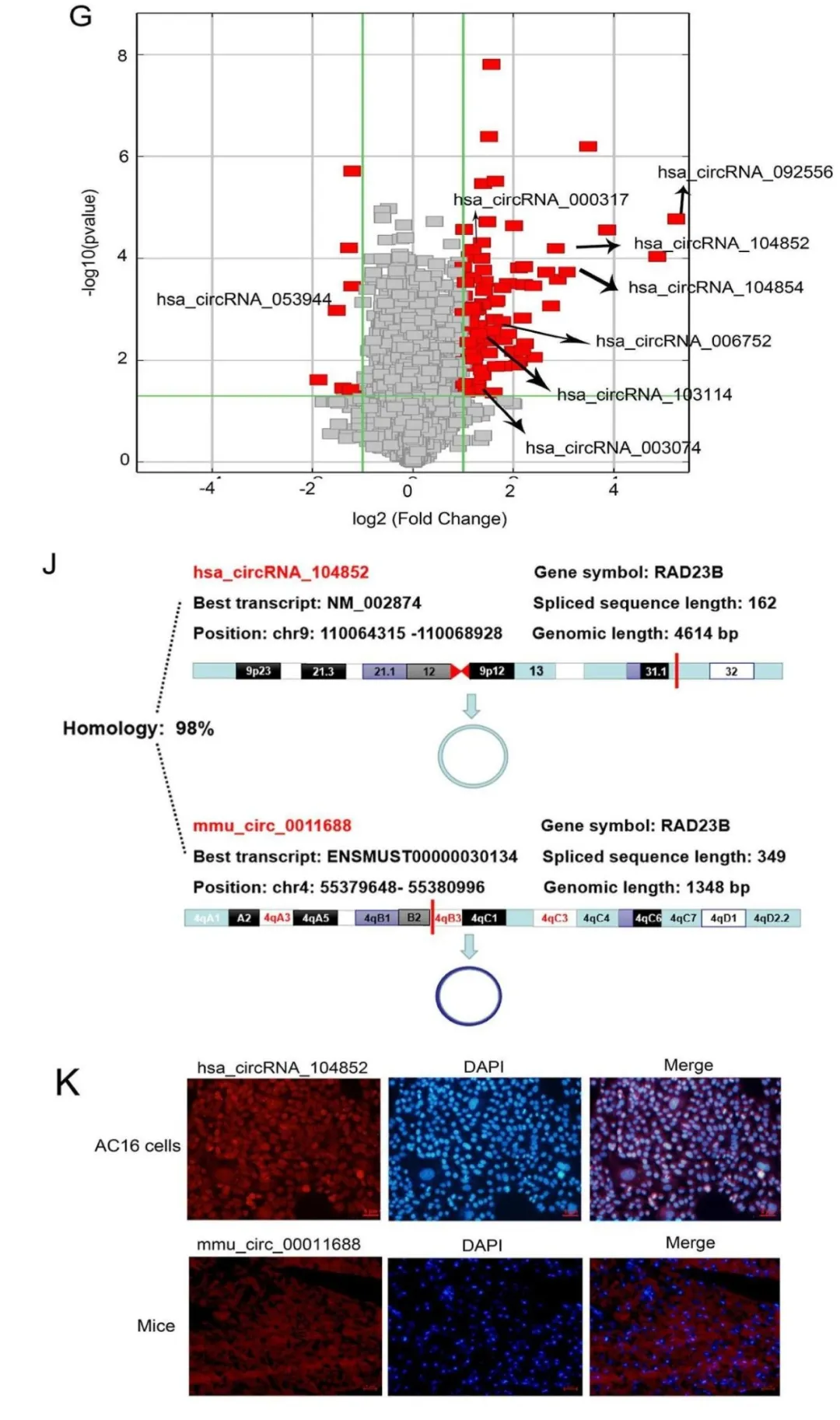
After obtaining a significant number of differentially expressed circRNAs, the authors conducted a further screening based on sequence lengths between 100 and 3000 bases. Ultimately, eight circRNAs were matched and plotted on the volcano plot (Figure 2G). Five of these eight circRNAs were significantly regulated in the H/RI group, while hsa_circRNA_104852 was transcribed by the stably expressed RAD23B in cardiomyocytes.
Comparison of hsa_circRNA_104852 and mouse mmu_circ_0011688 revealed 98% homology (Figure 2J). FISH assays revealed hsa_circRNA_104852 in AC16 cells and mmu_circ_0011688 in mouse heart tissue (Figure 2K). The authors gave these two RNAs the new name circMIRIAF (circular MI/RI-associated factor). MI/RI was detected in heart tissue and early myocytes, and circMIRIAF was found to be elevated, confirming the study's primary target.
ceRNA analysis
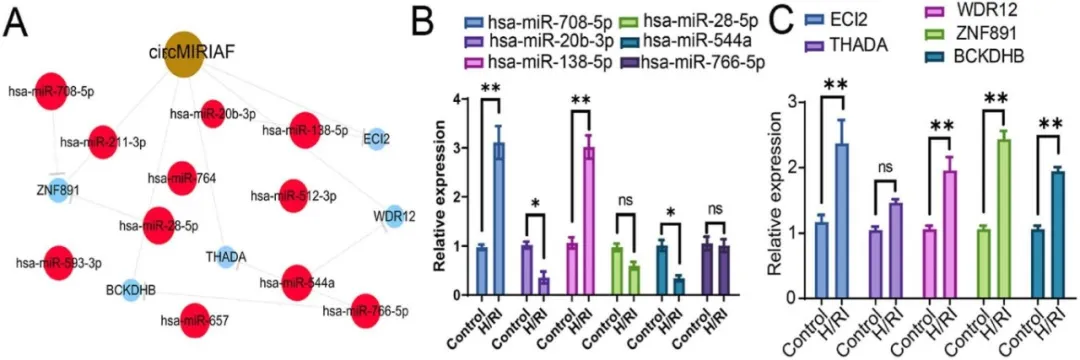
Based on the upregulated differentially expressed genes, miRNAs and mRNAs associated with circMIRIAF were predicted, forming a network (Figure 3A). Eleven miRNAs were predicted to bind to circMIRIAF, five of which were associated with upregulated differentially expressed genes, and the mRNA levels of these five miRNAs were verified (Figures 3B,C).
The authors speculated that miR-544a may be associated with damage after cerebral ischemia-reperfusion, and that high expression of WDR12 in patients with heart failure can lead to worsening cardiac function. Therefore, the circMIRIAF/miR-544/WDR12 axis is considered to have the potential to control MI/RI.
Verify the hypothesis
Validation of the circMIRIAF/miR-544/WDR12 axisNext, the authors validated this axis and confirmed the subcellular location of circMIRIAF. FISH results showed that circMIRIAF was located in the cytoplasm of AC16 cells, which, based on the results of an oxidase reporter gene assay, confirmed their previous hypothesis. Therefore, circMIRIAF competitively binds miR-544, thereby reducing miR-544's inhibition of WDR12.
WDR12/Notch1 signaling pathway is involved in the MI/RI process
The authors then verified the expression levels of WDR12 and its downstream related proteins in AC16 cells and mice. The results suggested that the circMIRIAF/miR-544/WDR12 axis regulates the oxidative stress and inflammatory response of MI/RI in vitro and in vivo through the Notch1 signaling pathway.
Inhibition of miR-544 aggravates H/RI in AC16 cells
The miR-544 antagonist was positively correlated with WDR12, while miR-544 and WDR12 were negatively correlated. Therefore, it was shown that miR-544 negatively regulates the expression of WDR12, thereby aggravating oxidative stress and inflammatory response through the Notch1 signaling pathway.Inhibition of miR-544 exacerbates MI/RI in mice
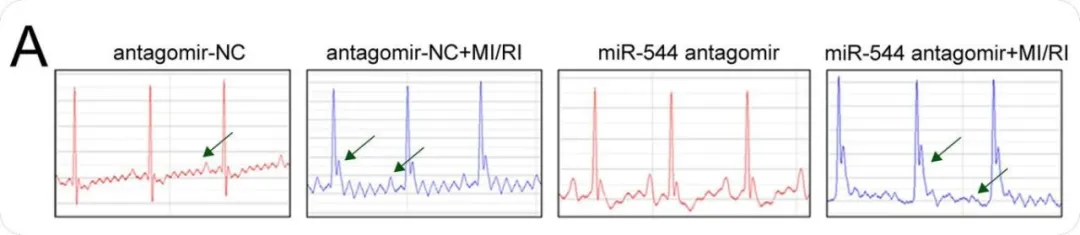
The in vivo effects of miRNAs were investigated using a miR-544 antagonist. This miR-544 antagonist reduced cardiac function in mice with MI/RI. Electrocardiograms of the mice were measured using the iWorx BIO4. These ECGs revealed elevated ST segments after MI/RI, with further elevation in mice treated with the miR-544 antagomir (Figure 4).
In addition, the deterioration of myocardial infarct size, echocardiography, myocardial fibers, inflammatory cells in myocardial tissue, and serum CK-MB and cTn-I levels also indicated that the cardiac function of mice deteriorated.
Based on the above test results, it was concluded that miR-544antagomir was positively correlated with WDR12, while miR-544 was negatively correlated with WDR12.
circMIRIAF knockout/overexpression can alleviate/aggravate H/RI in AC16 cells
Next, the authors validated the role of circRNAs in vitro. They found that reducing circMIRIAF levels significantly increased cell viability, while overexpression reduced it. They also found that circMIRIAF expression was positively correlated with inflammatory factor mRNA levels.
The experimental results also showed that in the si-circMIRIAF+H/RI group, circMIRIAF siRNA reversed the levels of these proteins, while in the over-circMIRIAF+H/RI group, the levels of these proteins further increased or decreased (Figure 5). Based on the above experimental results, it is shown that circMIRIAF regulates the WDR12/Notch1 signaling pathway by sponging miR-544 and exacerbates H/RI in AC16 cells.
Literature Summary
This study first screened the circRNA-miRNA-mRNA axis and then identified the target circMIRIAF. Finally, they confirmed that circMIRIAF acts as a sponge for miR-544, positively regulating WDR12 protein expression. Silencing miR-544 increased WDR12 expression, which aggravated H/RI in AC16 cells and MI/RI in mice by regulating oxidative stress and inflammatory responses.Overall, circMIRIAF could serve as a potential drug target for the treatment of MI/RI, potentially reducing cardiac damage caused by ischemia-reperfusion. While identifying the target is crucial, instrumentation is also crucial for detecting pathological changes.
In order to obtain the electrocardiogram of mice for ST segment analysis to evaluate cardiac function, the article used IX-BIO4 produced by the American company iworx to collect ECG signals, providing accurate physiological indicators for reference in this experiment.
User Cases