




Ugo Basile | Mechanical Pain Testing Experiment – e-VF Electronic Pain Meter Experimental Procedure
Background and Purpose
In 1898, physiologist Maximilian Von Frey (1852-1932) developed a test to assess sensitivity to tenderness. One side of a human or animal hair was glued to a handheld rod, with the other side in contact with the skin. By applying pressure to the hair, the hair was bent, thereby measuring the pressure sensitivity of nerve fibers in the skin. This test tool, known as the Von Frey test filament, was used.
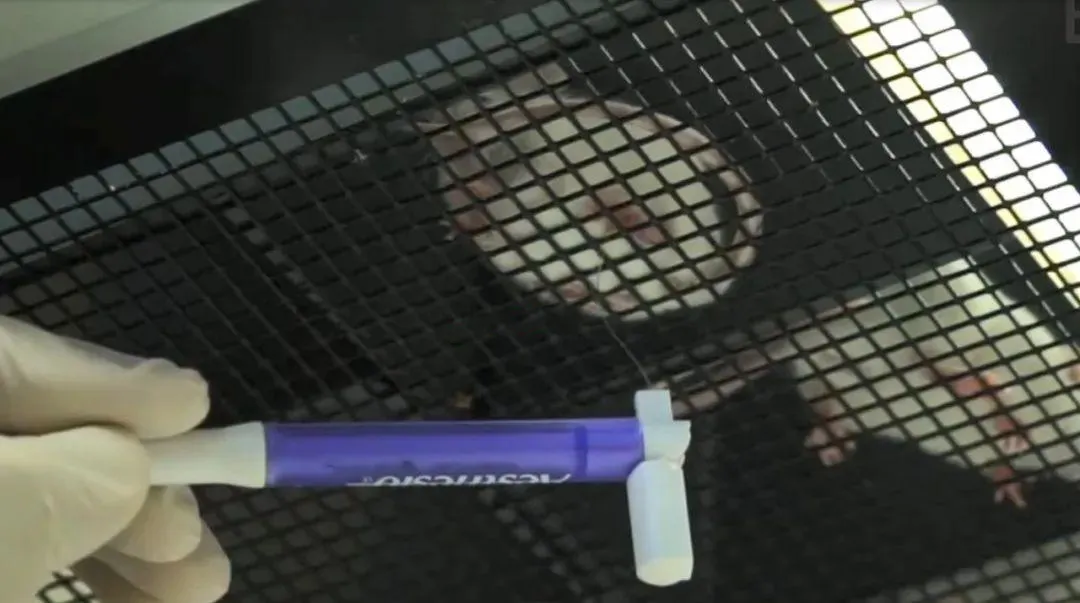
The inconveniences of using and calculating Von Frey fibers spurred the development of new technologies. At the end of the 20th century, the first e-VF was developed as an improved solution for Von Frey fiber testing.
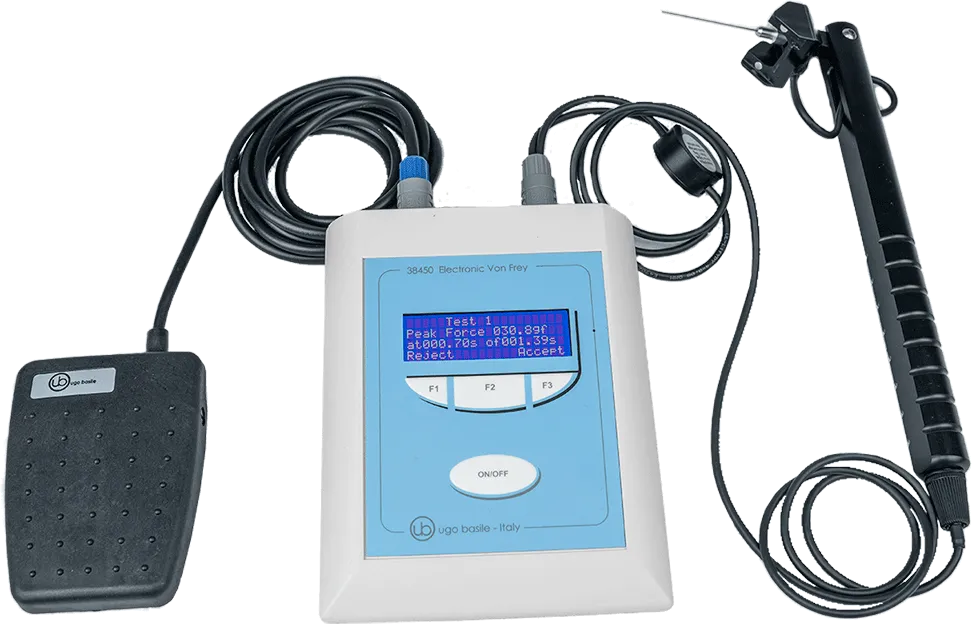
The Ugo Basile electronic analgesia is primarily used to assess pain thresholds in mice and rats. Its operating principle is similar to that of manual Von Frey filaments, but differs in that each Von Frey filament applies a fixed force, determining the paw withdrawal response after a few seconds of pain. The e-VF, on the other hand, applies a continuous force scale, providing a continuous measurement of paw withdrawal thresholds (100% threshold method). Numerous scientific studies have validated the Ugo Basile electronic analgesia's superior performance in measuring pain thresholds in rodents, with high consistency between results obtained with Von Frey filaments.
Application Areas
Used in animal neuropathic pain testing, such as sciatic nerve ligation (PNL), chronic constriction injury (CCI), and spinal nerve ligation (SNL), it can assist in pain mechanism research and drug screening for allodynia and hyperalgesia. It can also be applied to scientific research on human diseases.Experimental Preparation
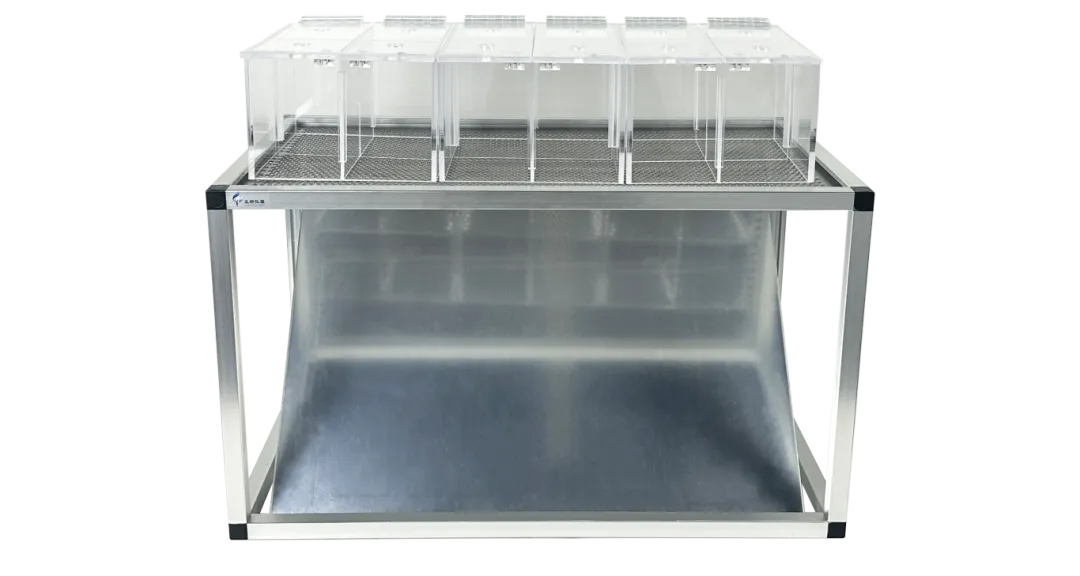
Equipment preparation:Prepare a plantar testing platform, corresponding animal compartment, and electronic analgesia; ensure the electronic analgesia is working properly, including components such as the electronic controller, pressure sensor, and foot switch;
Animal preparation:
To ensure experimental consistency, rats or mice of similar weight were selected;
Early adaptation:
Three days in advance, the animals were placed in the acrylic partition of the testing platform to acclimate for 1 hour each day;
Instrument disinfection:
Use ethanol solution to disinfect the plantar testing platform and the electronic pain meter probe;
Environmental adaptation:
Before each experiment begins, animals should be allowed to adapt to the experimental environment for 20 minutes to reduce stress response and improve experimental accuracy.
Experimental procedures
(The following pictures and interfaces use the Ugo Basile electronic pain meter as an example)Device Setup
(1) Use an electronic pain meter and select the appropriate range according to experimental requirements;
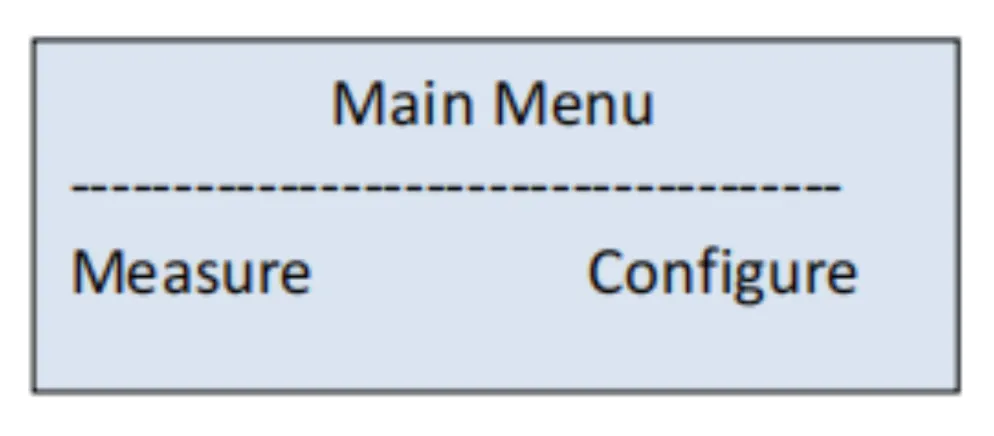
(2) Enter the measurement mode and start preparing to stimulate the animal's foot.
Animal placement
Place the animals on the plantar testing platform, ensuring they can move freely within a certain space without being restrained.
Stimulating animals
Using a prism, locate the stimulation site on the animal and gradually increase pressure until the animal withdraws, licks, or jumps. The instrument automatically records the peak pressure and the time of peak occurrence. Perform five tests on the same paw, with at least two minutes between each test. Then, test the other hind paw using the same method.
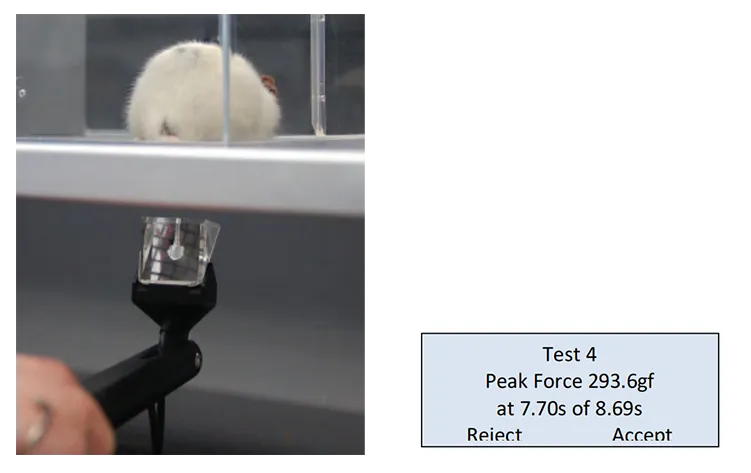
If you use the Ugo Basile electronic analgesic, you can connect it to a computer and use the Ugo Basile DCA application to observe the force slope. Applying a continuous force from small to large along the set slope can improve the continuity of the experimental data.
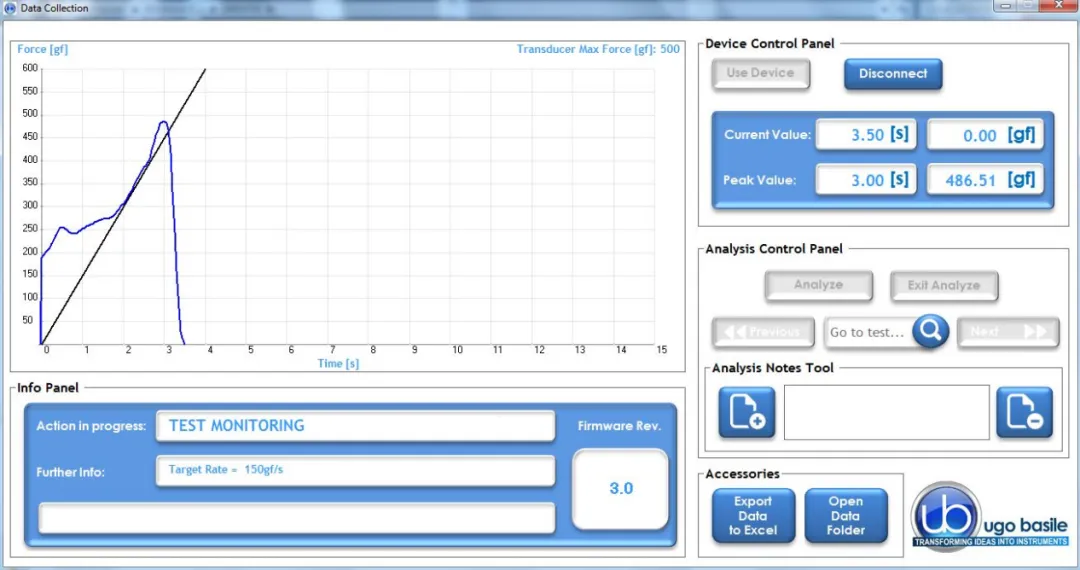
Data collection and analysis
The paw withdrawal reaction time data of all animals were collected and statistically analyzed to derive the animal pain threshold, thereby evaluating the differences in animal pain perception and response.
End of experiment
After the experiment is completed, clean and maintain the plantar testing platform and test probe to ensure that the equipment is in good condition and ready for the next use.
Experimental Notes
Animal selection and acclimation:Select healthy mice or rats and ensure they are acclimatized to the experimental environment before the experiment to reduce the impact of environmental factors on the experimental results;
Equipment inspection:
Ensure that the electronic analgesic meter is working properly and set to the appropriate range;
Velocity Control:
During the experiment, the environment should be kept quiet and stable to avoid external factors interfering with the animal's response, and the force should be applied as quickly as possible;
Observe and record:
After the animals are placed on the hot and cold plates, their reaction time to temperature stimulation, such as jumping, licking feet, etc., is recorded. Be careful to remove the animals immediately after they show pain behavior to avoid tissue damage;
Experimental reproducibility:
Each animal can undergo multiple experiments, but a certain interval (at least two minutes) is required to avoid the cumulative effect of pain sensitivity, and a control group should be set up to exclude the influence of other factors on the experimental results;
Data processing:
The reaction times of each group of animals were averaged, and appropriate statistical methods were used to compare differences in pain thresholds between groups;
Cleaning and disinfection:
After the experiment, the instrument should be cleaned and disinfected to avoid contamination and to remove any dirt or debris that may remain on the platform.
Literature Case
To determine the role of TNF in spinal cord microglia and astrocyte function, researchers tested burn-injured mice for mechanical allodynia using an Ugo Basile electronic analgesia instrument. Paw withdrawal thresholds (PWTs) were determined as the maximum force required to evoke paw withdrawal. Three measurements were performed at each time point, and the mean of each test was calculated. Thalidomide, a TNF synthesis inhibitor, was used as a pharmacological tool in the study.This demonstrates that microglia-derived TNF can act as an activator of spinal cord astrocytes in the BIP model.
Each mouse was placed on a hot plate maintained at a constant temperature (50°C or 55°C);
The time it took for each mouse to produce a nociceptive response (hind paw withdrawal or licking) was recorded, and the average value was used for comparison;
Combined with other behavioral experiments, it was confirmed that the loss of NCX3 is associated with normal acute pain-related behaviors.
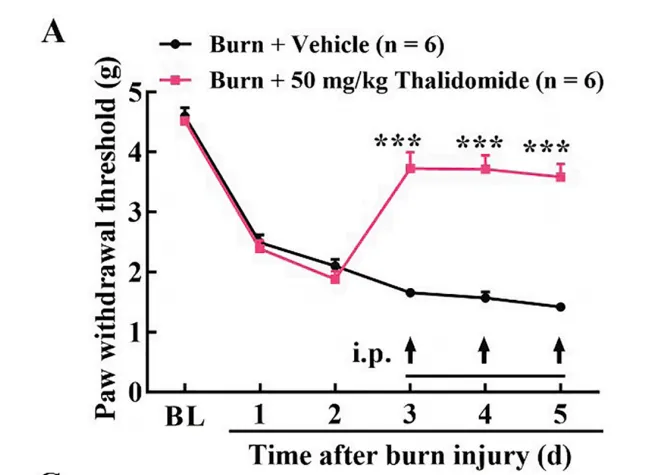
Figure: Thalidomide treatment effectively reduced mechanical allodynia 3 to 5 days after burn injury compared with the Vehicle group (p < 0.001).
Literature source: Zhang, Run, et al. "Spinal microglia-derived TNF promotes the astrocytic JNK/CXCL1 pathway activation in a mouse model of burn pain." Brain, Behavior, and Immunity 102 (2022): 23-39. doi: 10.1016/j.bbi.2022.02.006
Equipment Introduction
The Ugo Basile electronic analgesia (100% pain threshold assessment method) is an advanced method for assessing mechanical pain thresholds in mice and rats, specifically pinprick pain sensation. Compared to Von Frey filaments, which apply a fixed force per filament, the electronic analgesia can apply a continuous range of forces, providing accurate measurement of the paw withdrawal pain threshold across a continuous scale. The device utilizes a handheld force sensor and a fixed rigid test head. Combined with a software-defined force curve, this method produces stable test results, effectively reducing testing workload and experimenter bias.
Features
Can accurately locate the stinging site:Another feature of the Ugo Basile electronic pain meter is that it has a prism that can quickly locate the position of the metal needle tip through optical refraction, which is very important for accurately locating the test site;
Automatic calibration and recording:
The Ugo Basile electronic analgesia meter is easy to use, not only because it simplifies the pain threshold test protocol, but also because it automatically records the time and magnitude of the peak pressure when the pain threshold is reached. It also has an automatic calibration function, which maintains data accuracy even during long-term use, eliminating the need for calibration issues.
3 measuring ranges available, large storage capacity:
To ensure its accuracy, 0-50g, 0-200g, and 0-1500g force can be selected according to the specific pain model;
The force slope can be set, and the force curve can be compared intuitively:
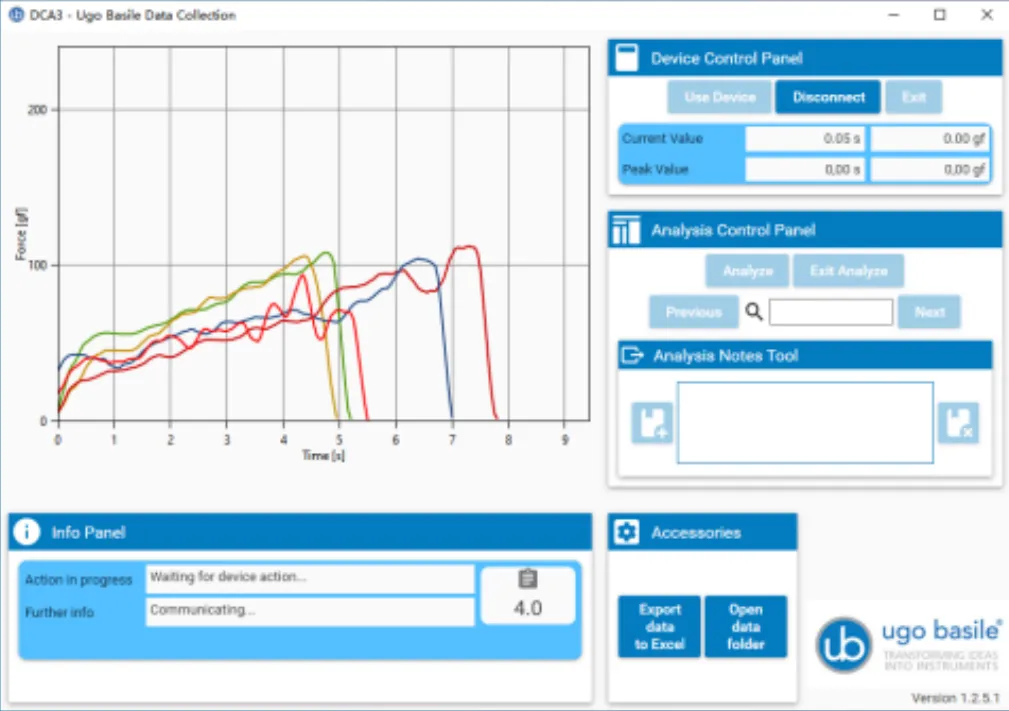
The Ugo Basile electronic analgesic device features a customizable linear force amplification range. This allows you to set a specific force slope for each model, maximizing the stability of the linear force amplification. As shown in the figure below, by using a constant slope (black line) as a reference, the experimenter can try to match the set linear force amplification line when applying force, improving the accuracy and consistency of experimental results. After multiple tests, the software generates multiple force-over-time graphs.
Partial user list