




Experimental Tips | A Powerful Tool for Neuroscience Research: Open Field Experiment Operation Guide and Data Interpretation
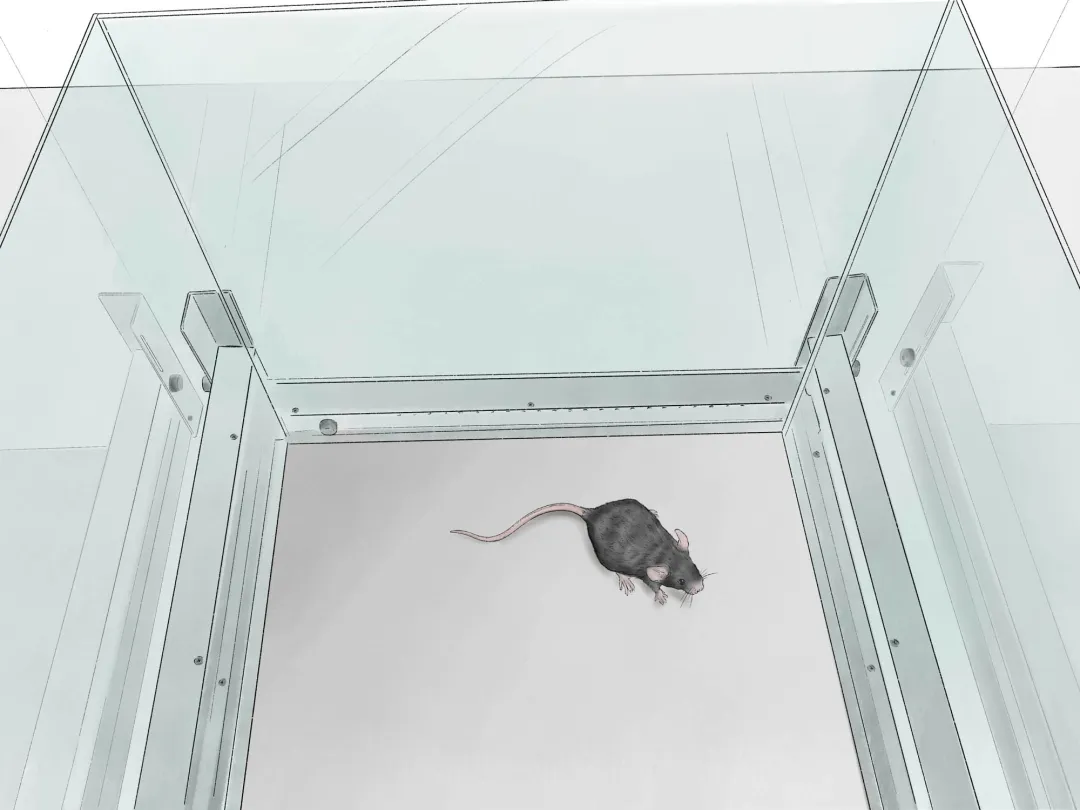
Experimental principle: behavioral insights driven by nature
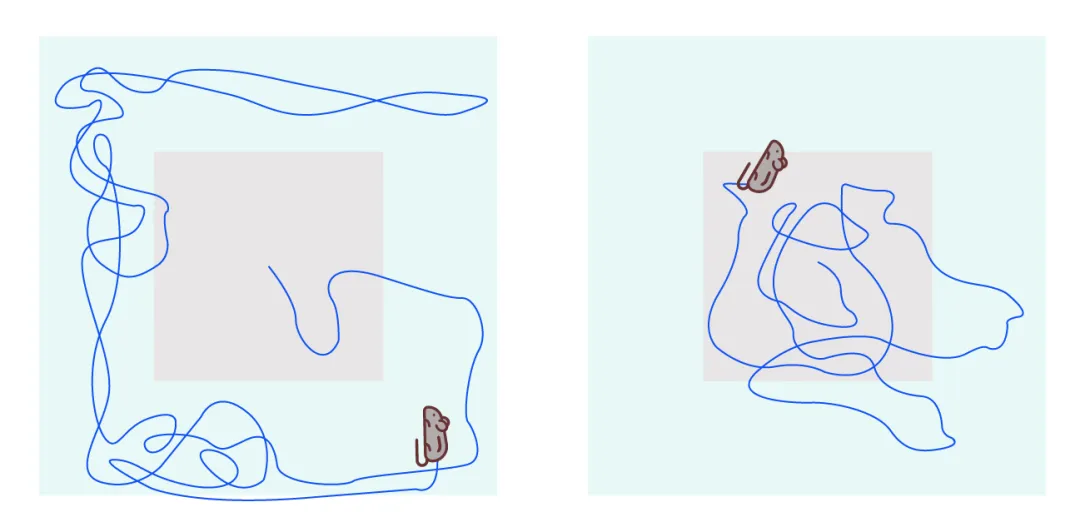
The core logic of open-field experiments lies in rodents' natural aversion to bright areas and their instinct to explore for threats. By dividing the area into "central" and "peripheral" zones, the experiment quantifies the animals' spatial preferences in novel environments: animals with higher anxiety levels tend to move in the peripheral zones, while those with more exploratory behaviors frequently enter the central zone. The system automatically collects data such as movement trajectory and dwell time, providing quantitative indicators for assessing neuropsychological status.Experimental process: standardized operation ensures data reliability
01Adaptation stage - reducing environmental stress
1. Environmental requirements: Quiet, no noise interference, and appropriate light intensity;
2. Acclimation Period: All mice were acclimated in the housing for one week. During this period, the animals were handled for approximately 5 minutes daily to acclimate them to the experimenter's handling. Animals within the same group were kept uniform in gender and age, and treatments were randomized to minimize variable confounding.
02 Experimental stage - capturing animal behavioral characteristics
1. Environmental requirements: quiet, no noise interference, and appropriate light intensity;
3. Environmental acclimatization: To ensure that mice are fully adapted to the test environment, they must be placed in the test room at least 30 minutes before the experiment. If the environment changes drastically or other stressors are introduced, it is recommended to extend the acclimatization period.
4. Starting position: The starting position of the experimental animals can be selected in the center or peripheral area of the open field. The center is the conventional method. Starting from the periphery (such as near the wall) can reduce the risk of the animals initially entering the central high-stress area. It is especially suitable for large open fields to simplify the operation.
5. Data Collection: Record spontaneous activity for 1 hour, with the first 10-20 minutes focused on exploratory behavior and the last 30-40 minutes reflecting stable activity. The software can be divided into 3×3, 4×4, or 5×5 grid areas to quantify the time spent in the center and edge areas.
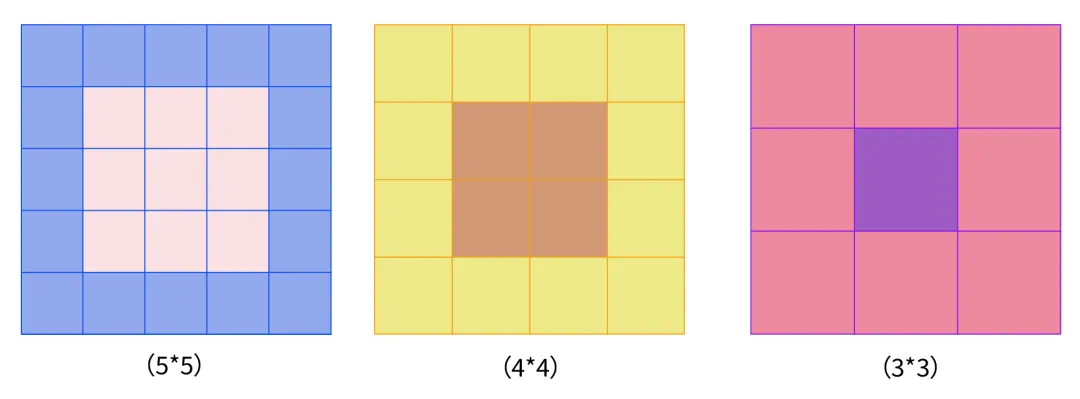
6. Key details: The experimenter should leave the room, or stay away from the open field and the animals' sight as much as possible, and remain still and quiet. After the experiment, the feces can be counted. The amount of feces is related to the animal's mood or anxiety state. Finally, clean the open field with disinfectant.
03Data Analysis - Interpreting Animal Behavior
1. The anxiety level of experimental animals can be assessed by the amount of feces excreted within a short period of time (e.g., 10 minutes). The more feces excreted, the more significant the anxiety.
2. In the open field and elevated plus maze tests, increased hind paw rearing (e.g., rearing, climbing, etc.) is generally associated with higher anxiety levels and can be used as a measure of exploratory behavior and anxiety state;
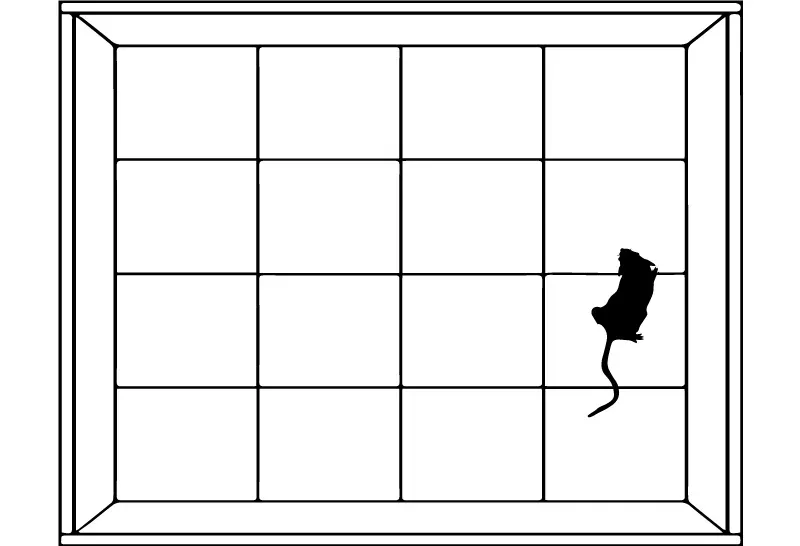
3. The autonomous movement ability of experimental animals can be preliminarily assessed by their movement distance and duration. If the total movement distance is shortened, the activity time is reduced, and the static time is increased, it indicates that the animal's autonomous movement function may be reduced;
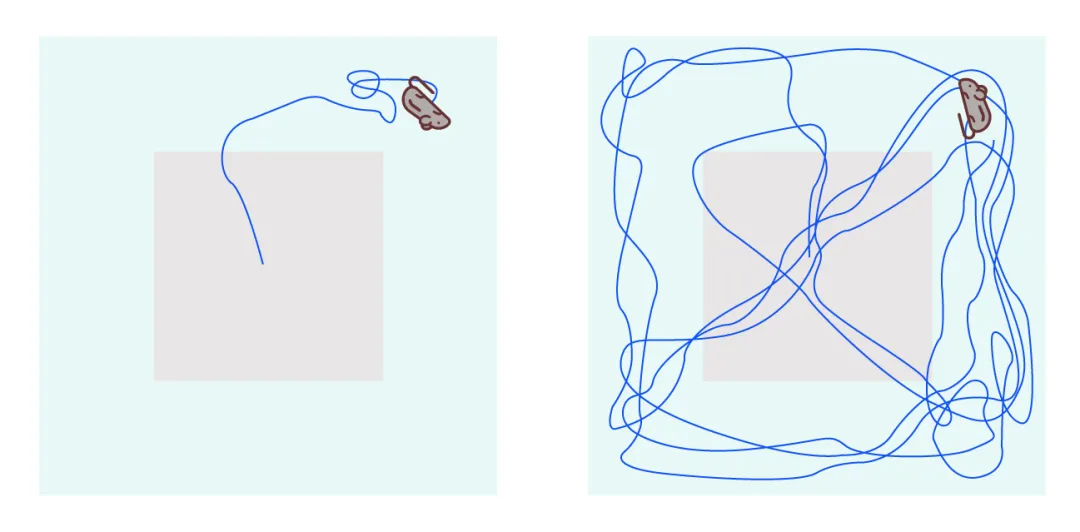
4. When the total movement distance of experimental animals is consistent, if they show obvious anxiety-like behavior, they will usually tend to stay longer in edge areas (such as near walls or corners). This spatial distribution preference can be used as one of the indicators to assess their anxiety level.
Precautions
1. Animal adaptation: One week before the experiment, the experimental animals need to be petted for about 5 minutes every day;2. Environmental control: Keep the environment quiet and use low light to avoid additional interference;
3. Animal screening: Experimental animals need to be screened;
4. Variable control: To ensure the reliability of experimental results, try to keep the gender and age of experimental animals consistent;
5. Time management: Pay attention to the circadian rhythm of experimental animals and try to conduct experiments in the same time period.
Literature Case
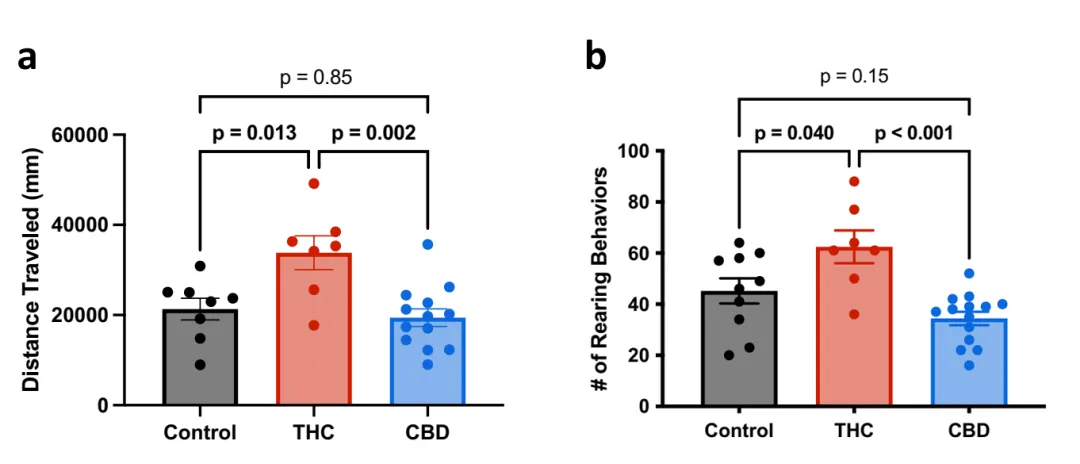
In a study published in eBioMedicine in 2025, Tyrah M. Ritchie et al. found through open field experiments that the offspring of mice that took CBD (cannabidiol) or THC (tetrahydrocannabinol) orally during pregnancy showed behavioral abnormalities.The study used a mouse model to directly compare the effects of oral administration of CBD and THC oil (20 mg/kg body weight) from early to mid-pregnancy on implantation site remodeling and fetal growth. The open field test was used to observe the behavior of the offspring.
In an open field test, male mice in the control, CBD, and THC groups were placed in a square arena (50×50 cm) for 10 minutes and recorded from above with a video camera. Male mice exposed to THC traveled significantly more distance and reared more frequently, suggesting slower adaptation to the novel environment. This finding provides key evidence for evaluating the effects of drugs on fetal development.
Experimental Pain Points and Solutions: Upgrading from Single Point to System
01 Limitations of Traditional Open Field Experiments
1. Subjectivity of data collection: Manual recording is susceptible to human error;
3. Single behavioral dimension: only focusing on movement trajectory, ignoring other detailed behaviors such as standing.
02Yuyan Instruments: One-stop open field experiment solution
Yuyan Instruments provides one-stop solutions for open field tests and other behavioral experiments. Whether you are studying the effects of drugs on anxiety behavior or exploring cognitive deficits in neurodegenerative diseases, we can provide customized solutions.
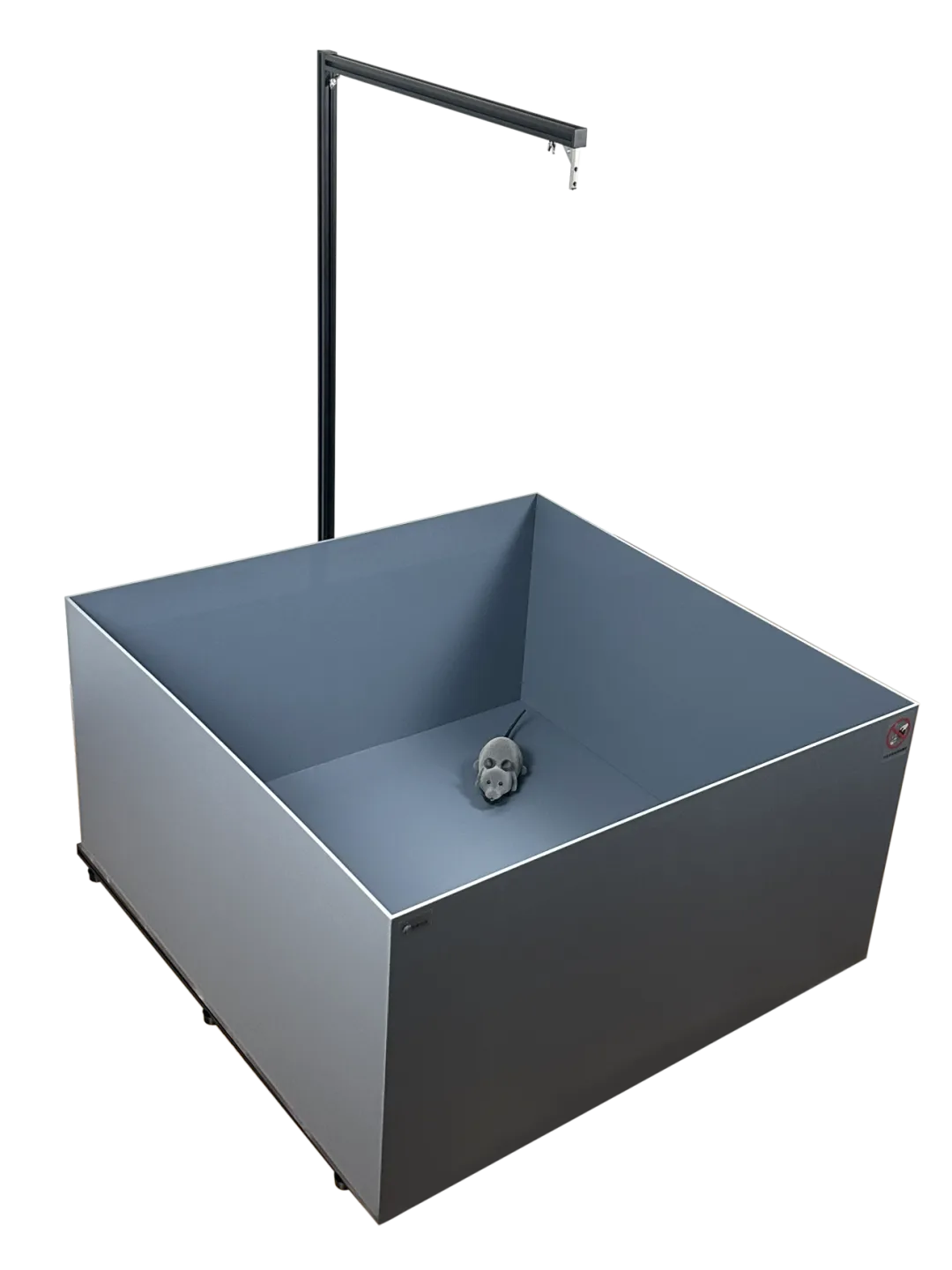
1. Hardware configuration: full model coverage, precise adaptation to needs
a. Model selection: We offer mouse, rat, and rat-universal open field modules, supporting multi-channel systems (such as 4-channel simultaneous acquisition) to meet the needs of high-throughput experiments.
b. High-definition tracking: equipped with high-definition cameras to accurately record movement trajectory, dwell time, regional distribution, and behavioral characteristics such as standing and grooming.
a. Multi-behavioral monitoring: Simultaneously monitor multiple behavioral states of mice and rats, such as standing, to comprehensively assess the animals' emotions, activity, and exploratory behavior;
b. Intelligent reporting: The system automatically analyzes and generates behavioral data reports, reducing human errors and improving experimental efficiency;
c. Convenient Operation: Easy to operate, suitable for researchers of all experience levels. Automated data collection and analysis, rapid generation of experimental reports, facilitate subsequent data interpretation and research.
Self-developed core creates extraordinary strength
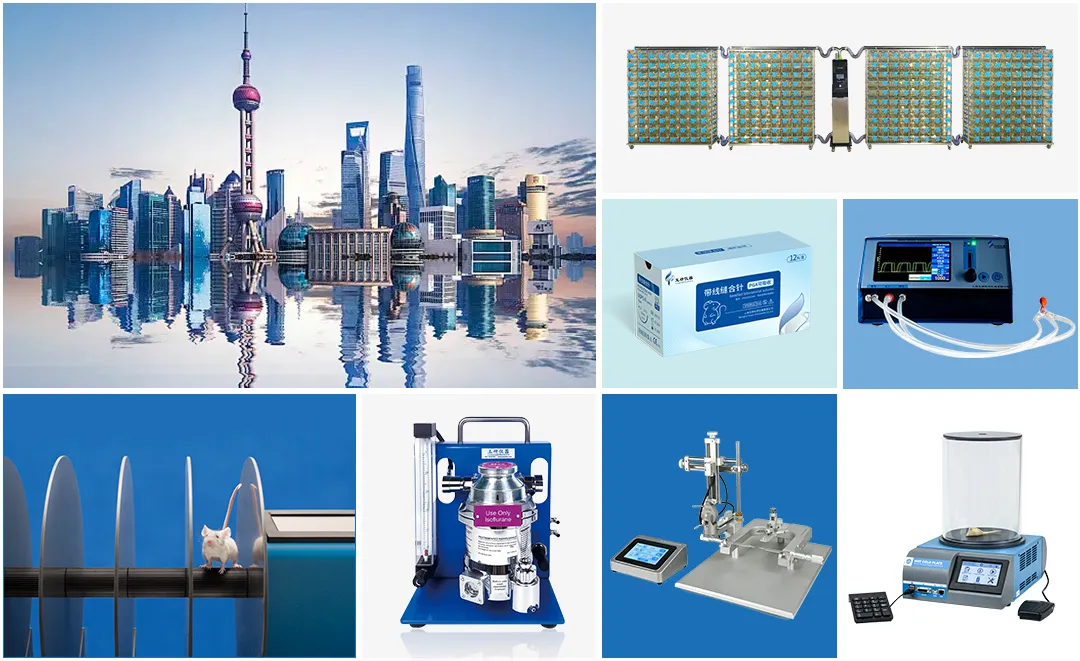
Shanghai Yuyan Scientific Instrument Co., Ltd., as a leading manufacturer of scientific research equipment in the industry, has been adhering to the core concept of "innovation drives development, and self-research creates quality" for 14 years since its establishment in 2010. It is committed to the independent research and development and production of scientific instruments. Its current product line covers multiple scientific research and application fields such as experimental animal husbandry, physiological signal acquisition, and neuroscience research. Not only does it continuously optimize and upgrade conventional instruments, but it also dares to explore cutting-edge technologies and has launched a series of high-end scientific instruments with independent intellectual property rights.
The company's R&D personnel account for 40%, and it has a team of scientists in sensors, chip design, core algorithms, etc., and has professional teams to provide support in product implementation and operation, market and academic promotion, comprehensive product solution design and application. The company has service points covering the whole country and strong technical service capabilities. Its customers include Tsinghua University, Peking University, Zhejiang University, Shanghai Jiaotong University, University of Chinese Academy of Sciences, West China Hospital of Sichuan University, Northern Theater Command General Hospital and other first-class research institutions and hospitals at home and abroad.