




Ugo Basile Climbing Tester | A New Vertical Motor Function Test: An Emerging Perspective on Pain Assessment in Rodents!
1. Scientific Frontiers of Pain Research
Pain is undoubtedly a significant global health issue. Data show that over 300 million people in my country suffer from chronic pain, making it the third most common health problem after cardiovascular and cerebrovascular diseases and cancer. Current analgesics (including opioids, nonsteroidal anti-inflammatory drugs, and gabapentinoids) have limited effectiveness for many pain symptoms and are associated with side effects that restrict their use. Consequently, there is an urgent need for novel analgesics. Despite significant advances in sensory systems research in recent decades (primarily stemming from experimental studies of pathological pain in rodents), the translation of novel analgesics from the laboratory to the clinic remains limited. This relatively slow progress is exemplified by the discontinuation of clinical trials for numerous analgesics, including NK1 antagonists, opioid agonists, cannabinoid agonists, and TRPV1 antagonists.
2. Methodological evolution of pain measurement
Since the introduction of the tail-flick test in 1941 for preclinical animal pain assessment, many traditional methods for measuring pain in animals using mechanical or thermal stimulation have only recorded the reflex elicited by sensory stimulation, resulting in results that do not fully reflect the human pain phenotype. In recent years, the pain research community has explored new approaches to measuring pain outcomes, including changes in physical and emotional function, pain suppression behaviors, and facial pain expressions. These approaches aim to more accurately measure pain in rodents in preclinical studies and thus facilitate the development of analgesic drugs. The proliferation of recent publications demonstrating alternatives to traditional mechanical or thermal stimulation pain measures indicates that preclinical pain assessment is shifting towards these methods, which are becoming standard testing procedures in preclinical pain laboratories.
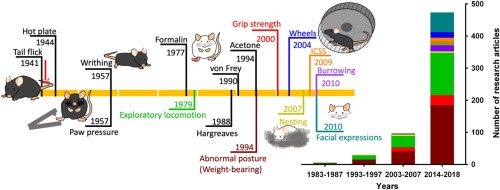
3. Measurement of pain behavioral inhibition
Pain behavioral inhibition can be defined as a reduction in the rate, frequency, duration, or intensity of various motor behaviors in response to a painful state. Common examples include decreased pain-related eating, locomotion, and subjectively motivated behaviors. Using pain behavioral inhibition as an outcome event for studying pain manifestations, mechanisms, and treatment has several advantages over behavioral responses to mechanical, thermal, or cold stimulation. First, clinical pain states requiring intervention are often associated with behavioral inhibition rather than stimuli-reflex behavior. Second, the goal of clinical pain treatment is to relieve pain and restore normal behavioral manifestations, which accelerates the translation of preclinical animal behavioral inhibition studies into the clinic. Third, the measurement of pain behavioral inhibition is less susceptible to false-positive drug effects; an improvement in the value of stimuli-reflex behavior measurements does not necessarily mean a decrease in pain behavioral inhibition. Pain behavioral inhibition, instead of stimuli-reflex behavior measurements, is widely used in clinical diagnosis, and tools for measuring pain behavioral inhibition are also playing an increasingly important role in preclinical animal research.
4. Ugo Basile Climbing Tester
The Ugo Basile Climbing Tester, developed in collaboration between Ugo Basile, a renowned Italian neuroscience company, and Virginia Commonwealth University, provides researchers with an automated tool for measuring pain suppression in rodents. Furthermore, the Climbing Tester can be applied to various neuroscience research areas to measure vertical animal behavior, including models of stroke, depression, anxiety, neuromuscular toxicity, and Parkinson's disease. The device primarily consists of a four-channel main unit that can connect to up to four climbing bases and cylinders.
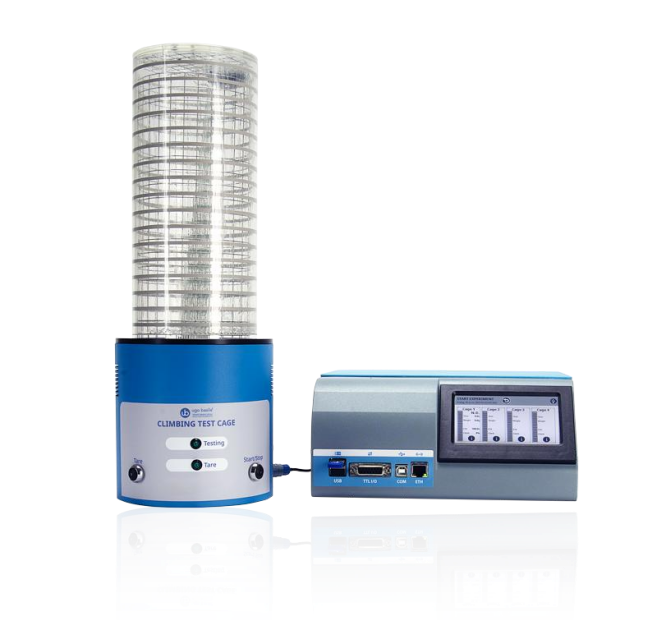
Rodents live in three-dimensional space. Traditional behavioral or pain measurement tools used in various neuroscience disease models have limited their analysis of positional differences in the XY plane, ignoring vertical Z-axis motion. While climbing behavior has been investigated in numerous studies, these studies often employed limited measurement parameters and were not automated.
5. Case Analysis of Pain Behavioral Inhibition Measurement
In the 2023 article "Climbing behavior by mice as an endpoint for preclinical assessment of drug effects in the absence and presence of pain," Santos et al. evaluated climbing behavior as a tool for assessing the expression and treatment of pain-related behavioral inhibition in ICR mice. The goal of the study was to evaluate the expression and treatment of pain-related behavioral inhibition in mice using a custom-made vertical cylinder with wire mesh walls as a testing environment. The climbing behavior test was conducted in four steps. First, the performance and stability of climbing were repeatedly measured to assess whether climbing was appropriate for the experimental design. Second, the effectiveness of intraperitoneal injection of dilute lactic acid (IP acid) as an acute noxious stimulus in reducing climbing was determined. Third, the effect of the positive control nonsteroidal anti-inflammatory drug (NSAID) ketoprofen was evaluated to block IP acid-induced inhibition of climbing. Ketoprofen is a clinically effective analgesic that has previously been shown to alleviate IP acid-induced inhibition of climbing behavior in mice and rats. Finally, the effect of U69593, a centrally acting opioid receptor (MOR) agonist, was evaluated as a negative control.
Mice were videotaped for 10 minutes in a vertical Plexiglas cylinder with wire mesh walls, and climbing time was scored by an observer. Baseline climbing ability remained stable over consecutive days of testing, and pain behavior was suppressed by intraperitoneal injection of dilute lactic acid (IP acid) as an acute pain stimulus. IP acid-induced climbing inhibition was alleviated by the positive control nonsteroidal anti-inflammatory drug (NSAID) ketoprofen, but not by the negative control opioid receptor agonist U69593. The study examined the varying efficacy of single opioids (fentanyl, buprenorphine, and naltrexone) and a fixed-ratio fentanyl/naltrexone mixture at opioid receptors (MORs). While opioids alone resulted in a dose- and effect-dependent decrease in climbing ability, data with the fentanyl/naltrexone mixture indicated that mouse climbing was particularly sensitive to interference with inefficient MOR activation. Opioids administered as a pretreatment with IP acid failed to prevent IP acid-induced climbing inhibition. These findings support the use of mouse climbing as an endpoint for evaluating the effectiveness of candidate analgesics.
Mice were individually placed in clear plastic cylinders (11.25 cm diameter x 25.5 cm height) for a 10-minute climbing test. Each cylinder was surrounded from bottom to top by a 0.5 cm² aluminum wire mesh. Furthermore, the top of the cylinder was covered by a lid made of the same wire mesh. In each experiment, three mice were tested simultaneously in different cylinders. Cardboard barriers between the cylinders prevented visual contact between the mice during the test, and behavior was recorded with a video camera while the experimenter was not in the room. The primary dependent variable was the time the mice spent climbing during each 10-minute behavioral session. "Climbing" was defined as the mouse having at least one paw touching the mesh wall and all paws off the ground. Time was scored by at least one of two trained observers who were blinded to the experimental treatment. Two observers scored a subset of the videos at the beginning and throughout the study to monitor inter-rater reliability.
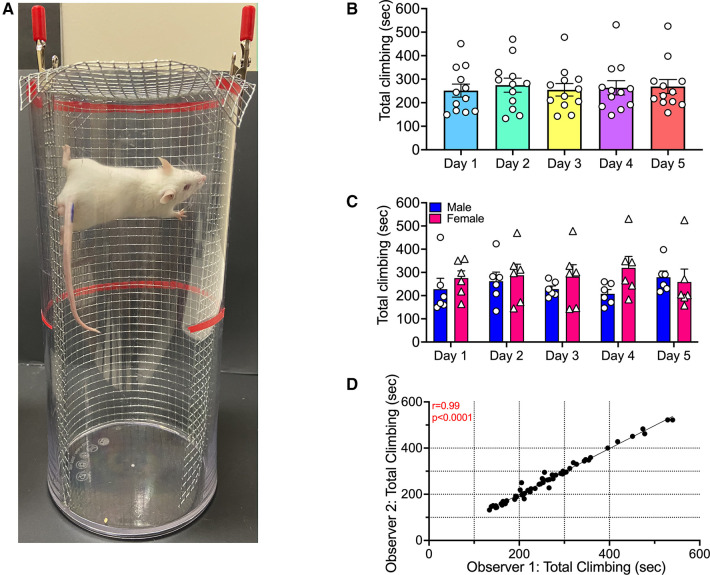
(A) Climbing apparatus. (B) Horizontal axis: Testing day. Vertical axis: Climbing time in seconds. Twelve mice were tested in each group and the mean ± SEM was calculated. Graphs show data from individual mice. (C) Same data as in panel B, categorized by sex. (D) Inter-rater reliability of climbing times assigned by two different observers for all mice on all testing days.
6. Measurement Advantages of the Ugo Basile Climbing Tester
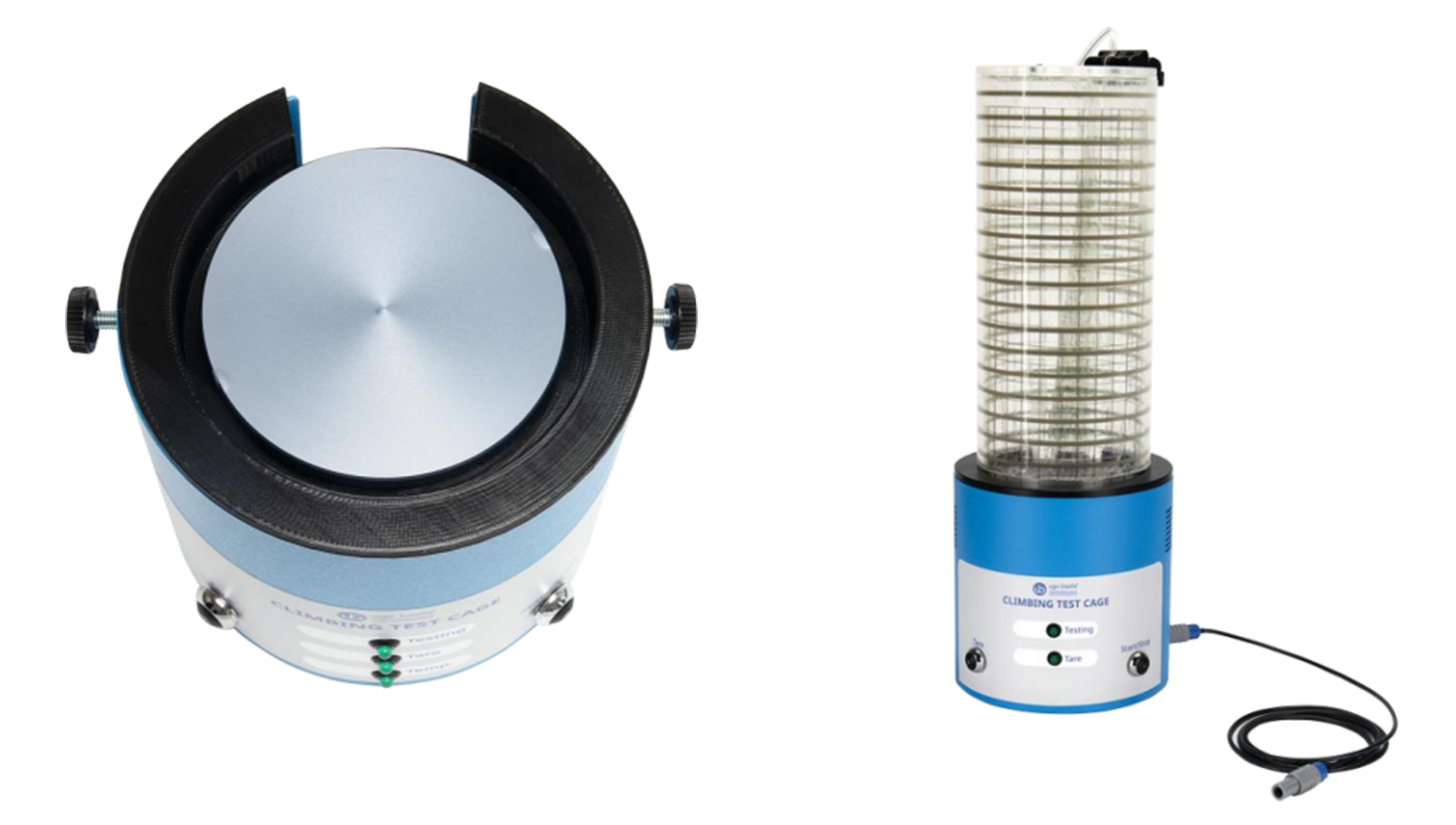
The climbing experiment measurement tools used in the above cases have a single measurement parameter, a non-automated measurement method, and are time-consuming and labor-intensive. Ugo Basile's newly launched fully automatic climbing tester overcomes these problems. It is the only tool in China and abroad that automatically measures the climbing behavior of rodents, and its measurement parameters include: maximum height, average height, average distance, total climbing time, total time spent at the top, and waiting time for a single climb. The temperature of the device's aluminum circular base can be set between 5 and 60°C. Once the animal leaves the base and begins to climb the metal grid inside the cylinder and the top of the cylinder, the sensors on the base and cylinder automatically start the test and record the results. The test results can be stored in the host computer and easily exported to Excel for analysis.
Features and advantages
The user-friendly interface is simple and easy to read, and multi-channel test and measurement are synchronized
A single host can be connected to up to four channel bases and cylinders. Animal individual and experimental information can be preset on the touch screen, and the main measurement parameters and experimental status are intuitively displayed on the screen.
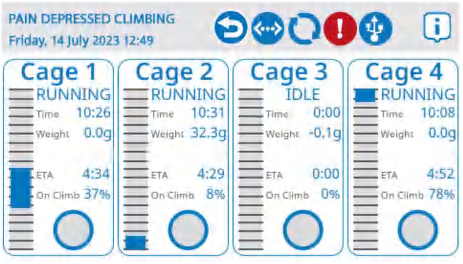
Multi-channel automatic measurement and one-click export of test results
Equipped with dual sensors for animal weight and vertical tracking, the device can accurately record the start time and all vertical measurement parameters. The measurement parameters can be exported to CSV format via a USB flash drive for subsequent statistical analysis.
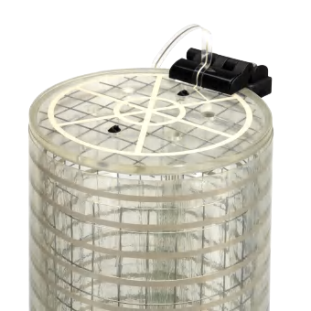
Wide range of applications, can be used in multiple areas of neuroscience
Previous studies have shown that animal climbing behavior is of interest to various neuroscience research fields. As a novel device and method, the Ugo Basile climbing tester is not only used in the field of pain to measure pain behavioral inhibition, but can also be used in models of stroke, depression, anxiety, neuromuscular toxicity, Parkinson's disease, and other conditions.
Emerging measurement method with stable measurement repeatability
The Pampa tester is an emerging measurement method in the field of pain. A study evaluated the practicality of climbing as a behavioral endpoint in preclinical studies of drug effects in the absence or presence of acute pain and revealed several important findings.
For example, the method has good repeatability within the same group of mice or between different groups of mice; the climbing results can be used as an endpoint of the study to detect the behavioral inhibitory effect of analgesics in relieving pain; and it has the advantage of high sensitivity in the screening of some pain pathways and analgesic drugs.
Application Areas
The Ugo Basile climbing tester can be applied to multiple fields such as physiology, behavior, genetics, neuroscience, pain behavior, psychology, etc. Disease models include stroke, depression, anxiety, musculoskeletal pain, Parkinson's disease, neuropathic pain and cancer pain.
7. Ugo Basile, Italy
Founded in 1963 by Ugo Basile, the company has grown over the decades into an innovative company focused on pioneering scientific experimental methods and producing new scientific instruments in the field of neuroscience. By combining classic instruments with innovative new devices, its pain management products have become a benchmark tool for neuroscientists worldwide and are widely recognized.

As the general agent of Italian company Ugo Basile in China, Shanghai Yuyan Scientific Instrument Co., Ltd. has long been cooperating closely with Ugo Basile and jointly exploring long-term development plans and strategic cooperation agreements between the two parties, bringing the world's leading and excellent pain research equipment and providing comprehensive technical support to the vast number of pain researchers in China.