




Ugo Basile Orofacial Pain Tester | A novel self-reward and punishment experiment effectively assesses orofacial pain behavior in mice and rats—providing a comprehensive solution for preclinical orofacial pain assessment.!
Date:2024-05-14
Author:Yuyan Instrument
1. Difficulties in assessing orofacial pain
Orofacial pain is one of the most common neurological disorders in clinical practice, often involving the unique structures and mechanisms of the trigeminal nerve. Currently, few methods are available for preclinical research on orofacial pain. Most measure unlearned behaviors, such as the withdrawal reflex, and none incorporate parallel measurements of mechanical or thermal stimulation within the same experiment.
Assessing pain levels in rodent models is a key method for pain research. Pain in rodents can be categorized as stimulus-evoked and non-stimulus-evoked, corresponding to evoked and non-stimulus-evoked behavioral responses, respectively. For example, the Von Frey test, hot and cold plate, and tail flick tests are classic stimulus-evoked response experiments, while bipedal balance and wheel running tests are non-stimulus-evoked response experiments. Induction methods include mechanical and thermal stimulation. The Von Frey test is a classic mechanical stimulus-evoked response method. When the Von Frey fiber stimulation exceeds the pain threshold, the animal will exhibit behaviors such as paw withdrawal, paw licking, grooming, and avoidance. Researchers can use these behaviors to identify pain events.
However, the testing location for orofacial pain is different from that for conventional neuropathic pain. The test sites for stimulus-evoked responses and non-stimulation-evoked responses mentioned in the previous paragraph are mainly the feet or tails of animals, which have great limitations when applied to orofacial pain models. The Von Frey test method for pain assessment mainly relies on the researcher's operation and judgment. Although it can also be used to measure orofacial mechanical pain thresholds, it is very prone to experimenter bias.
Limitations of the Von Frey test for orofacial pain testing
2. Professional tools for orofacial pain testing
Ugo Basile, a leading Italian company in the neuroscience field, has developed a behavioral test method, the orofacial self-reward and punishment test, to address the challenges of orofacial pain testing in mice and rats. This method uses a reward-punishment model to assess pain responses in animals. The self-reward and punishment test allows animals to choose between accepting a reward or avoiding a noxious stimulus. Compared to induced pain response tests, it is more objective, eliminates artifacts, and better reflects the processing of noxious stimuli by the animal's higher-level centers.
3. Ugo Basile Orofacial Pain Tester
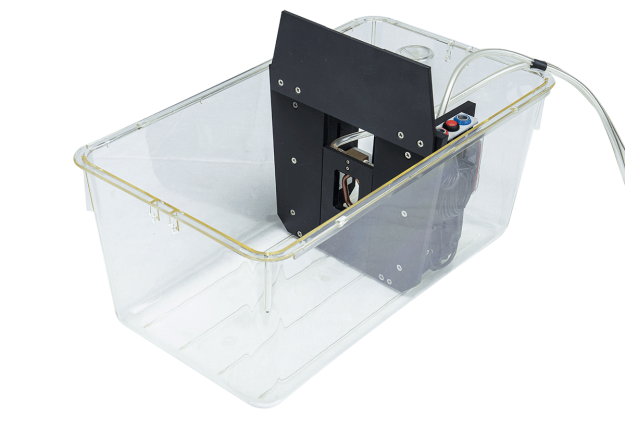
The instrument consists of an animal activity cage, a testing unit, and software. The testing unit includes a stimulation module, food rewards, and an infrared probe. The stimulation module consists of two types: a mechanical stimulation module and a thermal stimulation module, providing mechanical and thermal noxious stimulation to the orofacial area. The mechanical stimulation module also contains three components with different stimulation intensities. During the experiment, when the animal passes its orofacial area through the stimulation module to obtain a food reward, it touches the stimulation module, generating orofacial noxious stimulation. The degree of pain is assessed by analyzing the animal's licking behavior (duration and frequency of licking) during the noxious stimulation. The duration and frequency of licking are also related to the intensity of the applied thermal or mechanical stimulation.
Experimental process: A stimulation module and food rewards are pre-placed in the activity cage. The animals are fasted for several hours before being placed in the activity cage for the experiment. When the animals' mouths pass through the stimulation module to obtain food rewards, they need to endure intermittent mechanical or thermal stimulation. This process can be automatically detected by an infrared probe that passes through the stimulation module and transmits the information to the computer software to obtain the food intake level result data within a fixed time period.
4. Main features and advantages of the product
1. Mechanical pain and thermal pain methods complement each other and provide a more comprehensive test
The thermal stimulation module or mechanical stimulation module can be installed on the test unit, making it easy to replace components. The thermal stimulation module relies on a metal loop and a circulating water bath, and its temperature can be adjusted from ambient temperature to 70°C to reach the thermal nociception threshold.
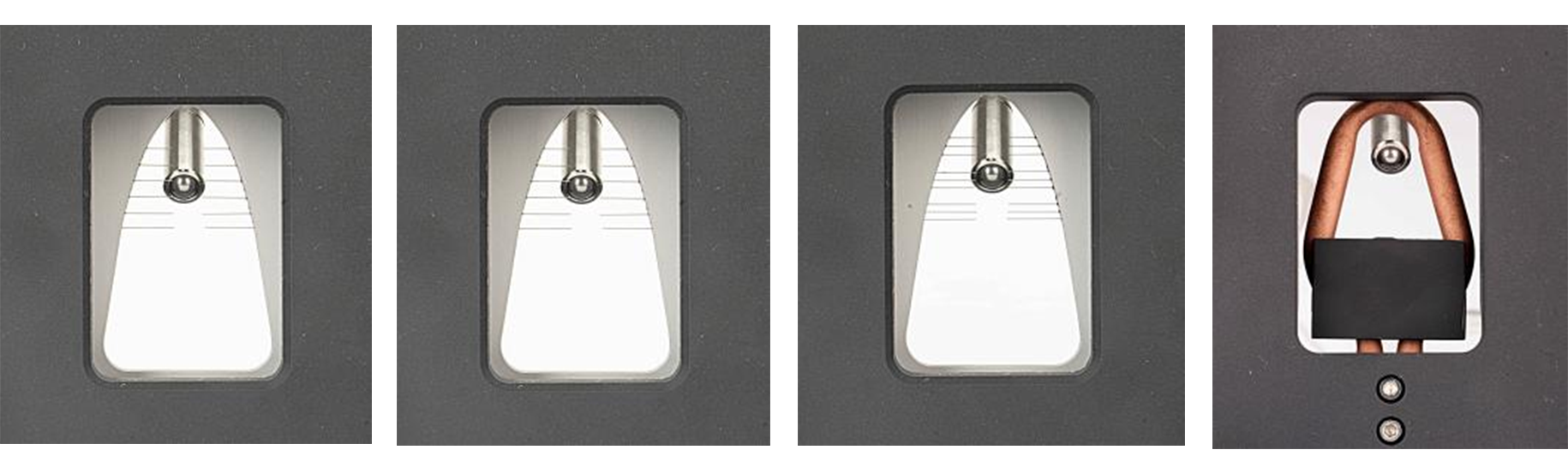
The three mechanical pricking modules with different stimulation intensities contain different numbers of metal needles, namely (left + right) 6+6, 9+9, and 13+13, which can apply different stimulation intensities when the animal licks.
2. High-throughput experiments, simultaneous measurement of software and hardware
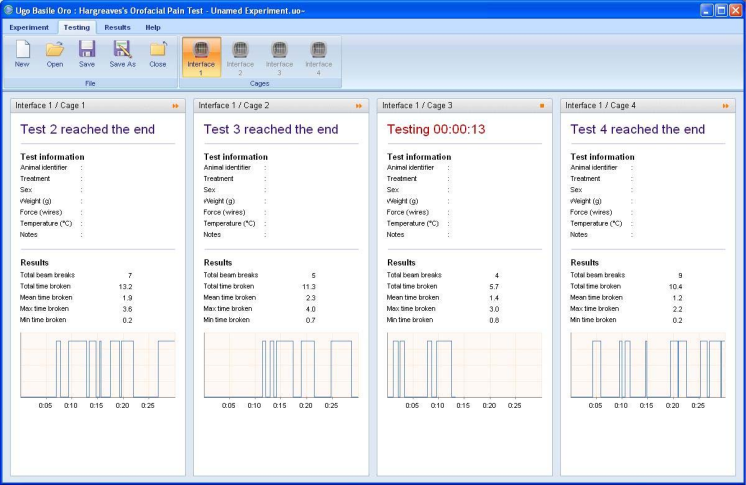
The orofacial pain tester can be used for high-throughput animal experiments. The multi-channel integrated component can be connected to the 4-channel orofacial pain tester via a computer. The ORO software included with the system can record data from up to 16 cages simultaneously and display it in real time.
3. Automatic infrared light detection, no need to shave the animal
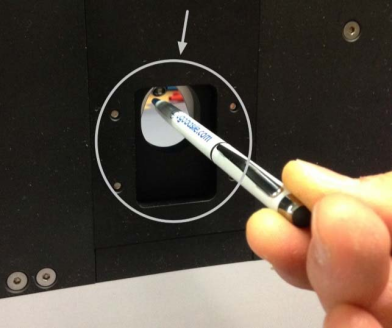
Using advanced infrared light sensors, the device accurately detects and times the animal's mouth and face as it passes through the stimulation module without any handling, minimizing the animal's natural physiological state. The device is factory calibrated for easy recalibration during subsequent use.
4. Self-reward and punishment behavior measurement can objectively evaluate pain symptoms
The orofacial pain tester can assess the behavioral integration of pain by higher-level centers. It can be used to study pathological pain in the trigeminal and facial nerves, such as models of chronic infraorbital nerve constriction, partial infraorbital nerve ligation, and orofacial inflammatory pain, exploring behavioral characteristics and related mechanisms. Self-reward and punishment experiments can also reflect the integration of pain by higher-level centers. Each test requires only the setup and operation of the instrument, eliminating the need for repeated manipulation of the experimental animals. This reduces fear and anxiety in the animals, resulting in stable and highly reproducible results.
5. Application scenarios of Peking University School of Stomatology
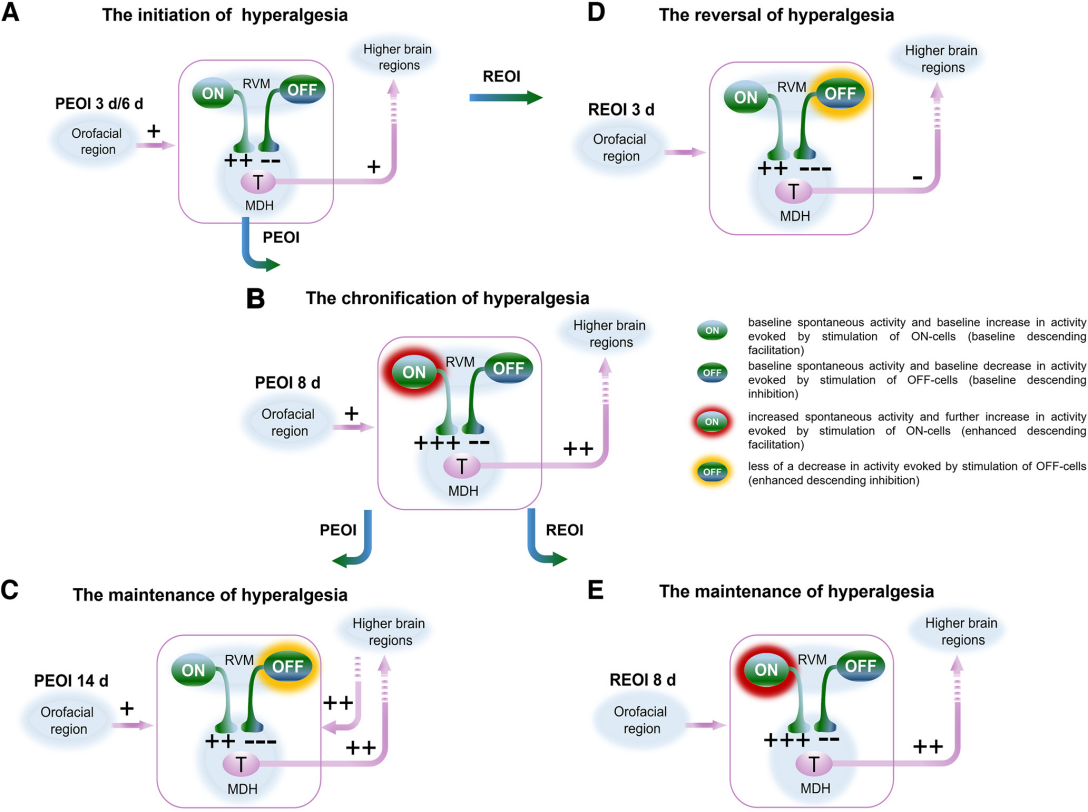
Recently, a research team led by Xie Qiufei and Cao Ye from the Department of Prosthodontics and the Oral and Maxillofacial Function Diagnosis and Treatment Center of the Peking University School of Stomatology published a research paper titled "Neuronal activities in the rostral ventromedial medulla associated with experimental occlusal interference-induced orofacial hyperalgesia" in the Journal of Neuroscience. This study further elucidates the mechanisms of action of the rostral ventromedial medulla (RVM), a relay station in the descending modulation system, in the different stages and outcomes of chronic orofacial pain. The study also uncovered the dynamic role of ON and OFF neurons in the nucleus during the transition from acute to chronic orofacial pain. This research represents a new advancement in the study of the mechanisms of chronic orofacial pain and provides new insights into its clinical treatment.
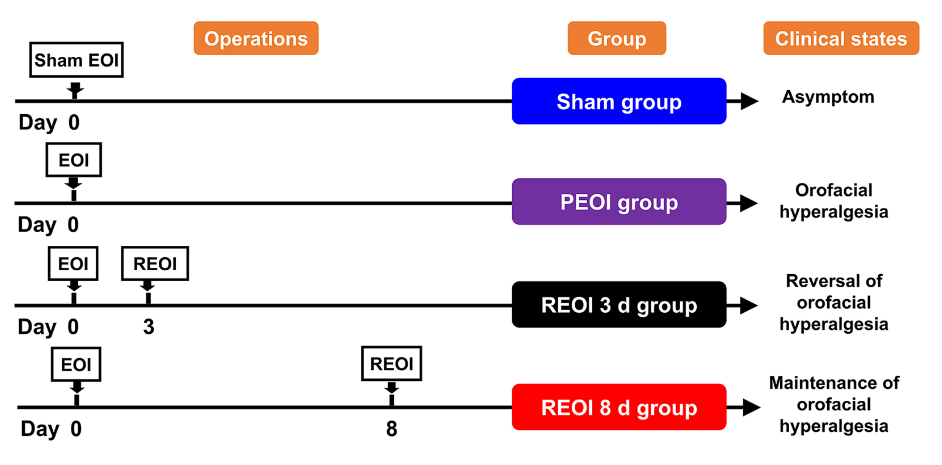
Our research group has been dedicated to studying the mechanisms of orofacial pain for many years. By simulating the clinical phenomenon of chronic pain caused by occlusal alteration, we established a rat model of chronic orofacial hyperalgesia induced by occlusal interference (EOI). Based on this model, we further simulated two distinct outcomes of orofacial hyperalgesia: reversal and maintenance, respectively, through early and late removal of occlusal interference (REOI). In vivo electrophysiological recordings, brain drug administration, and behavioral pain assessment revealed that within six days of EOI, the RVM maintained a balance between descending facilitation and descending inhibition. Around eight days after EOI, descending facilitation dominated, and around 14 days after EOI, descending inhibition dominated. Furthermore, the study confirmed that descending inhibition predominated in the reversal of hyperalgesia after early removal of EOI, while descending facilitation predominated in the maintenance of hyperalgesia after late removal of EOI. This study suggests that the different stages and outcomes of orofacial pain associated with EOI are influenced by adaptive changes in descending facilitation and descending inhibition in the RVM, highlighting the need for early intervention for this clinical problem.
1. Pain behavioral testing tools
The study used the Ugo Basile orofacial tester to measure pain behavior in rats. Rats were placed in an activity cage with a food reward, and the rats were free to move their orofacial area through the stimulation module to obtain the food reward (30% condensed milk). Before each adaptation or test, the rats underwent a 20±1 hour fasting period. During the adaptation process, the rats were placed in the testing system for 20 minutes to familiarize themselves with the environment and obtain food rewards with or without mechanical stimulation. After 4 to 6 preoperative adaptation training sessions over two weeks, each rat had 10 minutes to familiarize itself with the environment, and then was allowed to lick freely for 10 minutes. When the rat's mouth touched the mouth of the drinking bottle, the built-in infrared probe automatically recorded the time point and duration, which was analyzed by the system's own ORO Software.
2. Orofacial Testing Process
3. Live animal licking
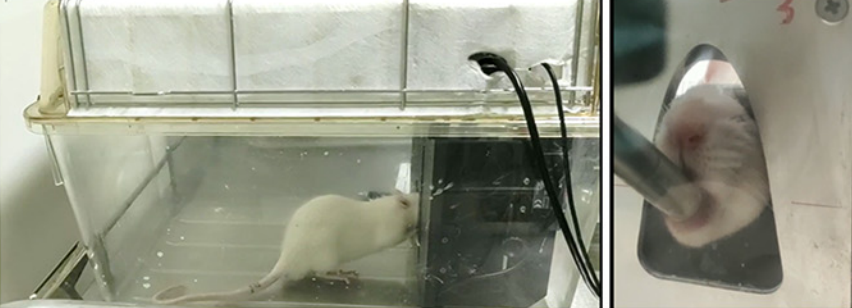
Rats were placed in the test environment and licked milk through the mechanical stimulation module.
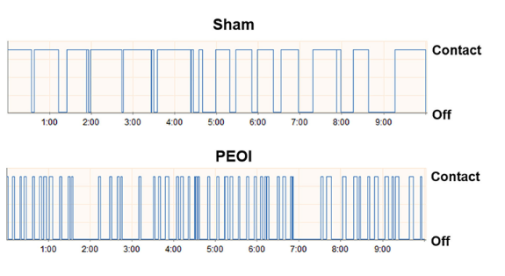
Comparison of software waveforms between the two groups: Two representative traces show that during the 10-minute test, the duration of single and total licking bouts in the PEOI group (PEOI) was significantly shorter than that in the sham-surgery group, while the total number of licks was greater. Contact: licking behavior, Off: no licking behavior.
4. Comparison of four sets of data
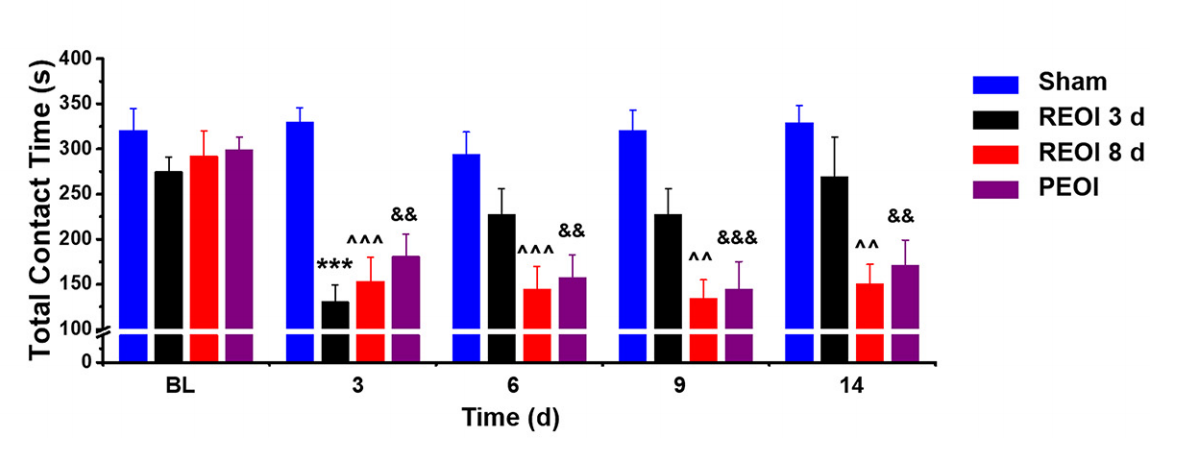
Total licking time at different time points in the sham, REOI 3-day, REOI 8-day, and PEOI groups (n = 8 per group). Baseline (BL) was calculated by measuring the average total licking time on days 1, 3, and 5 before EOI. All values are expressed as mean ± SEM.
5. Results
Orofacial mechanical hyperalgesia was reversed after EOI removal on day 3 after EOI, and chronic hyperalgesia occurred around day 8 after EOI. Maintenance of hyperalgesia was not driven by persistent EOI-induced nociceptive afferents, as hyperalgesia was not significantly different from that after EOI removal on day 8 after EOI.
6. Further Reading
1.Capsoni, Simona et al. “The chemokine CXCL12 mediates the anti-amyloidogenic action of painless human nerve growth factor.” Brain : a journal of neurology vol. 140,1 (2017): 201-217. doi:10.1093/brain/aww271
2. Zhang, Yuan et al. "Neuromedin B receptor stimulation of Cav3.2 T-type Ca2+ channels in primary sensory neurons mediates peripheral pain hypersensitivity." Theranostics vol. 11,19 9342-9357. 9 Sep. 2021, doi:10.7150/thno.62255
3. Zhang, Qian et al. "Chemokine CXCL13 mediates orofacial neuropathic pain via CXCR5/ERK pathway in the trigeminal ganglion of mice." Journal of neuroinflammation vol. 13,1 183. 11 Jul. 2016, doi:10.1186/s12974-016-0652-1
4. De Caro, Carmen et al. “Antinociceptive effect of two novel transient receptor potential melastatin 8 antagonists in acute and chronic pain models in rat.” British journal of pharmacology vol. 175,10 (2018): 1691-1706. doi:10.1111/bph.14177
5. Mo Si-Yi et al. “Neuronal activities in the rostral ventromedial medulla associated with experimental occlusal interference-induced orofacial hyperalgesia.” The Journal of neuroscience : the official journal of the Society for Neuroscience, vol. 42,27 5314–5329. 3 Jun. 2022, doi:10.1523/JNEUROSCI.0008-22.2022
6.Kanda, Hirosato et al. “Kv4.3 Channel Dysfunction Contributes to Trigeminal Neuropathic Pain Manifested with Orofacial Cold Hypersensitivity in Rats.” The Journal of neuroscience : the official journal of the Society for Neuroscience vol. 41,10 (2021): 2091-2105. doi:10.1523/JNEUROSCI.2036-20.2021
7. Pineda-Farias, Jorge Baruch et al. “Mechanisms Underlying the Selective Therapeutic Efficacy of Carbamazepine for Attenuation of Trigeminal Nerve Injury Pain.” The Journal of neuroscience : the official journal of the Society for Neuroscience vol. 41,43 (2021): 8991-9007. doi:10.1523/JNEUROSCI.0547-21.2021
8. Pineda-Farias, Jorge Baruch et al. “Mechanisms Underlying the Selective Therapeutic Efficacy of Carbamazepine for Attenuation of Trigeminal Nerve Injury Pain.” The Journal of neuroscience : the official journal of the Society for Neuroscience vol. 41,43 (2021): 8991-9007. doi:10.1523/JNEUROSCI.0547-21.2021
9.De Caro, Carmen et al. “Characterization of New TRPM8 Modulators in Pain Perception.” International journal of molecular sciences vol. 20,22 5544. 7 Nov. 2019, doi:10.3390/ijms20225544
10. Zhang, Qian et al. “Chemokine CXCL13 activates p38 MAPK in the trigeminal ganglion after infraorbital nerve injury.” Inflammation vol. 40,3 (2017): 762-769. doi:10.1007/s10753-017-0520-x
7. Ugo Basile, Italy
Founded in 1963 by Ugo Basile, the company has grown over the decades into an innovative company focused on pioneering scientific experimental methods and producing new scientific instruments in the field of neuroscience. By combining classic instruments with innovative new devices, its pain management products have become a benchmark tool for neuroscientists worldwide and are widely recognized.
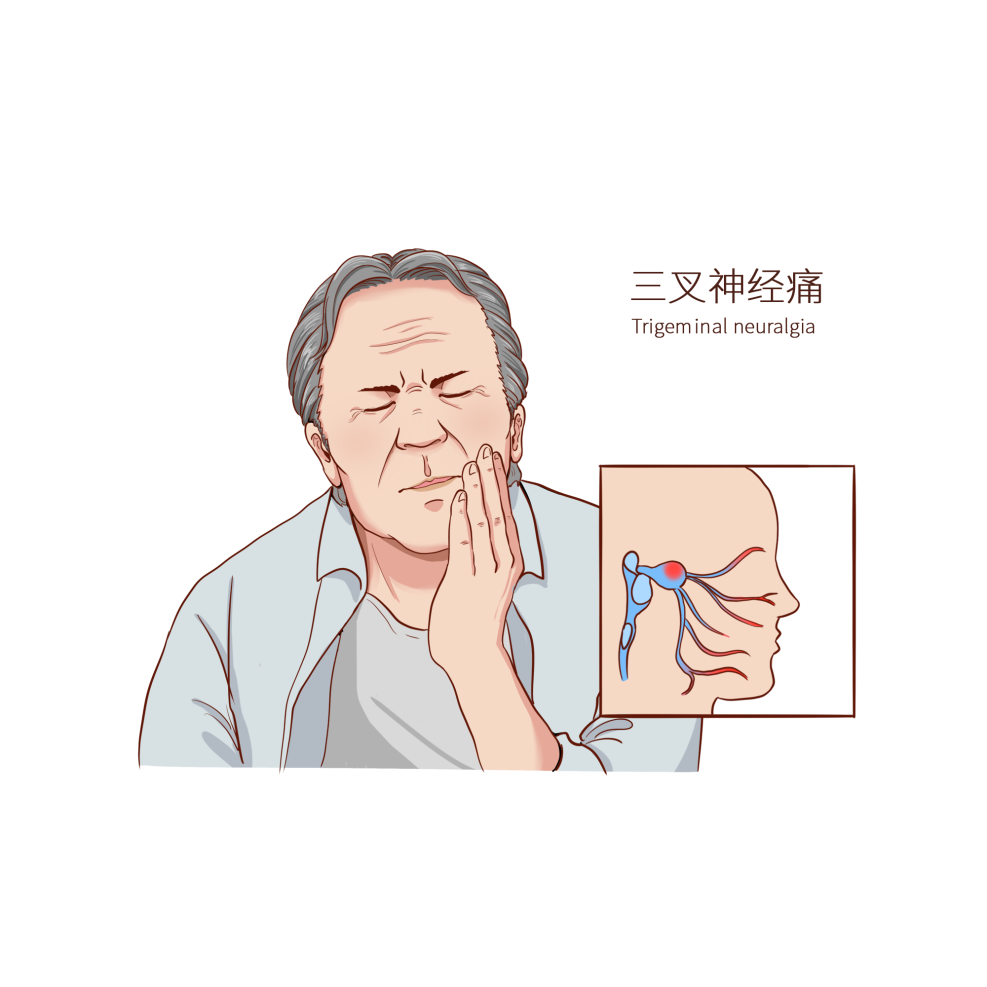
Orofacial pain is one of the most common neurological disorders in clinical practice, often involving the unique structures and mechanisms of the trigeminal nerve. Currently, few methods are available for preclinical research on orofacial pain. Most measure unlearned behaviors, such as the withdrawal reflex, and none incorporate parallel measurements of mechanical or thermal stimulation within the same experiment.
Assessing pain levels in rodent models is a key method for pain research. Pain in rodents can be categorized as stimulus-evoked and non-stimulus-evoked, corresponding to evoked and non-stimulus-evoked behavioral responses, respectively. For example, the Von Frey test, hot and cold plate, and tail flick tests are classic stimulus-evoked response experiments, while bipedal balance and wheel running tests are non-stimulus-evoked response experiments. Induction methods include mechanical and thermal stimulation. The Von Frey test is a classic mechanical stimulus-evoked response method. When the Von Frey fiber stimulation exceeds the pain threshold, the animal will exhibit behaviors such as paw withdrawal, paw licking, grooming, and avoidance. Researchers can use these behaviors to identify pain events.
However, the testing location for orofacial pain is different from that for conventional neuropathic pain. The test sites for stimulus-evoked responses and non-stimulation-evoked responses mentioned in the previous paragraph are mainly the feet or tails of animals, which have great limitations when applied to orofacial pain models. The Von Frey test method for pain assessment mainly relies on the researcher's operation and judgment. Although it can also be used to measure orofacial mechanical pain thresholds, it is very prone to experimenter bias.
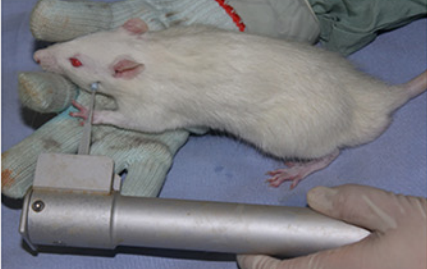
Limitations of the Von Frey test for orofacial pain testing
2. Professional tools for orofacial pain testing
Ugo Basile, a leading Italian company in the neuroscience field, has developed a behavioral test method, the orofacial self-reward and punishment test, to address the challenges of orofacial pain testing in mice and rats. This method uses a reward-punishment model to assess pain responses in animals. The self-reward and punishment test allows animals to choose between accepting a reward or avoiding a noxious stimulus. Compared to induced pain response tests, it is more objective, eliminates artifacts, and better reflects the processing of noxious stimuli by the animal's higher-level centers.
3. Ugo Basile Orofacial Pain Tester
The instrument consists of an animal activity cage, a testing unit, and software. The testing unit includes a stimulation module, food rewards, and an infrared probe. The stimulation module consists of two types: a mechanical stimulation module and a thermal stimulation module, providing mechanical and thermal noxious stimulation to the orofacial area. The mechanical stimulation module also contains three components with different stimulation intensities. During the experiment, when the animal passes its orofacial area through the stimulation module to obtain a food reward, it touches the stimulation module, generating orofacial noxious stimulation. The degree of pain is assessed by analyzing the animal's licking behavior (duration and frequency of licking) during the noxious stimulation. The duration and frequency of licking are also related to the intensity of the applied thermal or mechanical stimulation.
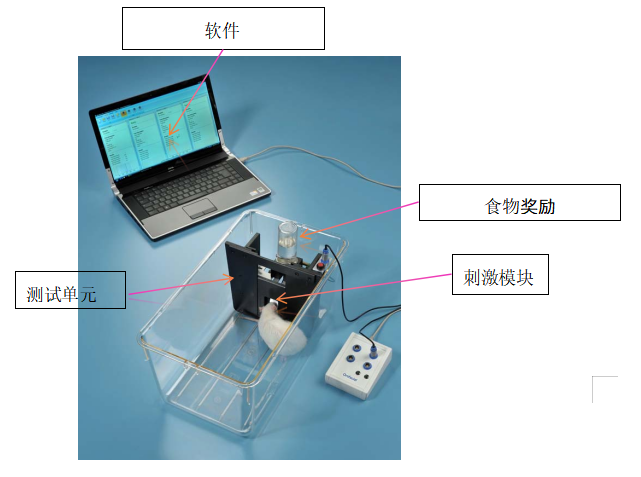
Experimental process: A stimulation module and food rewards are pre-placed in the activity cage. The animals are fasted for several hours before being placed in the activity cage for the experiment. When the animals' mouths pass through the stimulation module to obtain food rewards, they need to endure intermittent mechanical or thermal stimulation. This process can be automatically detected by an infrared probe that passes through the stimulation module and transmits the information to the computer software to obtain the food intake level result data within a fixed time period.
4. Main features and advantages of the product
1. Mechanical pain and thermal pain methods complement each other and provide a more comprehensive test
The thermal stimulation module or mechanical stimulation module can be installed on the test unit, making it easy to replace components. The thermal stimulation module relies on a metal loop and a circulating water bath, and its temperature can be adjusted from ambient temperature to 70°C to reach the thermal nociception threshold.
The three mechanical pricking modules with different stimulation intensities contain different numbers of metal needles, namely (left + right) 6+6, 9+9, and 13+13, which can apply different stimulation intensities when the animal licks.
2. High-throughput experiments, simultaneous measurement of software and hardware
The orofacial pain tester can be used for high-throughput animal experiments. The multi-channel integrated component can be connected to the 4-channel orofacial pain tester via a computer. The ORO software included with the system can record data from up to 16 cages simultaneously and display it in real time.
3. Automatic infrared light detection, no need to shave the animal
Using advanced infrared light sensors, the device accurately detects and times the animal's mouth and face as it passes through the stimulation module without any handling, minimizing the animal's natural physiological state. The device is factory calibrated for easy recalibration during subsequent use.
4. Self-reward and punishment behavior measurement can objectively evaluate pain symptoms
The orofacial pain tester can assess the behavioral integration of pain by higher-level centers. It can be used to study pathological pain in the trigeminal and facial nerves, such as models of chronic infraorbital nerve constriction, partial infraorbital nerve ligation, and orofacial inflammatory pain, exploring behavioral characteristics and related mechanisms. Self-reward and punishment experiments can also reflect the integration of pain by higher-level centers. Each test requires only the setup and operation of the instrument, eliminating the need for repeated manipulation of the experimental animals. This reduces fear and anxiety in the animals, resulting in stable and highly reproducible results.
5. Application scenarios of Peking University School of Stomatology
Recently, a research team led by Xie Qiufei and Cao Ye from the Department of Prosthodontics and the Oral and Maxillofacial Function Diagnosis and Treatment Center of the Peking University School of Stomatology published a research paper titled "Neuronal activities in the rostral ventromedial medulla associated with experimental occlusal interference-induced orofacial hyperalgesia" in the Journal of Neuroscience. This study further elucidates the mechanisms of action of the rostral ventromedial medulla (RVM), a relay station in the descending modulation system, in the different stages and outcomes of chronic orofacial pain. The study also uncovered the dynamic role of ON and OFF neurons in the nucleus during the transition from acute to chronic orofacial pain. This research represents a new advancement in the study of the mechanisms of chronic orofacial pain and provides new insights into its clinical treatment.
Our research group has been dedicated to studying the mechanisms of orofacial pain for many years. By simulating the clinical phenomenon of chronic pain caused by occlusal alteration, we established a rat model of chronic orofacial hyperalgesia induced by occlusal interference (EOI). Based on this model, we further simulated two distinct outcomes of orofacial hyperalgesia: reversal and maintenance, respectively, through early and late removal of occlusal interference (REOI). In vivo electrophysiological recordings, brain drug administration, and behavioral pain assessment revealed that within six days of EOI, the RVM maintained a balance between descending facilitation and descending inhibition. Around eight days after EOI, descending facilitation dominated, and around 14 days after EOI, descending inhibition dominated. Furthermore, the study confirmed that descending inhibition predominated in the reversal of hyperalgesia after early removal of EOI, while descending facilitation predominated in the maintenance of hyperalgesia after late removal of EOI. This study suggests that the different stages and outcomes of orofacial pain associated with EOI are influenced by adaptive changes in descending facilitation and descending inhibition in the RVM, highlighting the need for early intervention for this clinical problem.
1. Pain behavioral testing tools
The study used the Ugo Basile orofacial tester to measure pain behavior in rats. Rats were placed in an activity cage with a food reward, and the rats were free to move their orofacial area through the stimulation module to obtain the food reward (30% condensed milk). Before each adaptation or test, the rats underwent a 20±1 hour fasting period. During the adaptation process, the rats were placed in the testing system for 20 minutes to familiarize themselves with the environment and obtain food rewards with or without mechanical stimulation. After 4 to 6 preoperative adaptation training sessions over two weeks, each rat had 10 minutes to familiarize itself with the environment, and then was allowed to lick freely for 10 minutes. When the rat's mouth touched the mouth of the drinking bottle, the built-in infrared probe automatically recorded the time point and duration, which was analyzed by the system's own ORO Software.
2. Orofacial Testing Process
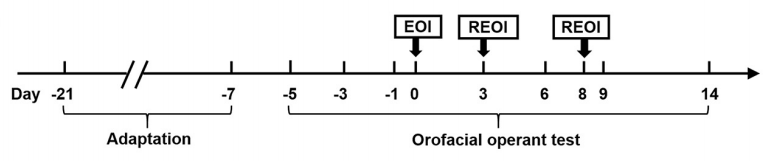
Animal Acclimation: Rats were placed in the testing environment for 20 minutes per day for 7-21 days before EOI surgery to acclimate them to the surrounding environment. The total licking time of the sham-operated group, the EOI removal group 3 days after EOI (REOI 3d), the EOI removal group 8 days after EOI (REOI 8d), and the EOI removal group (PEOI) was compared on days 1, 3, and 5 before EOI surgery (baseline) and days 3, 6, 9, and 14 after surgery.
3. Live animal licking
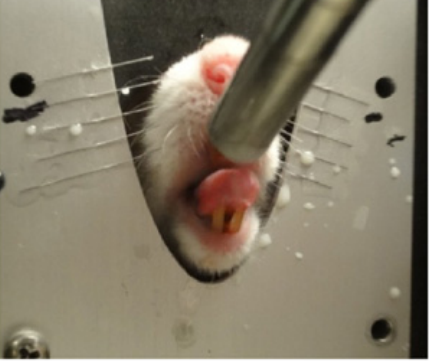
Rats were placed in the test environment and licked milk through the mechanical stimulation module.
Comparison of software waveforms between the two groups: Two representative traces show that during the 10-minute test, the duration of single and total licking bouts in the PEOI group (PEOI) was significantly shorter than that in the sham-surgery group, while the total number of licks was greater. Contact: licking behavior, Off: no licking behavior.
4. Comparison of four sets of data
Total licking time at different time points in the sham, REOI 3-day, REOI 8-day, and PEOI groups (n = 8 per group). Baseline (BL) was calculated by measuring the average total licking time on days 1, 3, and 5 before EOI. All values are expressed as mean ± SEM.
5. Results
Orofacial mechanical hyperalgesia was reversed after EOI removal on day 3 after EOI, and chronic hyperalgesia occurred around day 8 after EOI. Maintenance of hyperalgesia was not driven by persistent EOI-induced nociceptive afferents, as hyperalgesia was not significantly different from that after EOI removal on day 8 after EOI.
6. Further Reading
1.Capsoni, Simona et al. “The chemokine CXCL12 mediates the anti-amyloidogenic action of painless human nerve growth factor.” Brain : a journal of neurology vol. 140,1 (2017): 201-217. doi:10.1093/brain/aww271
2. Zhang, Yuan et al. "Neuromedin B receptor stimulation of Cav3.2 T-type Ca2+ channels in primary sensory neurons mediates peripheral pain hypersensitivity." Theranostics vol. 11,19 9342-9357. 9 Sep. 2021, doi:10.7150/thno.62255
3. Zhang, Qian et al. "Chemokine CXCL13 mediates orofacial neuropathic pain via CXCR5/ERK pathway in the trigeminal ganglion of mice." Journal of neuroinflammation vol. 13,1 183. 11 Jul. 2016, doi:10.1186/s12974-016-0652-1
4. De Caro, Carmen et al. “Antinociceptive effect of two novel transient receptor potential melastatin 8 antagonists in acute and chronic pain models in rat.” British journal of pharmacology vol. 175,10 (2018): 1691-1706. doi:10.1111/bph.14177
5. Mo Si-Yi et al. “Neuronal activities in the rostral ventromedial medulla associated with experimental occlusal interference-induced orofacial hyperalgesia.” The Journal of neuroscience : the official journal of the Society for Neuroscience, vol. 42,27 5314–5329. 3 Jun. 2022, doi:10.1523/JNEUROSCI.0008-22.2022
6.Kanda, Hirosato et al. “Kv4.3 Channel Dysfunction Contributes to Trigeminal Neuropathic Pain Manifested with Orofacial Cold Hypersensitivity in Rats.” The Journal of neuroscience : the official journal of the Society for Neuroscience vol. 41,10 (2021): 2091-2105. doi:10.1523/JNEUROSCI.2036-20.2021
7. Pineda-Farias, Jorge Baruch et al. “Mechanisms Underlying the Selective Therapeutic Efficacy of Carbamazepine for Attenuation of Trigeminal Nerve Injury Pain.” The Journal of neuroscience : the official journal of the Society for Neuroscience vol. 41,43 (2021): 8991-9007. doi:10.1523/JNEUROSCI.0547-21.2021
8. Pineda-Farias, Jorge Baruch et al. “Mechanisms Underlying the Selective Therapeutic Efficacy of Carbamazepine for Attenuation of Trigeminal Nerve Injury Pain.” The Journal of neuroscience : the official journal of the Society for Neuroscience vol. 41,43 (2021): 8991-9007. doi:10.1523/JNEUROSCI.0547-21.2021
9.De Caro, Carmen et al. “Characterization of New TRPM8 Modulators in Pain Perception.” International journal of molecular sciences vol. 20,22 5544. 7 Nov. 2019, doi:10.3390/ijms20225544
10. Zhang, Qian et al. “Chemokine CXCL13 activates p38 MAPK in the trigeminal ganglion after infraorbital nerve injury.” Inflammation vol. 40,3 (2017): 762-769. doi:10.1007/s10753-017-0520-x
7. Ugo Basile, Italy
Founded in 1963 by Ugo Basile, the company has grown over the decades into an innovative company focused on pioneering scientific experimental methods and producing new scientific instruments in the field of neuroscience. By combining classic instruments with innovative new devices, its pain management products have become a benchmark tool for neuroscientists worldwide and are widely recognized.
- Prev: Yuyan Whole-Body Exposure System | Convenient, efficient, and reliable laboratory animal exposure and drug delivery system—providing strong support for toxicology and pharmacology research
- Next: Yuyan Cigarette Exposure System | Automatic, flexible, and safe establishment of cigarette exposure mouse models – facilitating pathological research on COPD