




Ugo Basile's startle reflex system | An important experimental tool for studying the mechanisms of mental illness, antipsychotic drugs, and sensorimotor gating function
Date:2024-04-23
Author:Yuyan Instrument
The Ugo Basile startle reflex system (prepulse inhibition) features an extremely high sampling frequency, with freely configurable stimulation and prestimulus (sound, light, airflow, etc.), supporting multi-channel testing and rapid analysis! As the exclusive distributor of Ugo Basile in China, Yuyan Instruments is committed to providing you with professional, high-quality, and efficient service.
Ugo Basile's startle reflex system | An important experimental tool for studying the mechanisms of mental illness, antipsychotic drugs, and sensorimotor gating function
Startle reflex and prepulse inhibition
The startle reflex is an instinctive defensive mechanism in animals against potential threats: when exposed to a strong, sudden external stimulus, such as sound, light, or visual impact, the entire body's muscles flex and startle. Sensorimotor gating is a neural mechanism that filters out irrelevant stimuli to prevent overload of higher brain functions and ensure that the central nervous system deeply encodes only meaningful sensory information. When multiple stimuli are presented sequentially, the central nervous system prioritizes the earlier stimulus; even if a stronger stimulus is presented later, the startle response is suppressed. This phenomenon is known as prepulse inhibition (PPI). The prepulse inhibition ratio is the primary parameter for assessing sensorimotor gating function. Brain regions mediating the startle reflex and PPI are located in the brainstem and include the cochlear nucleus, caudal pontine reticular nucleus, inferior and superior colliculi, pedunculopontine nucleus, dorsolateral tegmental nucleus, and substantia nigra. In addition, several cortical limbic regions, such as the nucleus accumbens, ventral pallidum, basolateral amygdala, and dorsomedial thalamic nucleus, are also involved in regulating PPI.
Prepulse Inhibition of Startle Reflex (PPI) can be understood as the assessment of an animal's sensorimotor gating function by observing and analyzing prepulse inhibition during a startle reflex experiment. This experimental method is often used to study psychiatric disorders such as schizophrenia, depression, Huntington's disease, autism, and obsessive-compulsive disorder, as these conditions are often associated with dysfunctional sensory-motor integration. Studies have also confirmed PPI deficits in Alzheimer's disease model mice. Through this experiment, scientists can gain a deeper understanding of the pathogenesis of these diseases and provide theoretical support for their treatment and intervention. For example, while a clear PPI phenomenon is observed when sensorimotor gating is normal, individuals with schizophrenia exhibit PPI deficiency, and relevant drugs can alleviate or exacerbate this phenomenon.
Prepulse inhibition (PPI), a crucial neurological phenomenon, is closely linked to human cognitive function and mental health. Researchers have demonstrated that PPI can be studied across species. Testing PPI in rodents has translational value, enabling the evaluation of various therapeutic approaches (such as potential antipsychotic drugs) and the exploration of the genetic and neurobiological mechanisms underlying disease.
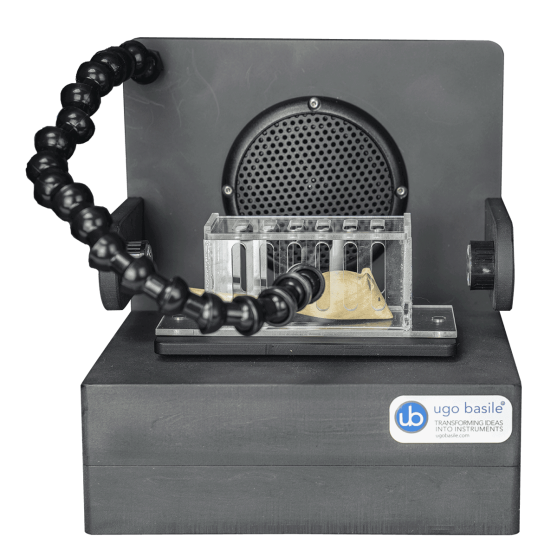
The Ugo Basile Startle Reflex (PPI) System quantifies prepulse inhibition of the startle reflex in mice and rats. The system consists of a visible/infrared light source, a speaker, a pressure sensor, and a data recording and analysis system. After the animal is stimulated with sound, light, or airflow, the gravity changes caused by the startle response are detected by the pressure sensor and transmitted to the data recording and analysis system for analysis.
Product Advantages
1. High sensitivity, automatic detection, low external environment interference
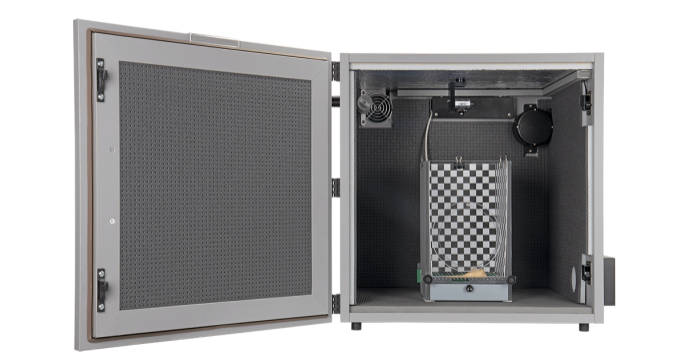
The system is equipped with a highly sensitive pressure sensor with a sampling frequency of up to 1Khz. It can dynamically monitor the fine movements of animals and the corresponding gravity changes, and automatically detect the animal's startle response. At the same time, the compact design and high-quality soundproof box can minimize the impact of the external environment on the experiment.
2. The software is powerful, the interface is intuitive, and the experimental parameters are highly customizable
The stimulus, pre-stimulus, and inter-stimulus intervals within the experimental program can be freely configured through programmable controls (light, volume, audio, white noise, airflow, and auxiliary I/O). Experiment types include pre-stimulus, strong stimulus, pre-stimulus-stimulus, and baseline acquisition. The software includes automatic statistical analysis and can export raw data in .csv format.
3. The experiment covers animals of different sizes and supports high-throughput experiments
Depending on the size of the animal, two test platforms, rats and mice, and four animal holders are available. These platforms can be used to test mice, rats, and even obese rats. This system also supports high-throughput experiments, allowing for simultaneous testing of multiple animals and rapid data analysis.
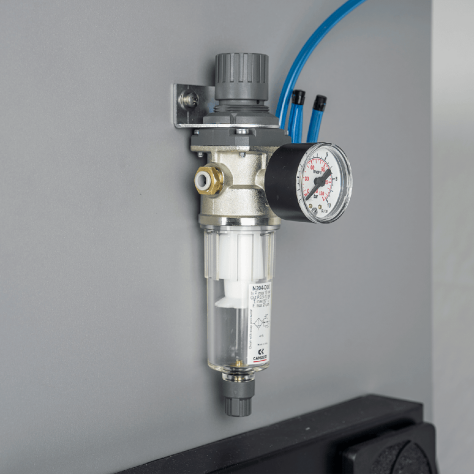
4. Strong scalability, providing air-blowing stimulation components
The system offers an air puff stimulation upgrade kit, allowing for more diverse experimental methods with different stimulation types. It can also be equipped with a synchronized video acquisition system and Any-maze professional behavioral video analysis software to extract and analyze visual information.
5. Universal components save experimental costs
The soundproof enclosure of the Ugo Basile startle reflex system is fully compatible with the fear conditioning system. By purchasing a few accessories, this system can be upgraded to a universal startle reflex and fear conditioning system. In addition to studying sensory-motor related psychiatric disorders, it can also involve the formation of fear, emotional memory, anxiety and depression.
Experimental methods and typical application scenarios
Experimental Methods: Mice were placed in a transparent holder (90 x 45 x 50 mm) above a platform. After acclimation for ten minutes, their acoustic startle responses were tested. Sound stimuli were delivered via a speaker mounted on the side of the holder. A high-precision gravity sensor detected the amplitude and peak of the startle response and recorded data for 300 ms after the startle onset. Experiments were divided into two modes: 1. Single startle: 120 dB volume, 40 ms duration; 2. Prestimulus-startle: 20 ms prestimulus followed by 80 ms interval and 40 ms of 120 dB startle. 65 dB broadband white noise was present throughout the training. The entire testing protocol consisted of 40 trials, consisting of single startle trials and prestimulus-startle trials (68, 75, and 85 dB prestimulus). Trials were presented in a randomized order, with an average intertrial interval of 15 s (ranging from 9 to 21 s). The PPI test lasted 20 minutes, and prepulse inhibition (PPI) was used as the metric.
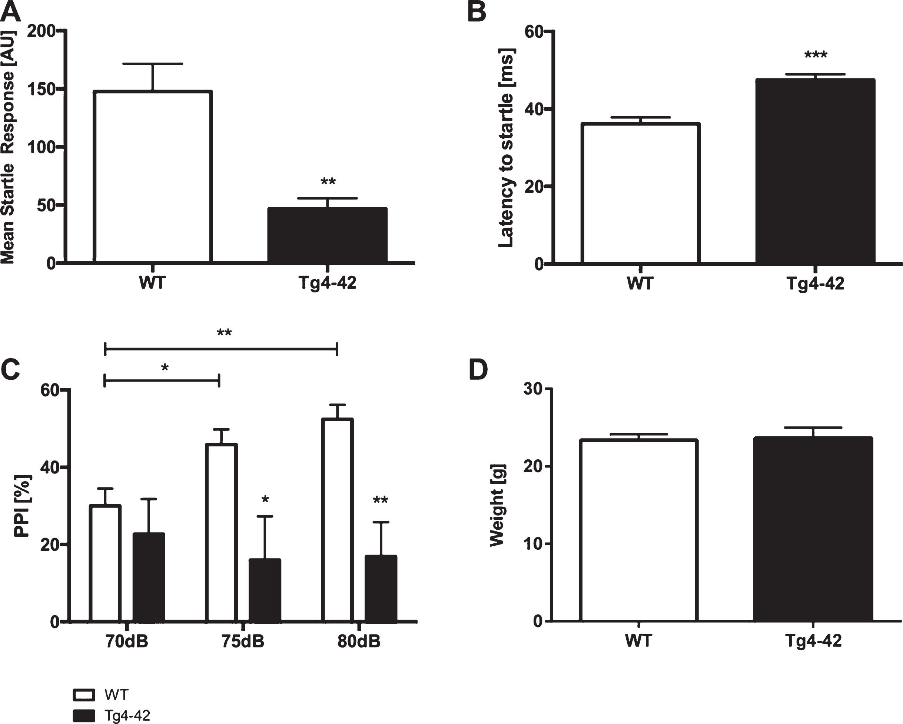
Insufficient prepulse inhibition indicates an inability to filter out unnecessary information from brain integration, which is associated with dysregulation of sensorimotor gating. Sichler et al. tested the PPI in Tg4-42 mice (a model of Alzheimer's disease). They found that the startle response amplitude and PPI inhibition rate were significantly reduced in Tg4-42 mice, while their response to stimuli was delayed. Tg4-42 mice demonstrated intact hearing in a fear conditioning task, suggesting that PPI deficits are caused by altered sensory processing rather than hearing impairment. Their study is the first to demonstrate that Tg4-42 mice exhibit impaired sensorimotor gating during the disease stage.
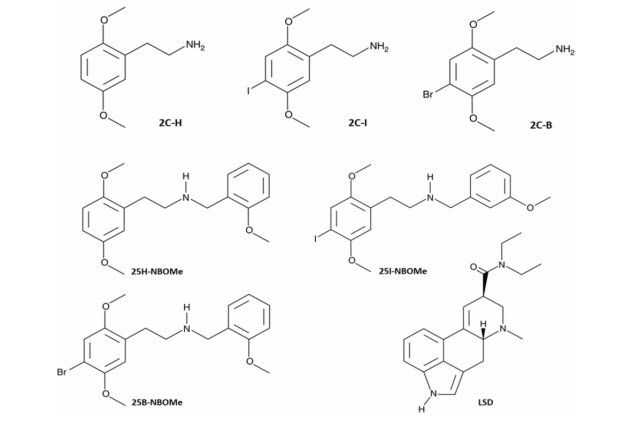
Tirri et al. conducted a comprehensive evaluation of the hallucinogen 25H-NBOMe and its halogenated derivatives to better understand the potential public health risks posed by these compounds, particularly in driving and hazardous work requiring specialized sensorimotor skills. Administration of a range of NBOMe doses (1-10 mg/kg, intraperitoneal) and LSD (10 mg/kg, intraperitoneal) resulted in impairment of the auditory startle reflex. Subsequent PPI testing revealed that low doses of 25I-NBOMe and 25B-NBOMe exhibited significant PPI suppression. A series of tests, including visual, auditory, tactile, reaction time, open field, and grip strength tests, demonstrated that 25I-NBOMe and 25B-NBOMe significantly impaired vision, hearing, reaction time, and sensorimotor gating (PPI) in mice. These results provide valuable insights for the comprehensive evaluation and potential research directions of this class of psychoactive substances.
The text and illustrations include the chemical structure of hallucinogens, the effects of 25H-NBOMe and other compounds on the startle reflex in mice, and the effects of 25H-NBOMe and other compounds on the PPI phenomenon in mice.
In vitro competitive binding experiments confirmed that MAM-2201 and AM-2201 have nanomolar affinities for both CD-1 mouse and human CB1 and CB2 receptors, with a preference for CB1 receptors. In vivo studies demonstrated that MAM-2201 caused visual, auditory, and tactile impairments, which were completely prevented by pretreatment with the CB1 receptor antagonist/partial agonist AM-251, suggesting that CB1 receptors mediate MAM-2201's mechanism of action. MAM-2201 reduced the amplitude of the startle response in mice at only 1 mg/kg, but inhibited PPI at a dose of 0.1 mg/kg, suggesting deleterious effects on motor and sensory gating functions. These findings suggest that synthetic cannabinoids may pose a potential public health burden, particularly by impairing driving and sensorimotor-related task performance.
Figure 2 Effects of MAM-2201 on the startle response amplitude and PPI phenomenon of mice 15min and 120min after administration
About Ugo Basile
Ugo Basile was founded in Milan, Italy, in 1963 by Mr. Ugo Basile, formerly Chief Laboratory Technician at the Department of Veterinary Physiology at the University of Milan. He possesses extensive experience in developing and refining animal laboratory instruments, successfully launching a wide range of highly acclaimed advanced instruments. Through decades of development and continuous technological innovation, Ugo Basile has grown into an innovative company specializing in the development of experimental methods and instruments for the neuroscience field. Its products, trusted tools by researchers worldwide, have garnered tens of thousands of citations. Ugo Basile is also committed to collaborating with researchers to transform laboratory prototypes into commercial instruments for the benefit of consumers.
References
1. Hoffman HS, Searle J L. Acoustic and temporal factors in the evocation of startle[J]. The Journal of the Acoustical Society of America, 1968, 43(2): 269-282.
2. Wang Haoyue, Huang Danyi, Li Jun, et al. Application of the startle reflex system in studying sensorimotor gating function in mice[D]. Journal of Neuroscience, 2014.
3. Swerdlow NR, Braff DL, Geyer M A. Cross-species studies of sensorimotor gating of the startle reflex[J]. Annals of the New York Academy of Sciences, 1999, 877(1): 202-216.
4. Fendt M, Li L, Yeomans J S. Brain stem circuits mediating prepulse inhibition of the startle reflex[J]. Psychopharmacology, 2001, 156: 216-224.
5. Geyer MA, Swerdlow N R. Measurement of startle response, prepulse inhibition, and habituation[J]. Current protocols in neuroscience, 1998, 3(1): 8.7. 1-8.7. 15.
6. Koch M, Fendt M. Startle response modulation as a behavioral tool in neuropharmacology[J]. Current Neuropharmacology, 2003, 1(2): 175-185.
7. Gómez-Nieto R, Hormigo S, López D E. Prepulse inhibition of the auditory startle reflex assessment as a hallmark of brainstem sensorimotor gating mechanisms[J]. Brain sciences, 2020, 10(9): 639.
8. Corli G, Tirri M, Bilel S, et al. MAM-2201 acute administration impairs motor, sensorimotor, prepulse inhibition, and memory functions in mice: a comparison with its analogue AM-2201[J]. Psychopharmacology, 2023, 240(7): 1435-1452.
9. Tirri M, Bilel S, Arfè R, et al. Effect of-NBOMe compounds on sensorimotor, motor, and prepulse inhibition responses in mice in comparison with the 2C analogs and lysergic acid diethylamide: from preclinical evidence to forensic implication in driving under the influence of drugs[J]. Frontiers in Psychiatry, 2022, 13: 875722.
10. Tirri M, Ponzoni L, Bilel S, et al. Acute DOB and PMA administration impairs motor and sensorimotor responses in mice and causes hallucinogenic effects in adult zebrafish[J]. Brain Sciences, 2020, 10(9): 586.
11. Bilel S, Tirri M, Arfè R, et al. Pharmacological and behavioral effects of the synthetic cannabinoid AKB48 in rats[J]. Frontiers in Neuroscience, 2019, 13: 1163.
12. Braff DL, Geyer MA, Swerdlow N R. Human studies of prepulse inhibition of startle: normal subjects, patient groups, and pharmacological studies[J]. Psychopharmacology, 2001, 156: 234-258.
13. Koch M. The neurobiology of startle[J]. Progress in neurobiology, 1999, 59(2): 107-128.
14. Hoffman HS, Fleshler M. Startle reaction: Modification by background acoustic stimulation[J]. Science, 1963, 141(3584): 928-930.
15. Marsh RR, Hoffman HS, Stitt CL, et al. The role of small changes in the acoustic environment in modifying the startle reflex[J]. Journal of Experimental Psychology: Animal Behavior Processes, 1975, 1(3): 235.
Ugo Basile's startle reflex system | An important experimental tool for studying the mechanisms of mental illness, antipsychotic drugs, and sensorimotor gating function
Startle reflex and prepulse inhibition
The startle reflex is an instinctive defensive mechanism in animals against potential threats: when exposed to a strong, sudden external stimulus, such as sound, light, or visual impact, the entire body's muscles flex and startle. Sensorimotor gating is a neural mechanism that filters out irrelevant stimuli to prevent overload of higher brain functions and ensure that the central nervous system deeply encodes only meaningful sensory information. When multiple stimuli are presented sequentially, the central nervous system prioritizes the earlier stimulus; even if a stronger stimulus is presented later, the startle response is suppressed. This phenomenon is known as prepulse inhibition (PPI). The prepulse inhibition ratio is the primary parameter for assessing sensorimotor gating function. Brain regions mediating the startle reflex and PPI are located in the brainstem and include the cochlear nucleus, caudal pontine reticular nucleus, inferior and superior colliculi, pedunculopontine nucleus, dorsolateral tegmental nucleus, and substantia nigra. In addition, several cortical limbic regions, such as the nucleus accumbens, ventral pallidum, basolateral amygdala, and dorsomedial thalamic nucleus, are also involved in regulating PPI.
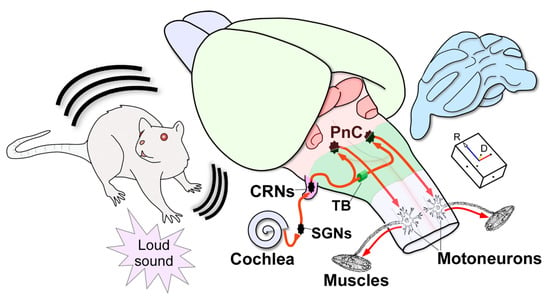
Prepulse Inhibition of Startle Reflex (PPI) can be understood as the assessment of an animal's sensorimotor gating function by observing and analyzing prepulse inhibition during a startle reflex experiment. This experimental method is often used to study psychiatric disorders such as schizophrenia, depression, Huntington's disease, autism, and obsessive-compulsive disorder, as these conditions are often associated with dysfunctional sensory-motor integration. Studies have also confirmed PPI deficits in Alzheimer's disease model mice. Through this experiment, scientists can gain a deeper understanding of the pathogenesis of these diseases and provide theoretical support for their treatment and intervention. For example, while a clear PPI phenomenon is observed when sensorimotor gating is normal, individuals with schizophrenia exhibit PPI deficiency, and relevant drugs can alleviate or exacerbate this phenomenon.
Prepulse inhibition (PPI), a crucial neurological phenomenon, is closely linked to human cognitive function and mental health. Researchers have demonstrated that PPI can be studied across species. Testing PPI in rodents has translational value, enabling the evaluation of various therapeutic approaches (such as potential antipsychotic drugs) and the exploration of the genetic and neurobiological mechanisms underlying disease.
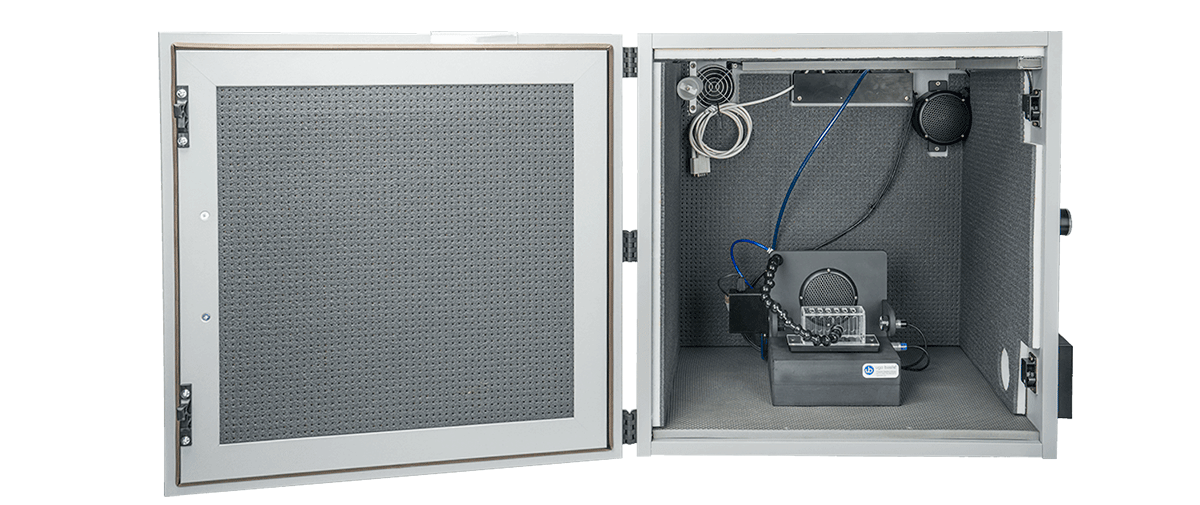
The Ugo Basile Startle Reflex (PPI) System quantifies prepulse inhibition of the startle reflex in mice and rats. The system consists of a visible/infrared light source, a speaker, a pressure sensor, and a data recording and analysis system. After the animal is stimulated with sound, light, or airflow, the gravity changes caused by the startle response are detected by the pressure sensor and transmitted to the data recording and analysis system for analysis.
Product Advantages
1. High sensitivity, automatic detection, low external environment interference
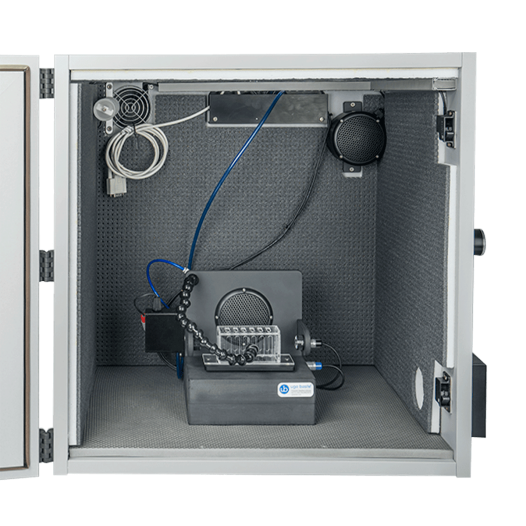
The system is equipped with a highly sensitive pressure sensor with a sampling frequency of up to 1Khz. It can dynamically monitor the fine movements of animals and the corresponding gravity changes, and automatically detect the animal's startle response. At the same time, the compact design and high-quality soundproof box can minimize the impact of the external environment on the experiment.
2. The software is powerful, the interface is intuitive, and the experimental parameters are highly customizable
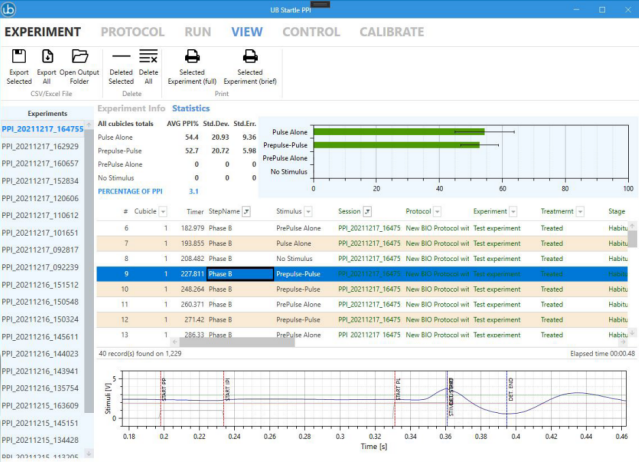
The stimulus, pre-stimulus, and inter-stimulus intervals within the experimental program can be freely configured through programmable controls (light, volume, audio, white noise, airflow, and auxiliary I/O). Experiment types include pre-stimulus, strong stimulus, pre-stimulus-stimulus, and baseline acquisition. The software includes automatic statistical analysis and can export raw data in .csv format.
3. The experiment covers animals of different sizes and supports high-throughput experiments
Depending on the size of the animal, two test platforms, rats and mice, and four animal holders are available. These platforms can be used to test mice, rats, and even obese rats. This system also supports high-throughput experiments, allowing for simultaneous testing of multiple animals and rapid data analysis.
4. Strong scalability, providing air-blowing stimulation components
The system offers an air puff stimulation upgrade kit, allowing for more diverse experimental methods with different stimulation types. It can also be equipped with a synchronized video acquisition system and Any-maze professional behavioral video analysis software to extract and analyze visual information.
5. Universal components save experimental costs
The soundproof enclosure of the Ugo Basile startle reflex system is fully compatible with the fear conditioning system. By purchasing a few accessories, this system can be upgraded to a universal startle reflex and fear conditioning system. In addition to studying sensory-motor related psychiatric disorders, it can also involve the formation of fear, emotional memory, anxiety and depression.
Experimental methods and typical application scenarios
Experimental Methods: Mice were placed in a transparent holder (90 x 45 x 50 mm) above a platform. After acclimation for ten minutes, their acoustic startle responses were tested. Sound stimuli were delivered via a speaker mounted on the side of the holder. A high-precision gravity sensor detected the amplitude and peak of the startle response and recorded data for 300 ms after the startle onset. Experiments were divided into two modes: 1. Single startle: 120 dB volume, 40 ms duration; 2. Prestimulus-startle: 20 ms prestimulus followed by 80 ms interval and 40 ms of 120 dB startle. 65 dB broadband white noise was present throughout the training. The entire testing protocol consisted of 40 trials, consisting of single startle trials and prestimulus-startle trials (68, 75, and 85 dB prestimulus). Trials were presented in a randomized order, with an average intertrial interval of 15 s (ranging from 9 to 21 s). The PPI test lasted 20 minutes, and prepulse inhibition (PPI) was used as the metric.
Insufficient prepulse inhibition indicates an inability to filter out unnecessary information from brain integration, which is associated with dysregulation of sensorimotor gating. Sichler et al. tested the PPI in Tg4-42 mice (a model of Alzheimer's disease). They found that the startle response amplitude and PPI inhibition rate were significantly reduced in Tg4-42 mice, while their response to stimuli was delayed. Tg4-42 mice demonstrated intact hearing in a fear conditioning task, suggesting that PPI deficits are caused by altered sensory processing rather than hearing impairment. Their study is the first to demonstrate that Tg4-42 mice exhibit impaired sensorimotor gating during the disease stage.
Tirri et al. conducted a comprehensive evaluation of the hallucinogen 25H-NBOMe and its halogenated derivatives to better understand the potential public health risks posed by these compounds, particularly in driving and hazardous work requiring specialized sensorimotor skills. Administration of a range of NBOMe doses (1-10 mg/kg, intraperitoneal) and LSD (10 mg/kg, intraperitoneal) resulted in impairment of the auditory startle reflex. Subsequent PPI testing revealed that low doses of 25I-NBOMe and 25B-NBOMe exhibited significant PPI suppression. A series of tests, including visual, auditory, tactile, reaction time, open field, and grip strength tests, demonstrated that 25I-NBOMe and 25B-NBOMe significantly impaired vision, hearing, reaction time, and sensorimotor gating (PPI) in mice. These results provide valuable insights for the comprehensive evaluation and potential research directions of this class of psychoactive substances.
The text and illustrations include the chemical structure of hallucinogens, the effects of 25H-NBOMe and other compounds on the startle reflex in mice, and the effects of 25H-NBOMe and other compounds on the PPI phenomenon in mice.
In vitro competitive binding experiments confirmed that MAM-2201 and AM-2201 have nanomolar affinities for both CD-1 mouse and human CB1 and CB2 receptors, with a preference for CB1 receptors. In vivo studies demonstrated that MAM-2201 caused visual, auditory, and tactile impairments, which were completely prevented by pretreatment with the CB1 receptor antagonist/partial agonist AM-251, suggesting that CB1 receptors mediate MAM-2201's mechanism of action. MAM-2201 reduced the amplitude of the startle response in mice at only 1 mg/kg, but inhibited PPI at a dose of 0.1 mg/kg, suggesting deleterious effects on motor and sensory gating functions. These findings suggest that synthetic cannabinoids may pose a potential public health burden, particularly by impairing driving and sensorimotor-related task performance.
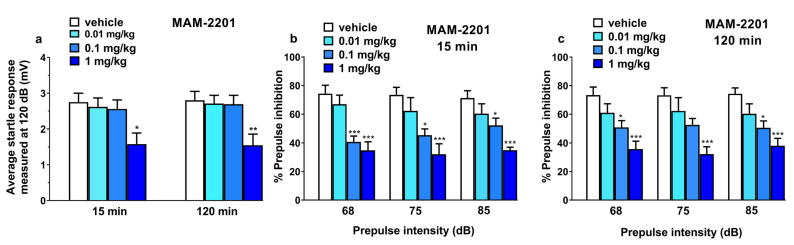
Figure 2 Effects of MAM-2201 on the startle response amplitude and PPI phenomenon of mice 15min and 120min after administration
About Ugo Basile
Ugo Basile was founded in Milan, Italy, in 1963 by Mr. Ugo Basile, formerly Chief Laboratory Technician at the Department of Veterinary Physiology at the University of Milan. He possesses extensive experience in developing and refining animal laboratory instruments, successfully launching a wide range of highly acclaimed advanced instruments. Through decades of development and continuous technological innovation, Ugo Basile has grown into an innovative company specializing in the development of experimental methods and instruments for the neuroscience field. Its products, trusted tools by researchers worldwide, have garnered tens of thousands of citations. Ugo Basile is also committed to collaborating with researchers to transform laboratory prototypes into commercial instruments for the benefit of consumers.
References
1. Hoffman HS, Searle J L. Acoustic and temporal factors in the evocation of startle[J]. The Journal of the Acoustical Society of America, 1968, 43(2): 269-282.
2. Wang Haoyue, Huang Danyi, Li Jun, et al. Application of the startle reflex system in studying sensorimotor gating function in mice[D]. Journal of Neuroscience, 2014.
3. Swerdlow NR, Braff DL, Geyer M A. Cross-species studies of sensorimotor gating of the startle reflex[J]. Annals of the New York Academy of Sciences, 1999, 877(1): 202-216.
4. Fendt M, Li L, Yeomans J S. Brain stem circuits mediating prepulse inhibition of the startle reflex[J]. Psychopharmacology, 2001, 156: 216-224.
5. Geyer MA, Swerdlow N R. Measurement of startle response, prepulse inhibition, and habituation[J]. Current protocols in neuroscience, 1998, 3(1): 8.7. 1-8.7. 15.
6. Koch M, Fendt M. Startle response modulation as a behavioral tool in neuropharmacology[J]. Current Neuropharmacology, 2003, 1(2): 175-185.
7. Gómez-Nieto R, Hormigo S, López D E. Prepulse inhibition of the auditory startle reflex assessment as a hallmark of brainstem sensorimotor gating mechanisms[J]. Brain sciences, 2020, 10(9): 639.
8. Corli G, Tirri M, Bilel S, et al. MAM-2201 acute administration impairs motor, sensorimotor, prepulse inhibition, and memory functions in mice: a comparison with its analogue AM-2201[J]. Psychopharmacology, 2023, 240(7): 1435-1452.
9. Tirri M, Bilel S, Arfè R, et al. Effect of-NBOMe compounds on sensorimotor, motor, and prepulse inhibition responses in mice in comparison with the 2C analogs and lysergic acid diethylamide: from preclinical evidence to forensic implication in driving under the influence of drugs[J]. Frontiers in Psychiatry, 2022, 13: 875722.
10. Tirri M, Ponzoni L, Bilel S, et al. Acute DOB and PMA administration impairs motor and sensorimotor responses in mice and causes hallucinogenic effects in adult zebrafish[J]. Brain Sciences, 2020, 10(9): 586.
11. Bilel S, Tirri M, Arfè R, et al. Pharmacological and behavioral effects of the synthetic cannabinoid AKB48 in rats[J]. Frontiers in Neuroscience, 2019, 13: 1163.
12. Braff DL, Geyer MA, Swerdlow N R. Human studies of prepulse inhibition of startle: normal subjects, patient groups, and pharmacological studies[J]. Psychopharmacology, 2001, 156: 234-258.
13. Koch M. The neurobiology of startle[J]. Progress in neurobiology, 1999, 59(2): 107-128.
14. Hoffman HS, Fleshler M. Startle reaction: Modification by background acoustic stimulation[J]. Science, 1963, 141(3584): 928-930.
15. Marsh RR, Hoffman HS, Stitt CL, et al. The role of small changes in the acoustic environment in modifying the startle reflex[J]. Journal of Experimental Psychology: Animal Behavior Processes, 1975, 1(3): 235.
- Prev: Yuyan Cigarette Exposure System | Automatic, flexible, and safe establishment of cigarette exposure mouse models – facilitating pathological research on COPD
- Next: Peira | Small Animal Tumor Measuring Instrument - Say Goodbye to Manual Measurement!Black technology for measuring surface tumor size