




Ugo Basile Fatigue Rotarod: A Good Helper and Gold Standard for Testing Motor Coordination Function in Rats and Mice
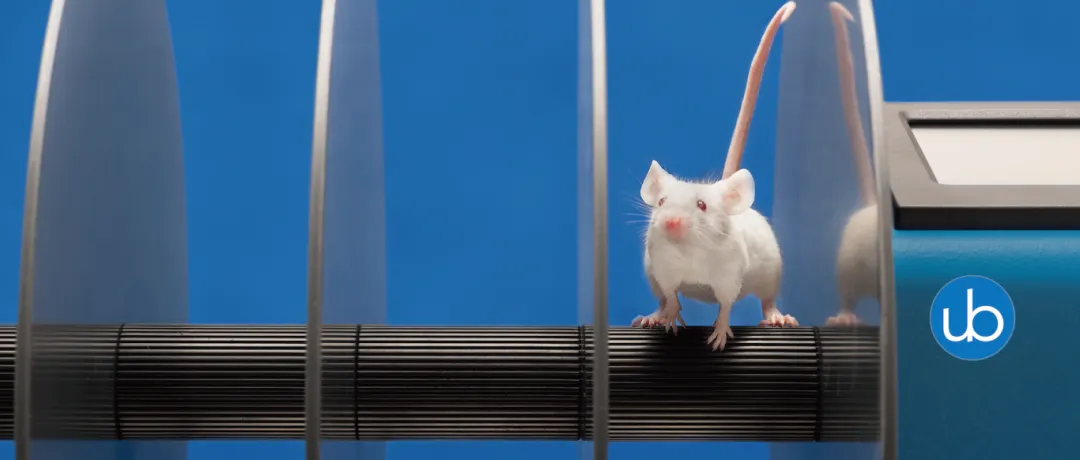
In March 2024, Dr. Zhang Ran, currently at Tsinghua University, published a research paper titled "Regulation of the urea cycle by reversible high-stoichiometry lysine succinylation" in the internationally renowned journal Nature Metabolism (IF: 16.2) as the first author. Corresponding authors were Professor Eric Verdin of the University of California, San Francisco, and Professor Birgit Schilling of the Buck Institute for Research on Aging. The experiments, designed to verify animal motor coordination, utilized the rotarod, one of Ugo Basile's flagship products.

Background
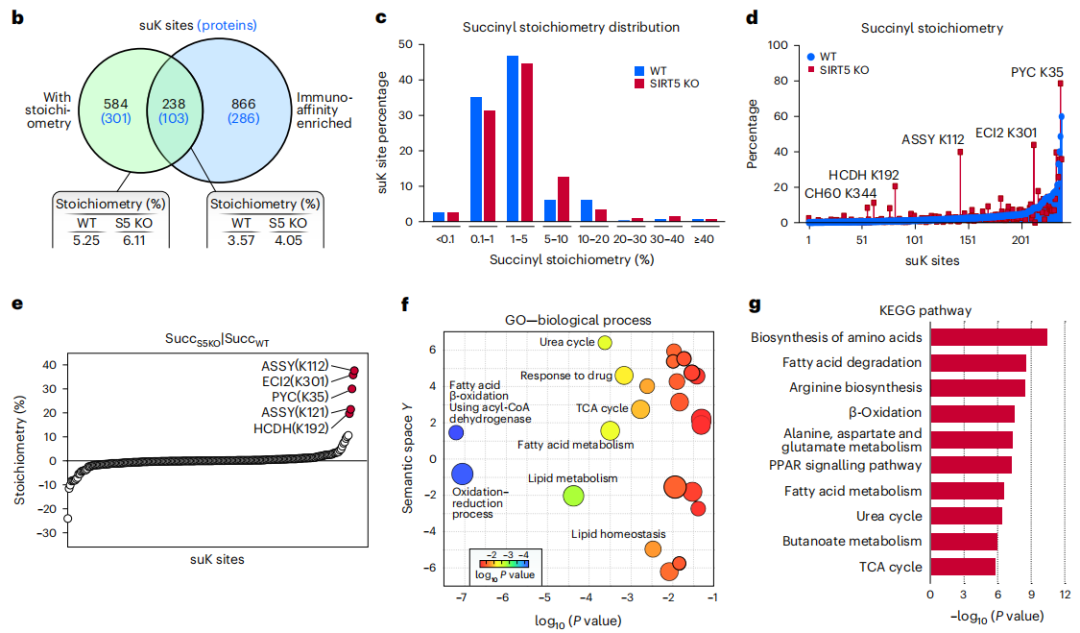
Currently, researchers have been able to identify thousands of succinylation sites within cells using antibody enrichment combined with proteomics analysis, but determining whether they are biologically significant is difficult. This study explored a method for globally identifying succinylation levels within cells, allowing rapid identification of functionally important, high-modification sites.
Experimental methods
Quantitative modification rate: SIRT5 (succinylation demodification enzyme) WT/KO mouse liver was lysed, and then the protein was fully introduced with heavy-labeled d4-succinic anhydride. After GluC enzymatic digestion, SWATH-DIA was used to detect the modification rate. Finally, the ratio of light-labeled to heavy-labeled succinylated modified peptides was used to determine the modification rate.
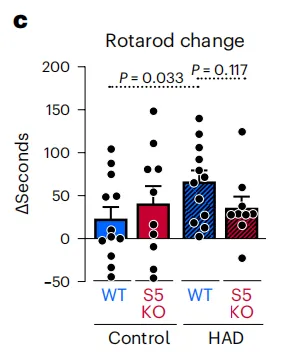
Phenotypic motor coordination function assessment: Testing was performed using the Ugo Basile rotarod apparatus on days 1, 14, and 28. Mice were acclimated for 30 minutes before the experiment. Each test consisted of a training phase and an experimental phase. During the training phase, mice remained on the rotarod at a constant speed of 5 rpm for 5 minutes. Mice were placed in separate lanes before the rotarod began to rotate (up to five mice could be tested simultaneously in a single experiment). The experiment was conducted three times, with a 30-minute interval between each session. The rotarod rotated slowly for the first 5 seconds of each experimental phase, followed by a gradual increase in speed from 5 to 50 rpm over the next 6 minutes. The experiment ended automatically if the mouse fell off the rod and was detected by the system; the experiment was manually recorded as ending when the mouse grasped the rod and rotated with it.
Experimental results
01. Identification of succinylation modification sites
02. Changes in modification levels after SIRT5 knockout
03. Protein structure analysis
04. Urea cycle metabolism level detection
Experimental Conclusion
Ugo Basile Rotarod - Classic and easy to use, the gold standard for testing
The rotarod technique, originating from research published by NW Dunham and TSMiya in 1957, has proven valuable in screening for drugs with potential effects on motor coordination and function in mice and rats. The Ugo Basile Rotarod, the world's first rotarod developed based on this method for mice and rats, was named the "Rota-Rod." It is widely used in neuroscience research on Alzheimer's disease, ALS, Huntington's disease, brain damage, anxiety, and depression, and can also be applied to other studies investigating motor coordination.
01. Diverse models to meet different needs
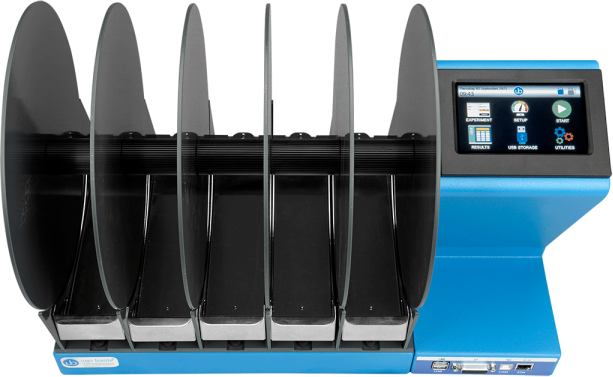
Five rotation modes allow users to customize experimental protocols and adapt to a variety of animal models. Choose from: constant speed mode, linear acceleration mode, acceleration-deceleration mode, forward and reverse mode, and multi-stage rotation mode (this mode is user-defined).

02. Multi-channel operation, supporting simultaneous experiments on multiple animals
The mouse rotarod offers five channels, while the rat rotarod offers four channels. As mice in each channel fall from the rotating rod to the drop sensor below, the device automatically records rotation speed and endurance time. At the end of a multi-animal test, the display shows each animal's movement time, rotation mode, and rotation speed at the time of fall, as well as user-preset information.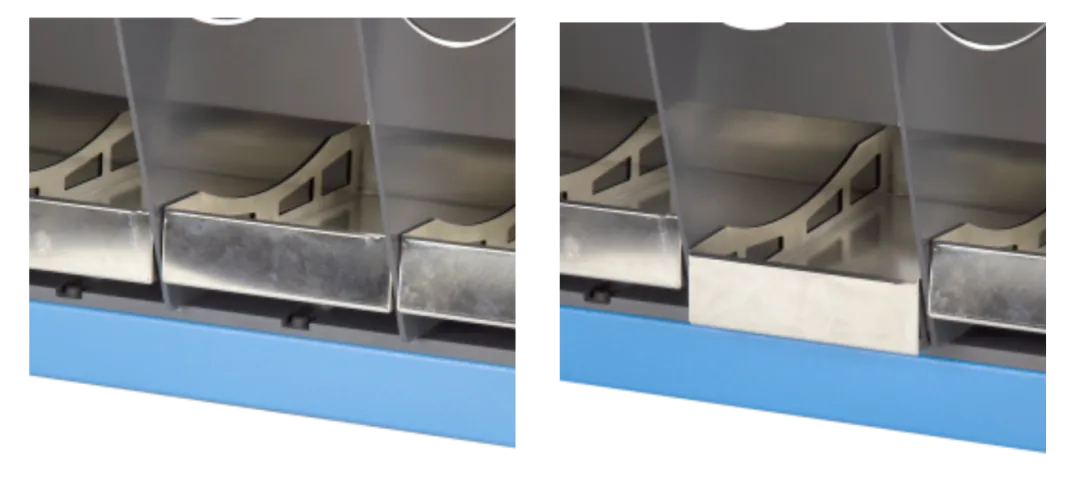
03. Composite wheel, more sensitive testing
Developed jointly by Ugo Basile and Professor Bellesi of the University of Camerino in Italy, the optional installation of a composite wheel on the basic rotarod transforms the original uniform, continuous climbing surface into a stepped pattern of horizontal rods. The number of these rods can be increased, either symmetrically or asymmetrically, to vary the complexity of the test. According to recent publications, the composite wheel improves the sensitivity of the test, enabling the detection of even the smallest changes in motor deficits, making it particularly suitable for rats.
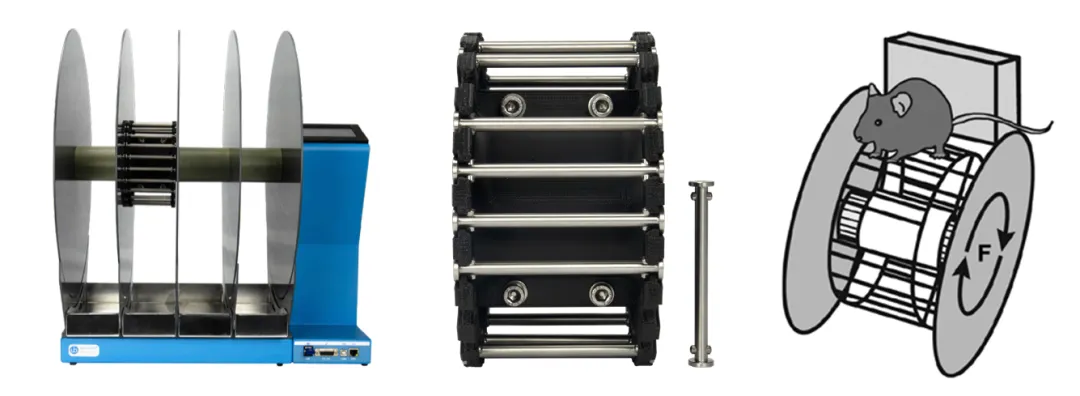
The RotaRod, a composite wheel for mice and rats, introduces additional complexity and improves sensitivity to motor coordination tests in mice and rats. Animals walk on a wheel with irregular horizontal bars, and the difficulty of the task can be controlled by randomly removing some bars, thereby adjusting the degree of motor cortex and hippocampal involvement. Available models for both mice and rats provide optimal experimental results.
04. Wide range of applications and high number of literature citations
It can be applied to fatigue experiments, skeletal muscle relaxation experiments, central nervous system inhibition experiments, and other experiments that require exercise to detect drug effects, such as the effect of toxicity on exercise capacity, the effect of substance deficiency on exercise capacity, the effect of cardiovascular and cerebrovascular drugs on exercise capacity, etc.
It is often used in conjunction with other behavioral tests, such as grip strength and tail suspension tests, to measure an animal's muscle function, coordination, and balance. It has been cited in over 6,000 peer-reviewed articles and is considered the gold standard test for motor coordination research.
Related product recommendations
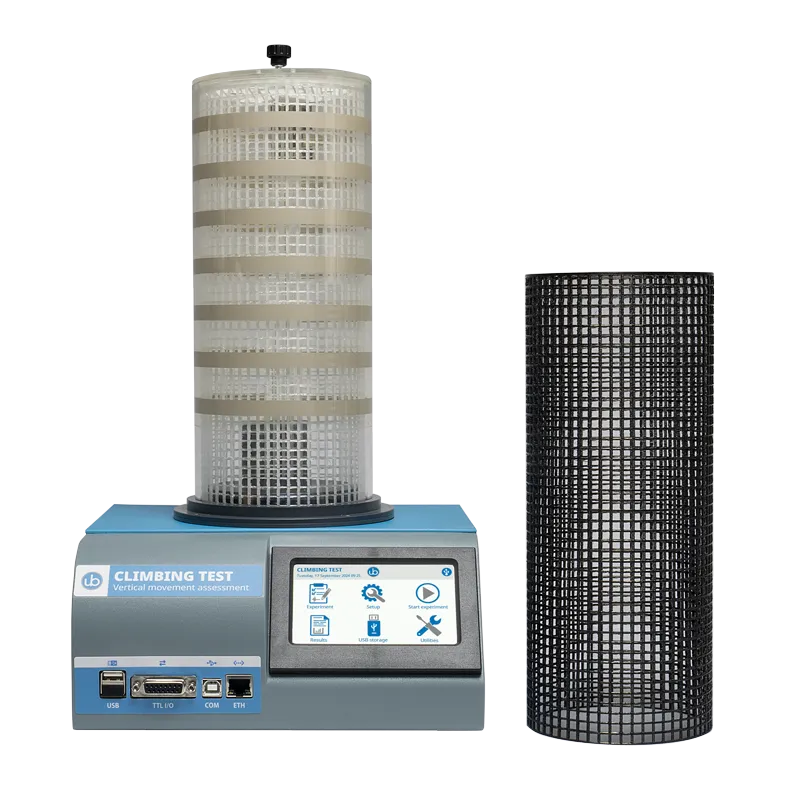
The Ugo Basile Climbing Tester, jointly developed by Ugo Basile of Italy and Professor Sidney Negus's team at Virginia Commonwealth University, is an experimental instrument that automatically measures and quantifies vertical climbing behavior in mice. The Climbing Tester is designed to provide researchers with a simple, automated tool for investigating the vertical movement of small rodents within a cylinder.
02. UGO Grip Dynamometer
The Ugo Basile Grip Strength Meter is a classic device for assessing the grip strength of the forelimbs, hindlimbs, and all four limbs of mice and rats. It can be used to test the effects of muscle relaxants, neuroleptics, and stimulants on limb strength. It can also be used to assess animal aging, nerve damage, skeletal muscle damage, and postoperative recovery. It has a wide range of applications.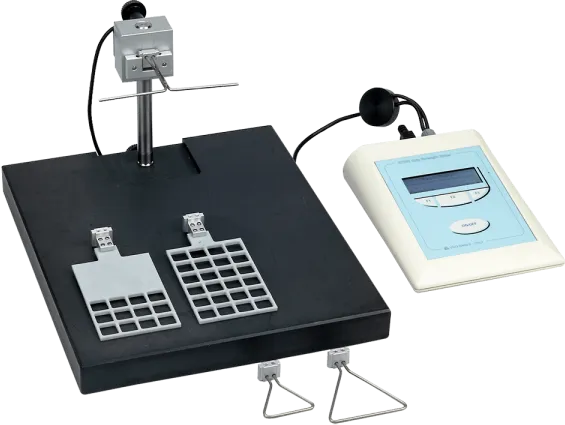
03.UGO fully automatic animal treadmill
The Ugo Basile fully automatic animal treadmill can be used for exercise fatigue testing in mice and rats across various disease models. Based on a belt-based runway, the device allows for forced exercise training and accurate fatigue testing of mice and rats by adjusting the belt speed and track inclination. All parameter settings are conveniently controlled via the instrument's touchscreen or accompanying software.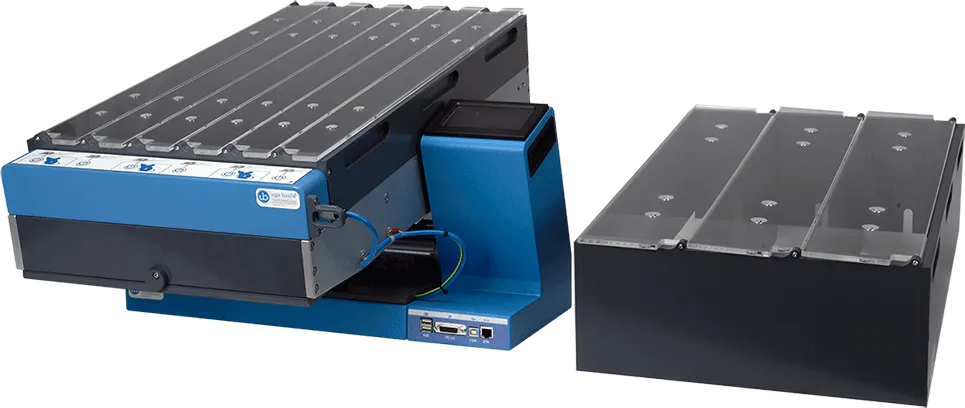
Some user documents
1.Achilly NP, Wang W, Zoghbi HY. Presymptomatic training mitigates functional deficits in a mouse model of Rett syndrome. Nature. 2021;592(7855):596-600. doi:10.1038/s41586-021-03369-7
2. Lieb A, Qiu Y, Dixon CL, et al. Biochemical autoregulatory gene therapy for focal epilepsy. Nat Med. 2018;24(9):1324-1329. doi:10.1038/s41591-018-0103-x
3.Cocozza G, di Castro MA, Carbonari L, et al. Ca2+-activated K+ channels modulate microglia affecting motor neuron survival in hSOD1G93A mice. Brain Behav Immun. 2018;73:584-595. doi:10.1016/j.bbi.2018.07.002
4.Gautam M, Jara JH, Kocak N, et al. Mitochondria, ER, and nuclear membrane defects reveal early mechanisms for upper motor neuron vulnerability with respect to TDP-43 pathology. Acta Neuropathol. 2019;137(1):47-69. doi:10.1007/s00401-018-1934-8
5. Weston M, Kaserer T, Wu A, et al. Olanzapine: A potent agonist at the hM4D(Gi) DREADD amenable to clinical translation of chemogenetics. Sci Adv. 2019;5(4):eaaw1567. Published 2019 Apr 17. doi:10.1126/sciadv.aaw1567
6. Elorza A, Márquez Y, Cabrera JR, et al. Huntington's disease-specific mis-splicing unveils key effector genes and altered splicing factors. Brain. 2021;144(7):2009-2023. doi:10.1093/brain/awab087
7. Alonso Bellido IM, Posada-Pérez M, Hernández-Rasco F, et al. Microglial Caspase-3 is essential for modulating hippocampal neurogenesis. Brain Behav Immun. 2023;112:206-219. doi:10.1016/j.bbi.2023.06.013
8. Alonso Bellido IM, Posada-Pérez M, Hernández-Rasco F, et al. Microglial Caspase-3 is essential for modulating hippocampal neurogenesis. Brain Behav Immun. 2023;112:206-219. doi:10.1016/j.bbi.2023.06.013
9.Haigh JL, Adhikari A, Copping NA, et al. Deletion of a non-canonical regulatory sequence causes loss of Scn1a expression and epileptic phenotypes in mice. Genome Med. 2021;13(1):69. Published 2021 Apr 26. doi:10.1186/s13073-021-00884-0
10. Zhang Y, Mickle AD, Gutruf P, et al. Battery-free, fully implantable optofluidic cuff system for wireless optogenetic and pharmacological neuromodulation of peripheral nerves. Sci Adv. 2019;5(7):eaaw5296. Published 2019 Jul 5. doi:10.1126/sciadv.aaw5296
Further Reading
Ugo Basile Climbing Tester | A New Vertical Motor Function Test: An Emerging Perspective on Pain Assessment in Rodents!

Ugo Basile | Thermal Pain Testing Experiment – Introduction to the Plantar Hot Spot Tester Experiment

A guide to the 50% withdrawal threshold for mice and rats: Accurate assessment of pain quantification


Yuyan Instruments was founded in 2010. With 14 years of independent research and development, it focuses on the design, production and sales of life science instruments such as IVC cages, animal gas anesthesia machines, and physiological signal acquisition systems. It is committed to providing customers with effective and reasonable system solutions for life science research and laboratory construction.
Yuyan Instruments has served more than 10,000 customers from domestic and foreign companies and organizations. It has established several offices and after-sales service centers across the country, such as Beijing, Shanghai, and Guangzhou. The instruments are widely used in major research institutes and universities and are widely praised.!