




No more blind tail vein injections! A new device can light up mouse blood vessels, boosting experimental success rates.
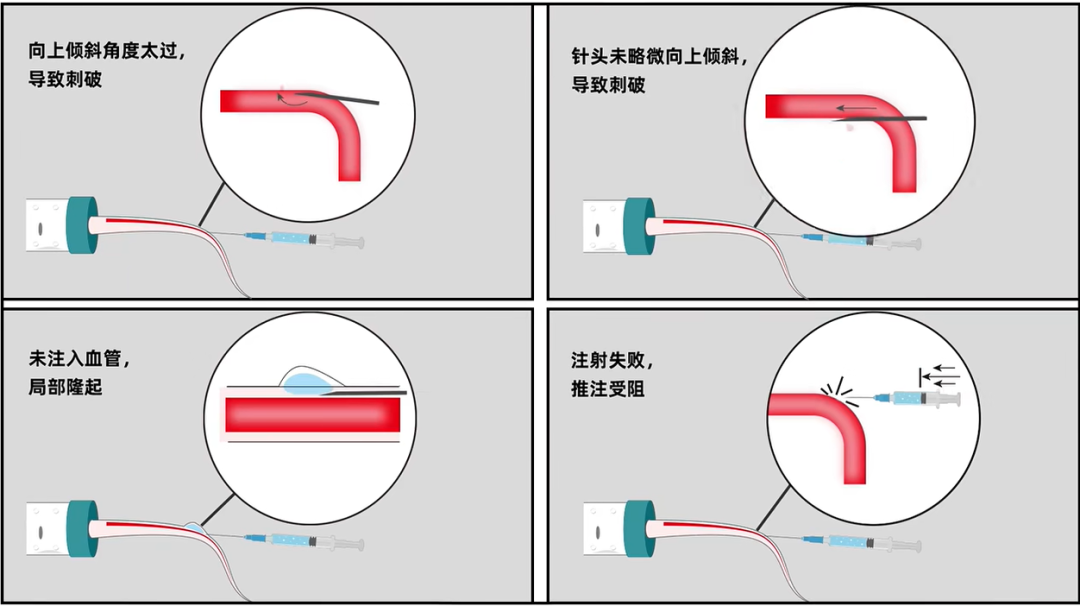
However, the mouse tail vein is very thin and difficult to observe, making injection very challenging and a "technical task." Consequently, tail vein injection has become an experimental black hole for many researchers. Even the slightest movement of the mouse's tail during the injection process can cause the injection to fail, making proper mouse fixation crucial for successful tail vein injection.
Anatomy of the mouse tail vein
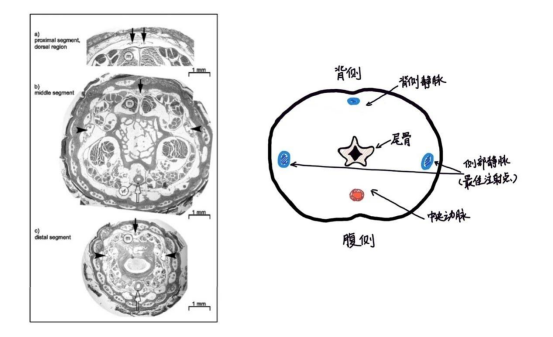
Precise mouse tail vein injection technology is based on a thorough understanding of the anatomical characteristics of the tail.Although existing literature has revealed the spatial distribution of tail blood vessels, nerves, and bony structures based on analysis of serial cross-sectional sections of the rat tail, the tail anatomical features are highly conserved between rodents (such as rats and mice), with the main differences being at the tissue scale level (the diameter of the mouse tail is typically 1-2 mm, significantly smaller than the 3-4 mm of the rat).As can be seen in the image (left), the rat tail's vascular system primarily consists of three veins (solid arrows) and a central artery (open arrow), with the remainder consisting of smaller branches. The central artery lies deep and ventrally, making it difficult to visualize and impractical for puncture. Therefore, experienced operators can minimize the difficulty of puncture by choosing a dorsal or lateral approach.
Tail vein visual injection fixator to help you
01 Working Principle
A limit block is installed in the mouse tube used for fixation, which can better restrict the movement of mice and rats, and the hole of the front plug is designed according to the physiological curve of the skull of mice and rats, which does not hinder the normal breathing of mice and rats.
02How to use
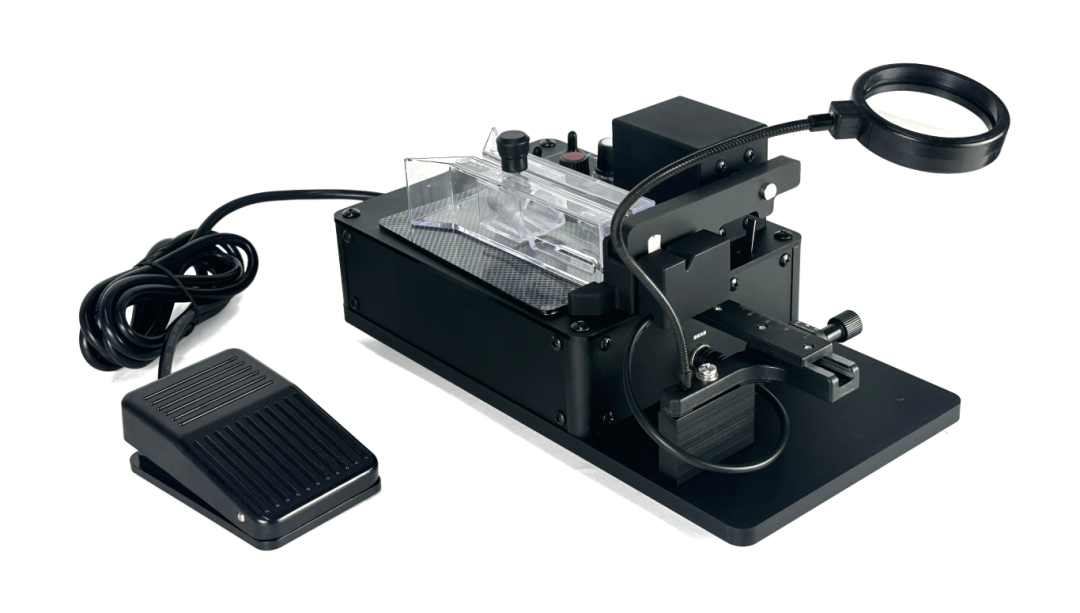
1. Connection: Connect the power supply, foot switch and mouse tail perspective light;
2. Fast loading of mice: Using the rear-pull tail loading method, after the mouse is pulled into the tube, it can be blocked inside with the front plug, which can effectively control the animal and prevent it from moving freely without affecting its normal breathing;
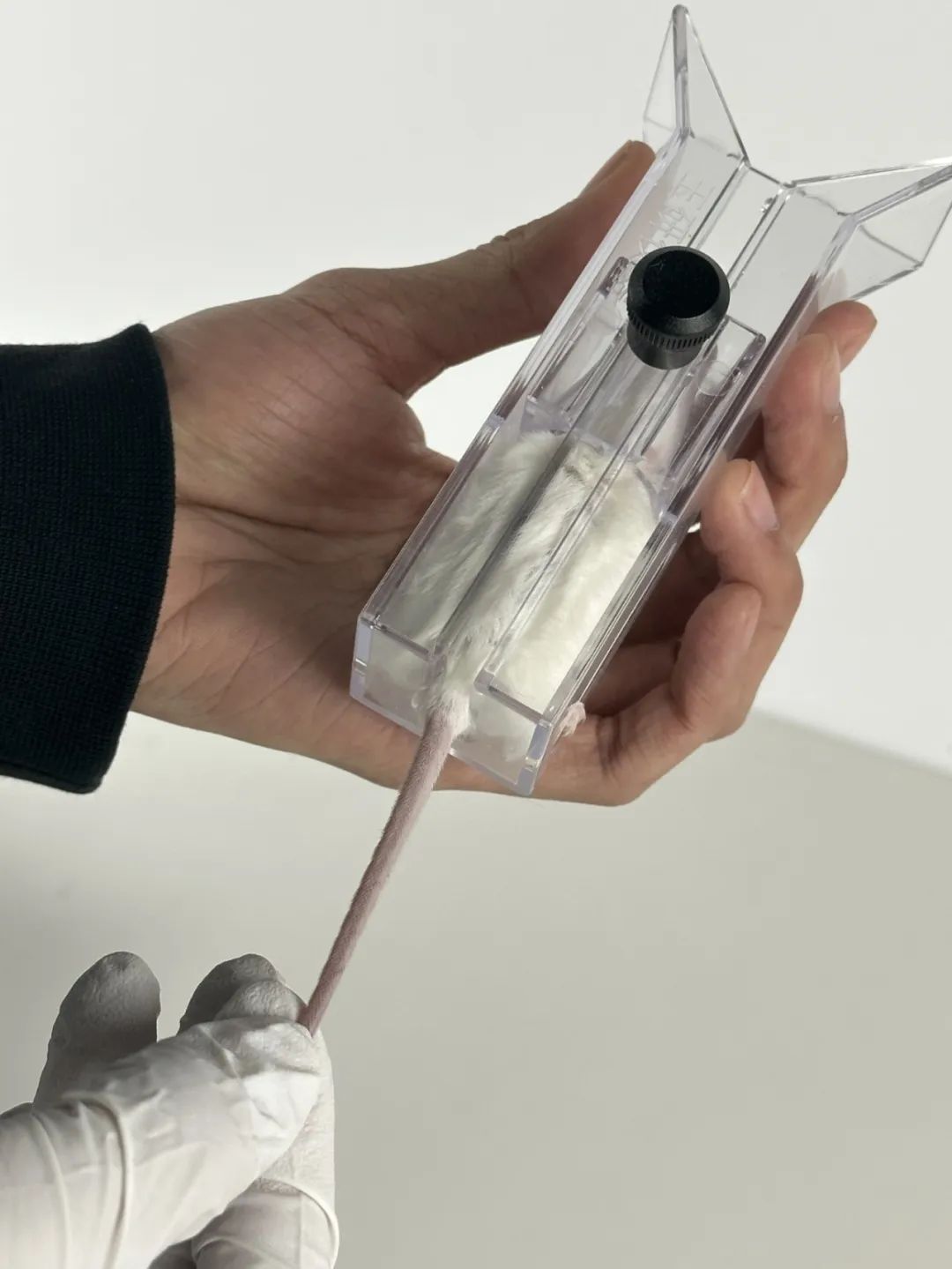
3. Place the rat tube: Place the rat tube upright, with the rat tail passing through the open baffle, and place it in the groove of the lower plate of the rat tail extrusion plate. Turn on the light to observe whether the rat tail blood vessels are aligned;
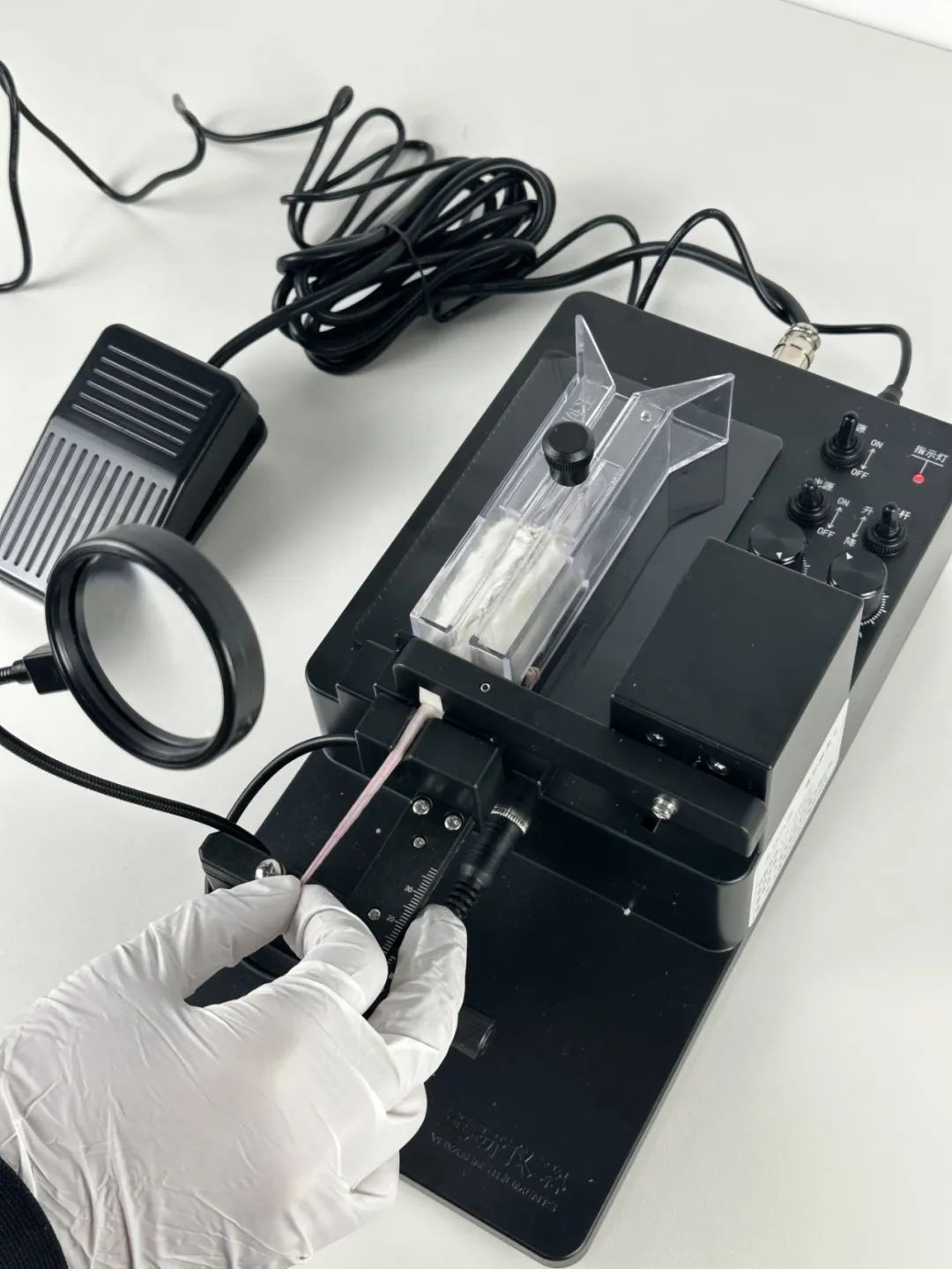
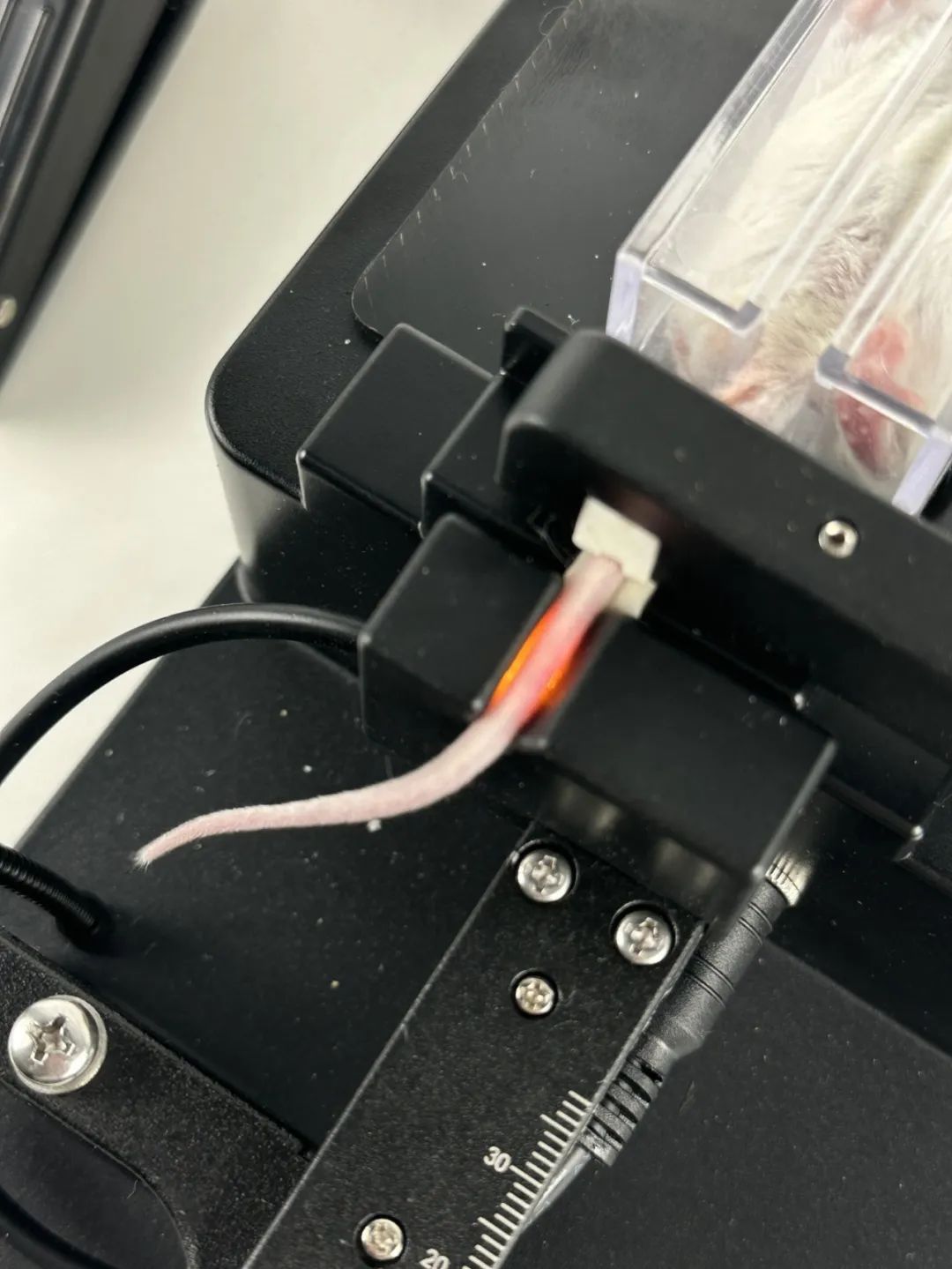
4. Highlight blood vessels: Slowly press the mouse tail, and the yellow light will automatically light up as you press down. At this time, you can adjust the yellow light brightness knob according to the yellow light's penetration through the blood vessels to make the blood vessels clearest;
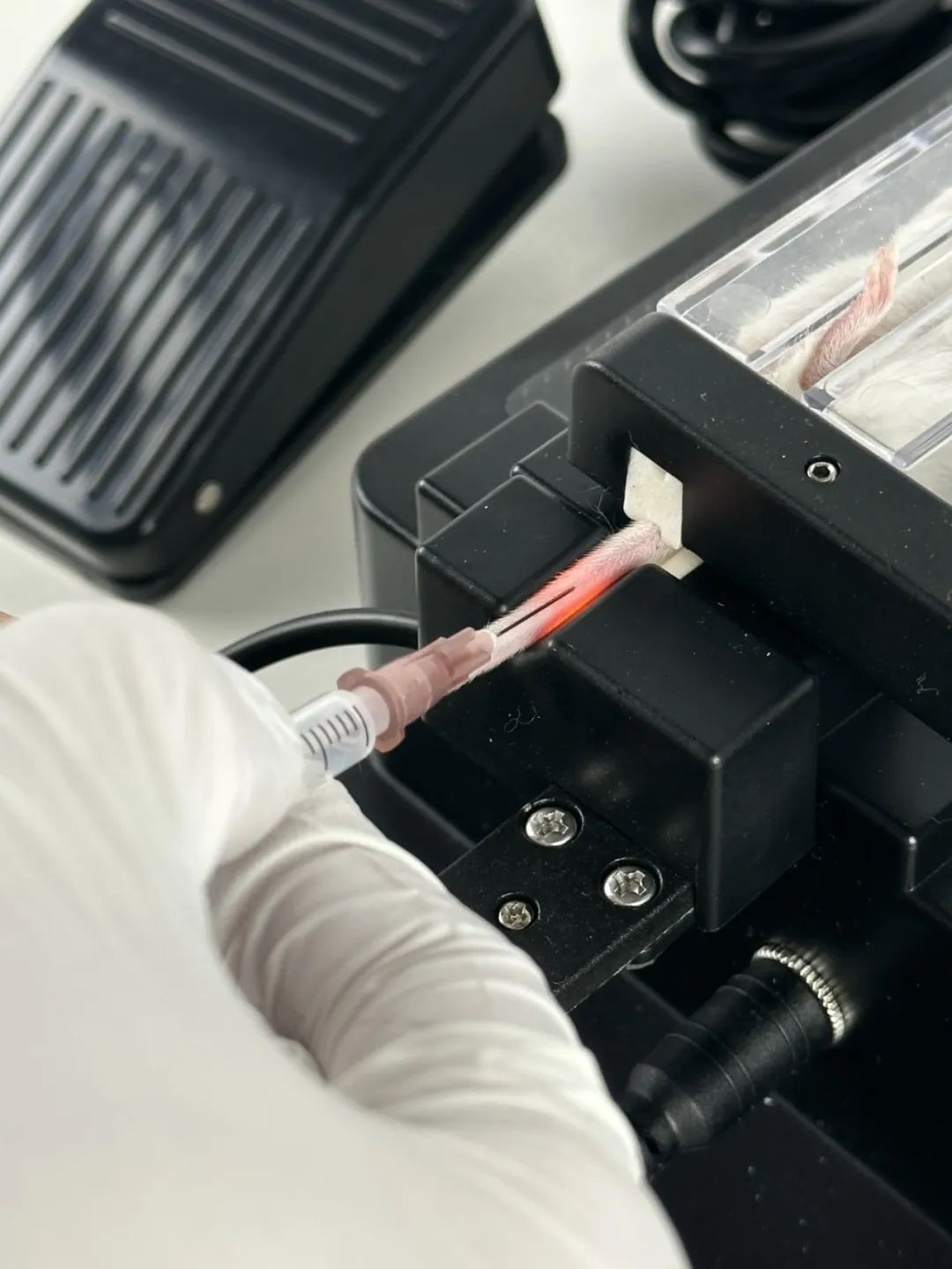
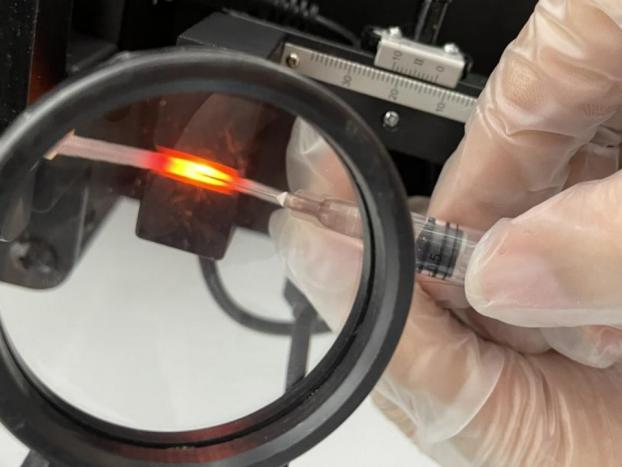
5. Perform the injection operation: Insert the needle from the lower 1/3 of the mouse's tail, and gradually inject from bottom to top to avoid leakage from the needle hole. You can use a magnifying glass at the same time to more clearly see the tail vein and the entry of the needle.
03Precautions
2. Unplug the power cord when the instrument is not in use to avoid overheating and damage.
3. It is recommended to operate in a dark room, away from direct sunlight to prevent the blood vessels from being highlighted;
4. The gag should be fixed in a position that prevents the animal from moving freely but does not affect the expansion of the animal's lungs and normal breathing.
04Unique Advantages
1. The animal is stable and secure: The front end of the dustpan-shaped mouse tube can smoothly pull the mouse into the tube. To prevent the mouse from rolling inside the tube, a front plug can be used to block it inside. The hole of the front plug is designed according to the physiological curve of the mouse skull. It can effectively control the mouse's head without affecting its normal breathing, and at the same time allow the mouse's forelimbs to find a comfortable position;
2. The rat's tail blood vessels are fully filled: When pressing, apply force slowly to allow the blood at the base of the rat's tail time to be squeezed to the tip of the tail. Adjust the yellow light brightness knob according to the yellow light's penetration of the blood vessels to make the blood vessels clearest.
3. Reduce the difficulty of operation: Use special yellow light to illuminate the mouse tail to highlight the tail blood vessels, so that the needle tip can be inserted accurately under visual conditions. At the same time, with a magnifying glass, the tail vein blood vessels and the entry of the needle can be seen more clearly, and the position can be adjusted. Different angles can be selected for observation, which is convenient for the operator to perform injections and reduces the difficulty of the operator.
Tail vein visual injection fixator to help you
The Tail Vein Visualized Mouse Injection Fixator can be widely used in various fields, including pharmacokinetic/toxicokinetic studies, anti-tumor drug testing, biomacromolecule delivery and viral vector injection, etc.1. Drug development and efficacy evaluation: Precise tail vein drug injection, real-time monitoring of drug distribution and metabolism, and tracking of drug targeting using in vivo imaging technology. Visualization-assisted positioning ensures efficient delivery of chemotherapy drugs or nano-drug delivery systems into tumor model mice, and evaluates tumor inhibition and toxicity.
2. Gene Editing and Cell Therapy: In gene therapy research (e.g., CRISPR-Cas9 delivery), precise control of adeno-associated virus (AAV) or lentiviral injection dose and location can reduce off-target risks;
3. Immune model construction: Autoimmune disease models (such as rheumatoid arthritis) are established by injecting antigens or immunomodulators through the tail vein. A fixator ensures injection consistency.