




[From Invasive to Non-Invasive] How do we make a 0.1mm sensor understand the blood pressure signals of small animals?
At three o'clock in the morning in the animal room, the ventilation ducts emitted a low-frequency hum.
Experimenter Xiao Zhang pressed the hemostat again, the metal prongs piercing the rat's neck skin. He was all too familiar with this scene—wiping with an iodine cotton ball, isolating the carotid artery, inserting a PE catheter... his movements were as precise as a surgical robot. But today, his fingers suddenly stopped in mid-air.
"The third one." The scribbled handwriting on the notebook was stained with coffee. "The post-operative infection rate has increased, and the long-term survival rate is almost 0." Outside the glass window, the animal to be tested in the cage was gnawing at the cage door anxiously, and the scabs on its neck reflected dark red as it shook.
This is the invasive blood pressure measurement method still used in 80% of laboratories worldwide: surgically implanting a catheter connected to a pressure sensor, turning the animal into a "living data cable." We obtain blood pressure curves, but we lose their true physiological responses during their natural behavior.
"We're certainly aware of the drawbacks of this kind of measurement," the PI said, tapping on a table of experimental data on the projection screen during a weekly group meeting at a university. "But can we truly strike a balance between accuracy and ethics?"

Elsewhere at the Yuyan Instrument R&D Center, 650nm red light passed through a tailcuff sensor, reflecting a faint blue waveform on an oscilloscope. This was the team's unique red light penetrating photoelectric sensing system—leveraging hemoglobin's high absorption of specific wavelengths to accurately capture arterial pulses beneath 0.5mm-thick fur. The waveform on the display suddenly distorted—the rat twisted its body, and the animal's displacement superimposed on the sensor caused interference.
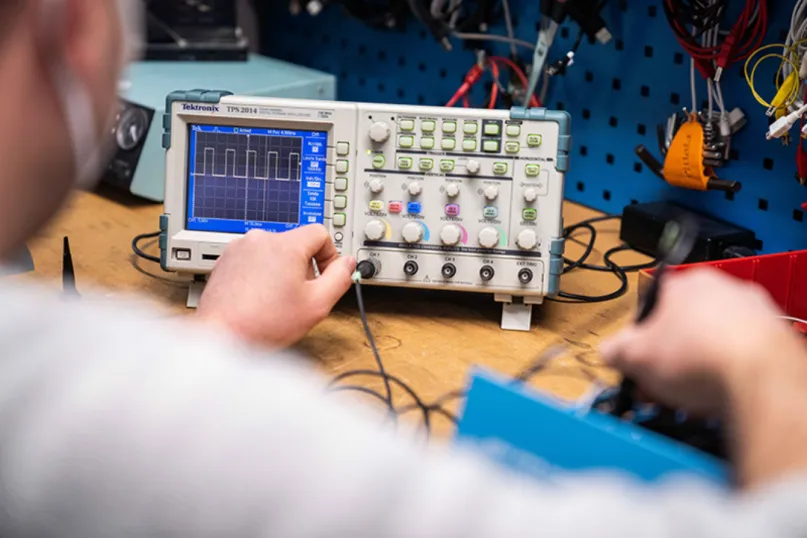
"Failure 37th time." A new note was made in the lab log, "But this time, we heard the answer in the noise.
”
null
When traditional monitoring methods are trapped in the curse of "the higher the accuracy, the greater the damage", how can this sensor, smaller than a fingernail, penetrate the 0.5mm of skin and ethical dilemmas to understand the most authentic signals of life?
Smart non-invasive blood pressure monitor: a revolution in animal physiological monitoring
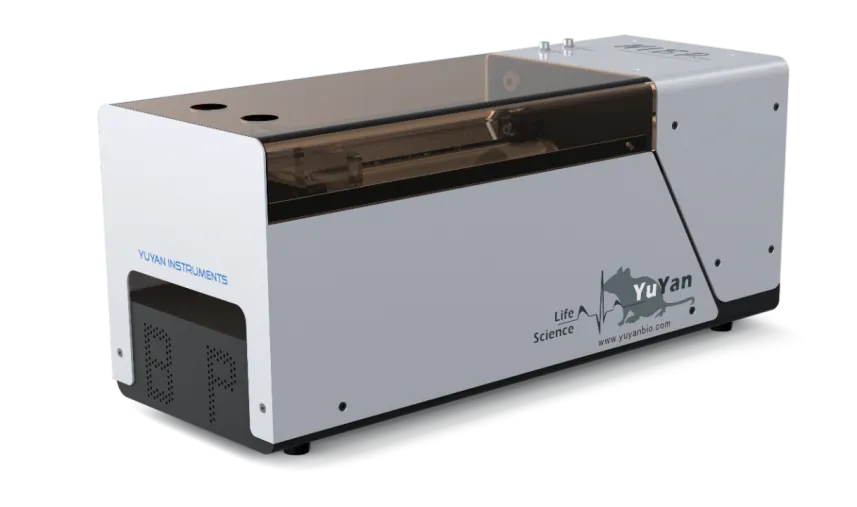
1. Animal welfare protection: No surgical catheter implantation is required, eliminating infection risks, and the measurement process is non-invasive;
2. Long-term monitoring capability: supports repeated measurements of awake animals in a freely moving state, suitable for long-term experiments;
3. Improved data quality: Intelligent algorithms eliminate motion artifacts, achieving measurement accuracy comparable to invasive methods
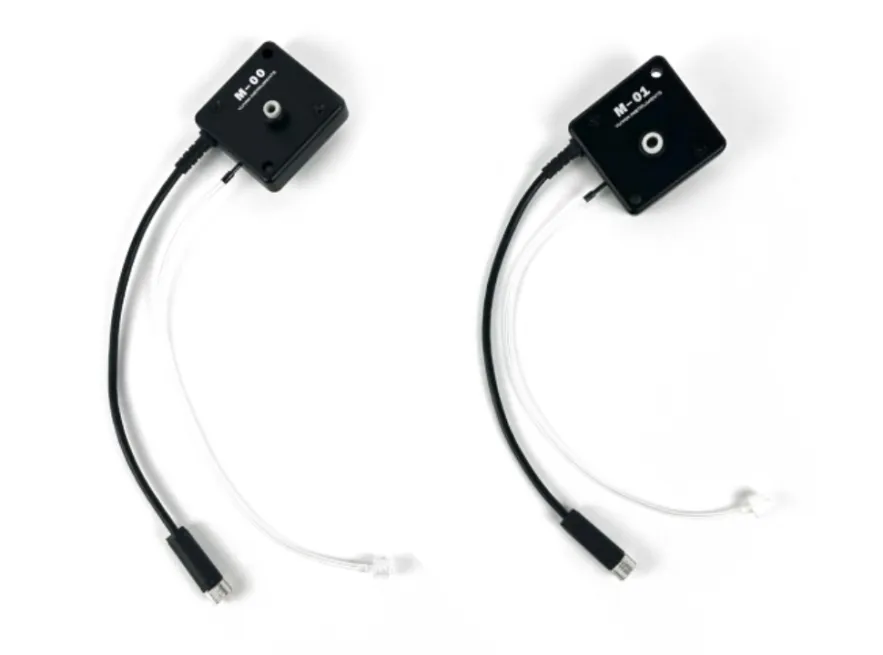
Sensor Revolution: Upgrading from "Traditional Photoelectric" to "Red Light Sensing"
01. Breakthrough in light source technology
1. Wavelength optimization: Upgrading traditional infrared light to red light significantly increases the light absorption rate of hemoglobin and the signal strength;2. Optical path design: closed unidirectional beam measurement, greatly improved resistance to ambient light interference
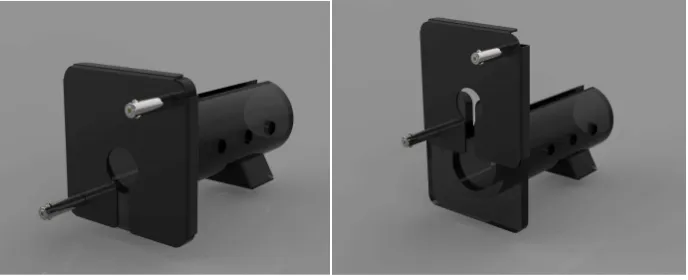
02. Mechanical structure innovation
1. Flexible silicone sleeve: Ultra-thin, light-transmitting, flexible silicone sleeve to achieve dynamic pressure adjustment during the entire inflation process;
2. Quick mouse loading tube: The pull-out bottom plate connects the sensor and the holder, which is convenient for fastening the animal. No screws and locks are required, and it is easy to fix the animal.
Algorithmic breakthrough: the transformation from "raw signal" to "pure waveform"
01. Motion Artifact Removal
1. Dual filtering mechanism: Through dynamic baseline correction and high-frequency noise suppression algorithm, it effectively filters out animal movement and breathing interference;2. Waveform fidelity technology: Using intelligent algorithms to prioritize signal accuracy, the waveform optimization algorithm automatically performs efficient noise reduction without manual intervention
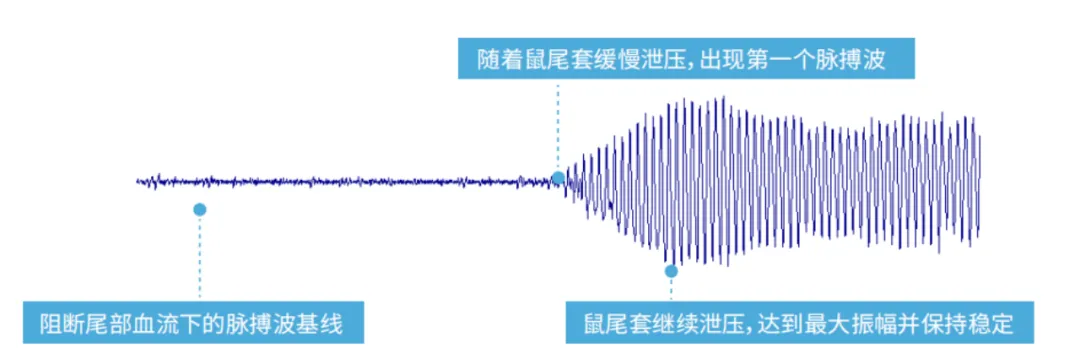
02. Signal quality verification
Compared with the gold standard equipment, the filtered physiological signals have strong correlation
Technology integration: Four major innovations break through the boundaries of experimental efficiency
01.Solution
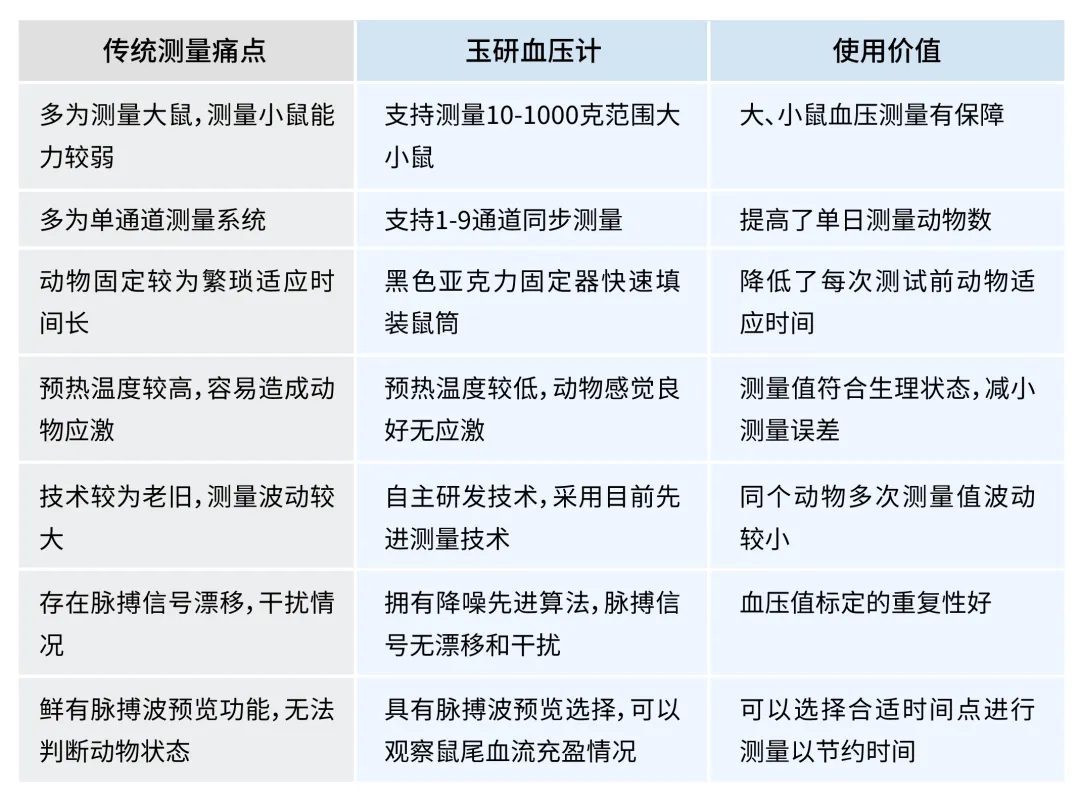
02. In-depth technical analysis
01. Hardware architecture: Distributed architecture is adopted to support parallel processing of 9-channel raw data, and synchronous measurements do not affect each other;
02. Application scenario: Supports multi-cage synchronous monitoring (up to 9 channels), suitable for large-scale research such as group pharmacology experiments and model screening
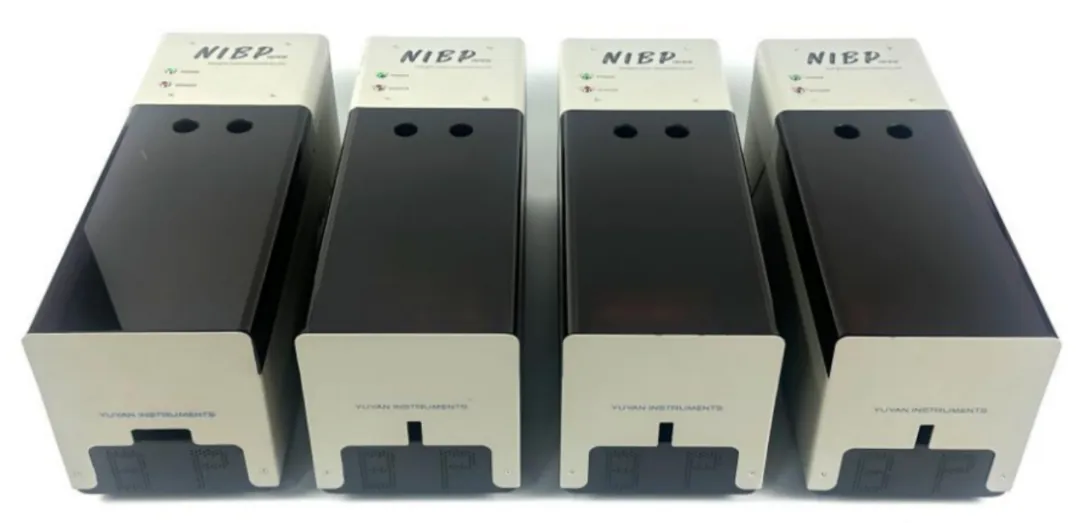
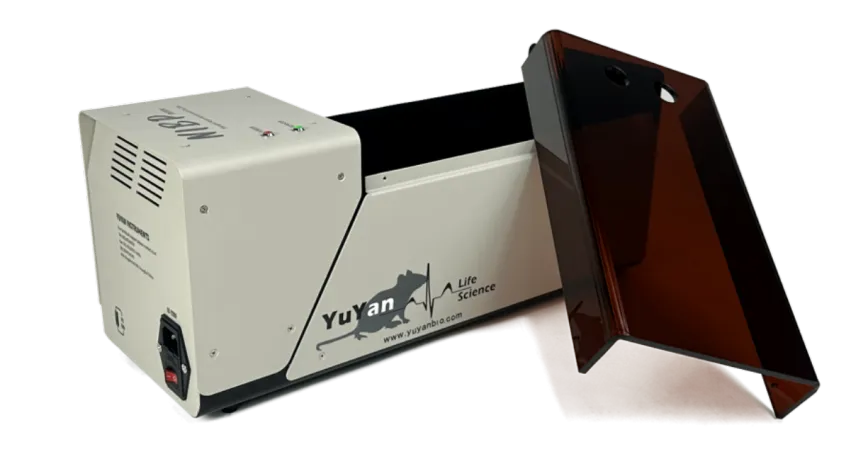
2.Pure black acrylic holder
01. Material properties: The raw material acrylic has a light transmittance of >92% and strong impact resistance;
02. Darkroom effect: Special environmentally friendly coating achieves full spectrum light absorption, adapting to the dark-seeking characteristics of rodents;
03. Animal welfare: Comply with the 3R principle (replacement, reduction, optimization), and support measurements on awake animals in a non-anesthetized state
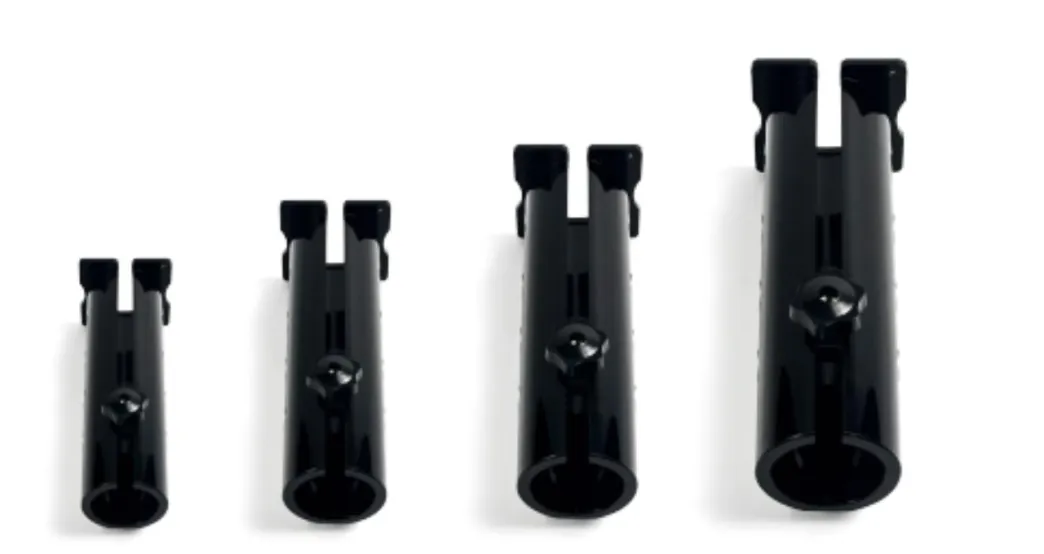
3. Host integrated design
01. Integrated breakthrough: The host has built-in animal constant temperature chamber, mouse tail cover, photoelectric sensor and mouse holder, making the desktop more tidy;
02. Intelligent interaction: Computer integrated software controls multiple channels simultaneously, and the software operation logic is clear and reasonable;
03. Expansion capability: reserved expansion interface, expandable multi-channel measurement module
4. Low temperature preheating technology
01.0 Fast preheating: The heating wire heating can achieve a temperature rise from 25℃ to 32℃ in just 90 seconds, which is more than 20% faster than the semiconductor heating module;
02. Environmental adaptability: wide temperature operating range, supporting experimental scenarios under various conditions
Three major upgrade matrices: breaking through the traditional monitoring paradigm
01. Ethical Upgrade: Making Life Research More Humane
3R Principle: Achieving a Three-Dimensional Breakthrough in Animal Experimentation: "Replacement-Reduction-Optimization"01. Replacement: Compatible with a wide range of animals of different weights, such as mice and rats, to minimize the use of animals;
02. Reduction: Intelligent algorithms optimize experimental design, improve data accuracy, and significantly reduce animal use compared to traditional methods;
03. Optimization: Low preheating temperature reduces animal stress response and allows real-time preview and evaluation of animal status
02. Precision upgrade: challenging the hegemony of imported equipment
01. Photoelectric sensing revolution: Equipped with a new generation of dual-wavelength photoelectric sensors and red light source detection technology, it achieves nanoscale sensing of vascular filling;
02. Hemodynamic Modeling: A unique tail blood flow dynamic compensation algorithm converts tiny changes in blood vessel diameter into quantifiable light absorption signal fluctuations, thereby analyzing the animal's pulse;
03. Adaptive filtering algorithm: The recognition rate of motion artifacts is greatly improved, supporting accurate measurement of awake animals in free movement, regardless of animal activity
03. Efficiency Upgrade: Reshaping the Economics of the Experimental Cycle
01.9-channel synchronous acquisition: Breaking through the single-channel measurement limitations of traditional equipment, it supports 9-channel parallel acquisition of physiological signals. A single experiment can simultaneously monitor the core physiological indicators of 9 experimental subjects;
02. Intelligent temperature control accelerates adaptation: The constant temperature insulation chamber keeps animals warm, and the animal temperature gradient is increased through thermal convection. The animals are not in direct contact with the heating module, which reduces animal stress. The blood pressure measurement of a single animal can be completed in as fast as 10 minutes, and the single test time does not exceed 10 seconds.
Application scenario expansion: from "laboratory" to "preclinical research"
01. Upgrading technology application scenarios
01. Basic research: hypertension model construction, drug screening;02. Preclinical research: pharmacodynamic evaluation, toxicology study;
03. Teaching demonstration: Real-time waveform display and manual marking mode help understand the principle of blood pressure fluctuation.

Extending scientific research value: from tools to strategic partners
"This is the most surprising domestic device I've used in the past five years," commented a university PI. "It has truly made the leap from a 'parameter collector' to a 'strategic research partner.' In hypertension model experiments, the device measured blood pressure five minutes earlier than imported equipment, and with exceptional accuracy. This performance advantage is of immense value to practical research."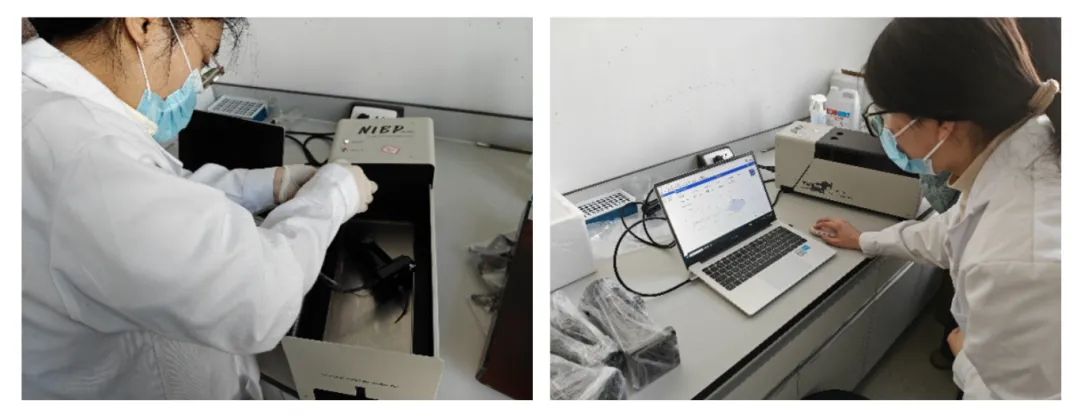
Conclusion: A new era of animal blood pressure measurement
In the journey of exploring life sciences, every technological innovation is a gentle inquiry into the unknown world.The intelligent non-invasive blood pressure monitor carefully crafted by Yuyan Instruments not only redefines the precision boundary of animal physiological monitoring, but also builds a new experimental paradigm with animal welfare as the core. When complex operation flows evolve into intelligent interactive experiences, laboratory animals are no longer silent "research tools", but become life partners worthy of respect in scientific research narratives.From laboratory to clinical translation, from fundamental mechanisms to new drug development, the Yuyan non-invasive blood pressure monitor will inject powerful momentum into cardiovascular research, pharmacodynamic evaluation, and other fields. If you are looking for a blood pressure monitoring solution for laboratory animals that improves experimental efficiency while adhering to ethical standards, please contact us for more technical information and witness together how technology empowers life science research.
Self-developed core creates extraordinary strength
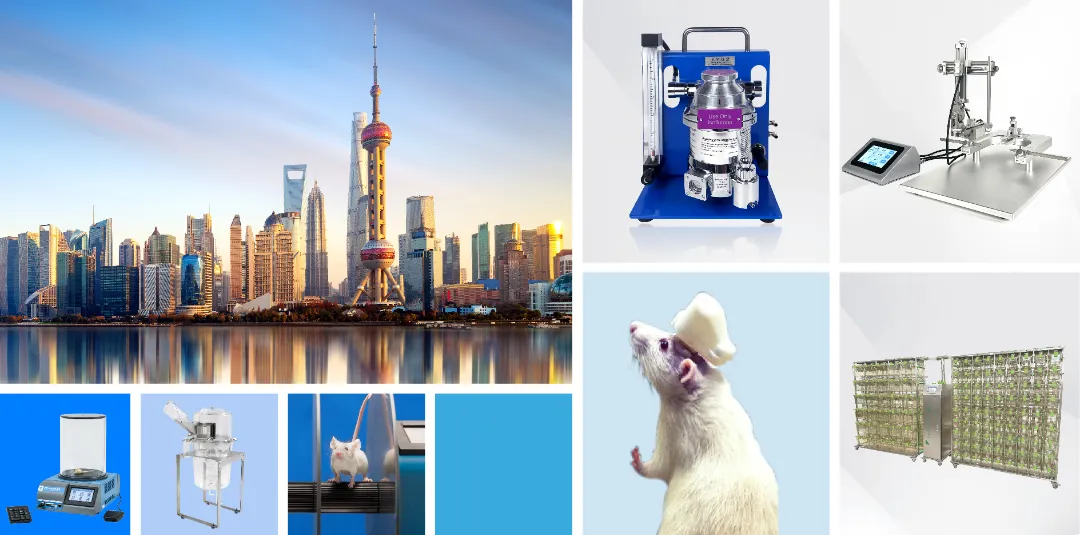
Shanghai Yuyan Scientific Instrument Co., Ltd., as a leading manufacturer of scientific research equipment in the industry, has been adhering to the core concept of "innovation-driven development and self-research to create high-quality products" for 15 years since its establishment in 2010. It is committed to the independent research and development and production of scientific instruments. Its current product line covers multiple scientific research and application fields such as experimental animal husbandry, physiological signal acquisition, and neuroscience research. Not only does it continuously optimize and upgrade conventional instruments, but it also dares to explore cutting-edge technologies and has launched a series of high-end scientific instruments with independent intellectual property rights.