



Animals live longer in oxygen-deficient environments?How a low-oxygen environment stimulates the body's potential and adaptability

The mysterious gas from the red powder shook the phlogiston theory.
In 1774, British chemist Joseph Priestley used a large convex lens to focus sunlight, heated mercuric oxide, collected the resulting gas using the displacement method, and studied its properties. He found that candles burned with extremely strong flames in this gas and that mice could survive in a bottle twice as long as in the same volume of ordinary air.In the same year, Priestley told Lavoisier about the preparation and properties of oxygen. Lavoisier repeated these experiments and pointed out that the gas produced by Priestley was not "dephlogistonized air" but oxygen that could support combustion.
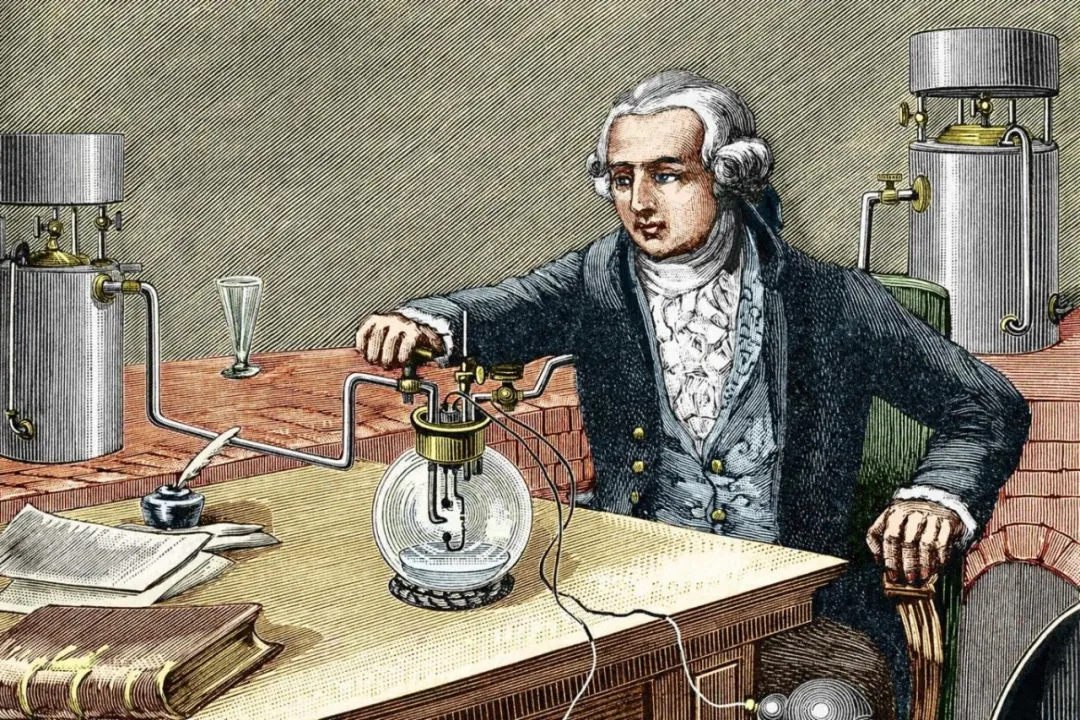
French chemist: Antoine-Laurent Lavoisier
Unfortunately, Joseph Priestley failed to uncover the true nature of oxygen, but later scientists followed in the footsteps of their predecessors and continued to explore, gradually making oxygen no longer mysterious.
The fundamental element of life activities - the importance of oxygen to the body
Oxygen is essential to the human body. Metabolism and energy production require a certain amount of oxygen. Too much or too little oxygen may have a series of impacts on life. When you experience symptoms such as dizziness, headache, fatigue, poor sleep quality, memory loss, and mental fatigue, you may be suffering from hypoxia!Normally, oxygen enters the lungs through breathing, undergoes gas exchange in the alveoli, and is then transported to the capillaries via the alveolar-capillary exchange system. Over 95% of this oxygen binds to hemoglobin in red blood cells. Oxyhemoglobin (HbO2) carries a large amount of oxygen with the blood and is delivered to peripheral tissues, meeting their needs.
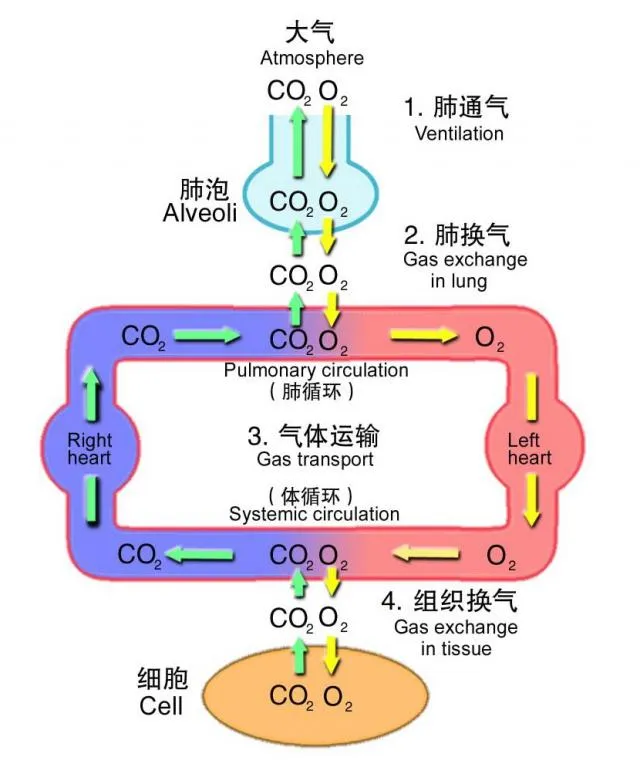
The effects of hypoxia on the human body
The dangers of hypoxiaOxygen is vital to life. Hypoxia can cause many kinds of harm to the body. The brain and heart are extremely sensitive to oxygen levels. Therefore, the harm of hypoxia to the nervous system and cardiovascular system is particularly obvious.
(1) Harm to the nervous system: Brain tissue is very sensitive to ischemia and hypoxia. Mild hypoxia may cause dizziness, lack of energy, and slow reaction. Severe hypoxia may lead to increased intracranial pressure, headache, syncope, shock and other serious symptoms, and damage the brain nerves. Long-term hypoxia can lead to slow reaction and even pulmonary encephalopathy.
(2) Harm to the cardiovascular system: Human heart activity and normal blood vessel function require the participation of oxygen. If the cardiovascular system is hypoxic, it may lead to damage to cardiovascular function, compensatory acceleration of heart rate, decreased myocardial contraction and relaxation ability, causing bradycardia, arrhythmia, palpitations, chest tightness and other discomforts. In severe cases, ventricular fibrillation may even occur.
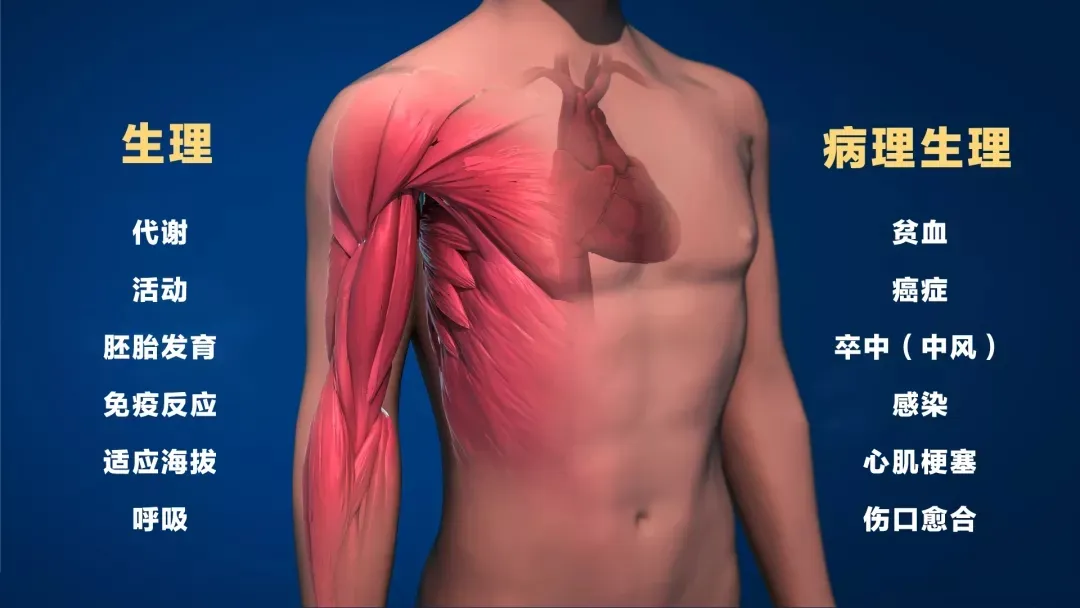
Benefits of Hypoxia
The harmful effects of hypoxia caused by low oxygen levels are well known, but interestingly, adaptation to low oxygen levels can be beneficial. Studies have shown that both experimental and wild animals live longer in hypoxic environments. The rate of centenarians in Tibet is also higher than in Han Chinese communities in the plains, and the relative mortality rate of the elderly in Tibet is lower than that of Han Chinese communities in the plains. This echoes the discovery of "longevity villages" among another high-altitude population, the indigenous people of the Andes.
This longevity trait is likely due to genetic differences: genes related to aging have shown rapid evolution both in Tibetan people and domestic animals on the Qinghai-Tibet Plateau. The longevity of Tibetan people may be caused by low oxygen levels on the plateau.

Life's adaptation to hypoxia: Our cells are so smart
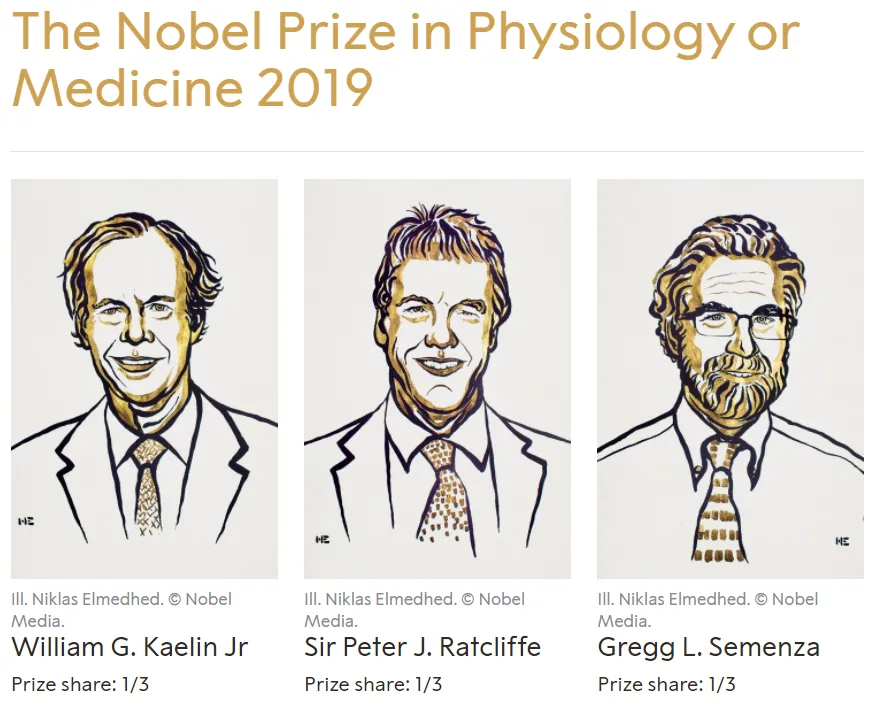
The 2019 Nobel Prize in Physiology or Medicine was awarded to William G. Kaelin Jr., Professor of Harvard Medical School, Peter J. Ratcliffe, Professor of the University of Oxford, and Gregg L. Semenza, Professor of the Johns Hopkins University School of Medicine, for their groundbreaking research and significant contributions to understanding how cells sense and adapt to changes in oxygen availability. The trio discovered that the body regulates gene activity in response to varying oxygen levels, laying the foundation for understanding how oxygen levels influence cellular metabolism and physiological function.
The body's self-regulation in the face of hypoxic environments
When the amount of oxygen carried changes, cells must respond. Both low and high oxygen levels pose significant challenges to organisms. Excessive oxygen forms reactive oxygen species, which are toxic. Under physiological conditions, cells more often encounter hypoxic conditions. Through biological sensing of oxygen, cellular metabolism changes with oxygen levels to adapt to low oxygen environments. For example, during strenuous exercise, adaptive processes in muscles include the generation of new blood vessels and the production of red blood cells. Red blood cells respond to hypoxia in vitro through oxygen-dependent metabolic regulation. This adaptive process ensures oxygen supply to muscles during strenuous exercise.Can hypoxia protect the body? What is hypoxic preconditioning?
Hypoxic preconditioning (HPC) refers to the ability of the body to increase its resistance to subsequent severe hypoxia by prior exposure to a brief, sublethal hypoxic stimulus, or to short periods of hypothermia or other moderate stressors. It is an endogenous cellular protective mechanism that occurs in organs such as the heart, brain, kidneys, and liver.Early observation and exploration
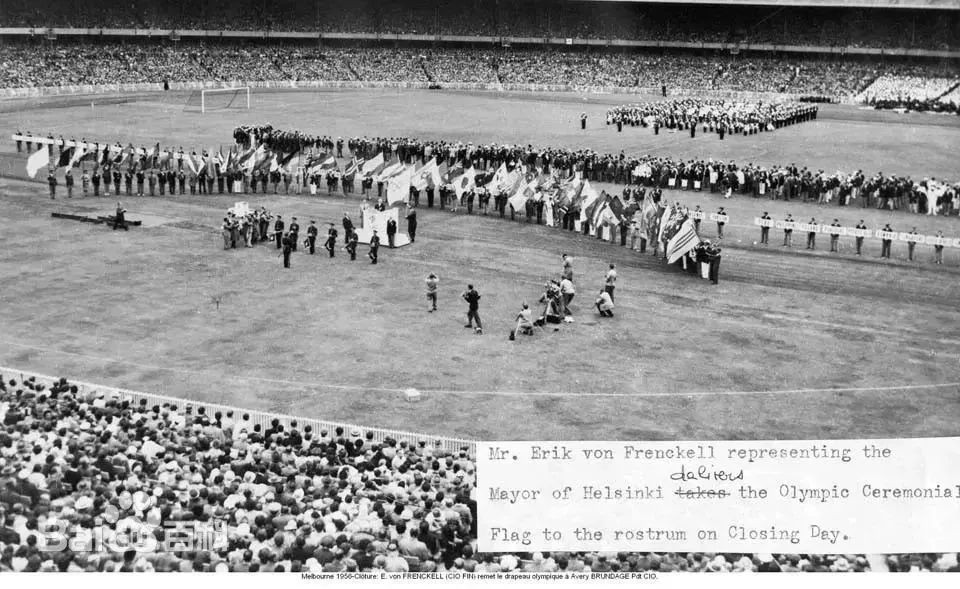
1950s: Soviet middle- and long-distance runners trained at an 1800m altitude training base in the Caucasus and subsequently achieved excellent results at the Melbourne Olympics. This observation initially demonstrated the potential benefits of altitude training (i.e., training in a hypoxic environment) for improving athletes' physical fitness.
In the medical field, scientists have begun observing the body's physiological responses to low oxygen levels. They have discovered that when the body is in a hypoxic state, a series of protective mechanisms are triggered to cope with the challenge of hypoxia. These mechanisms include increasing red blood cell count, raising hemoglobin concentration, and enhancing cardiopulmonary function, all designed to improve the body's oxygen utilization efficiency and tolerance.
Theoretical proposal and scientific research
In 1927, Haldane proposed that "acquired tolerance of tissue cells to hypoxia" was formed during the evolutionary process.
In 1963, Lü Guowei, the founder of hypoxic preconditioning in China, coined the term "adaptation of tissue cells to hypoxia." Due to its inherently high oxygen consumption rate, the brain is most sensitive to changes in oxygen concentration. Therefore, during periods of hypoxia, the brain utilizes key adaptive mechanisms to survive and maintain homeostasis.

Evidence from animal experiments
Research on the neuroprotective effects of HPC began in 1986 and has received considerable attention since its discovery. It has been reported that hypoxic preconditioning can inhibit glial activation and neuroinflammation in neonatal brain injury. Using a neonatal model of hypoxic-ischemic brain injury, researchers evaluated the effects of hypoxia and hypoxic preconditioning on glial cell activation in 7-day-old rats and an in vitro hypoxia model. They found that hypoxic preconditioning significantly attenuated glial activation and produced a potent neuroprotective effect.
Similarly, in vitro experiments have shown that exposure to 0.5% oxygen for 4 hours induces a glial inflammatory response. A brief (0.5 hour) hypoxia exposure 24 hours before hypoxic injury significantly attenuates this response. Other studies have shown that hypoxic preconditioning can significantly mitigate hypoxia injury and significantly improve sensorimotor and cognitive function 35 days after H/I.
Subsequently, scientists began exploring preconditioning in other organs and tissues. They discovered that preconditioning exists not only in the nervous system but also in a wide range of tissues and cells, including the liver, kidneys, and brain. These studies further expanded the scope of application and research on hypoxic preconditioning.
Practical application and development
Existing researchers have further evaluated animals' tolerance to hypoxia, building on previous work. One study placed mice in a sealed hypoxic chamber, creating an oxygen-deficient environment. By controlling the chamber's oxygen concentration and duration of exposure, they created a hypoxic preconditioning process, which resulted in "auto-hypoxia." Repeated short-term hypoxia exposures were then used to study the physiological effects of hypoxic preconditioning.
At the same time, research results published in multiple top international journals support the effectiveness of hypoxic preconditioning in the prevention and treatment of cardiovascular and cerebrovascular diseases. For example, for patients with ischemic stroke, combined with bilateral upper limb remote ischemic conditioning training, can significantly reduce stroke recurrence rates and improve brain tissue blood perfusion and metabolism.
Research on the mechanism of hypoxic pre-adaptation will provide new ideas and strategies for hypoxic pre-adaptation to become a clinical treatment method and for cell protection in extreme conditions such as plateaus, aerospace, and navigation.
How to create a hypoxic pre-adaptation model? —Oxygen concentration control system
So, how do conventional laboratories simulate hypoxic environments and create suitable animal hypoxia pre-adaptation models?Yuyan Instruments provides professional integrated model building solutions through its independently developed oxygen concentration control system. Our professional engineers and after-sales service team can assist in resolving experimental problems and ensure your experiments are carried out smoothly.
Product Introduction
The oxygen concentration control system primarily consists of a gas concentration control unit, an exposure chamber, and an oxygen sensor. By precisely controlling the oxygen input, the set oxygen concentration within the exposure chamber is maintained over a long period of time. This product can be used for various experiments involving hypoxia or oxygen enrichment in experimental animals such as rats and mice. The constant oxygen concentration control system can adjust the oxygen concentration in the experimental animal environment within a range of 0-100% based on user needs.
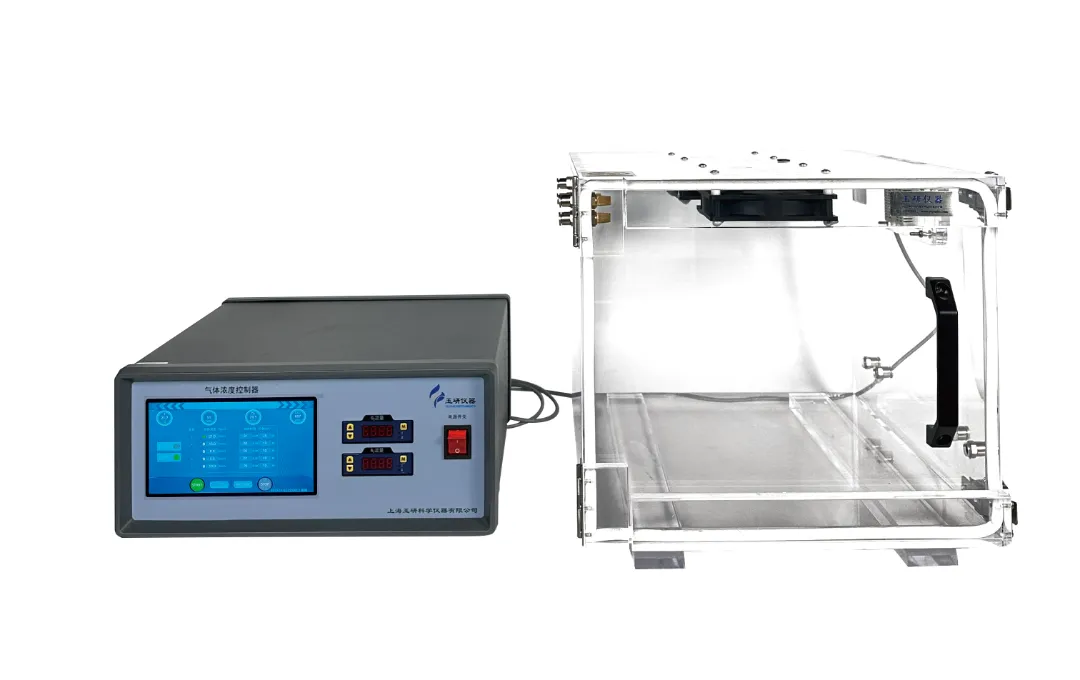
The high-precision oxygen concentration sensor monitors oxygen concentration in real time, and can help with low oxygen adaptation and high oxygen adaptation. The high-strength acrylic glass is beautiful and sturdy, ensuring experimental safety while allowing the hamster's condition to be clearly visible.
Main Features
Oxygen concentration control host:Modular design: the host and exposure box are separated, flexible to match and easy to use.
Fingertip interactive touch screen: Set various parameters on the touch screen, easy to use.
Rapid flow rate adjustment: automatic feedback adjusts the oxygen flow rate, and the oxygen concentration rise curve is smooth.
Multiple parameters can be set: inflation time, inflation interval, and inflation flow are adjustable and controllable.
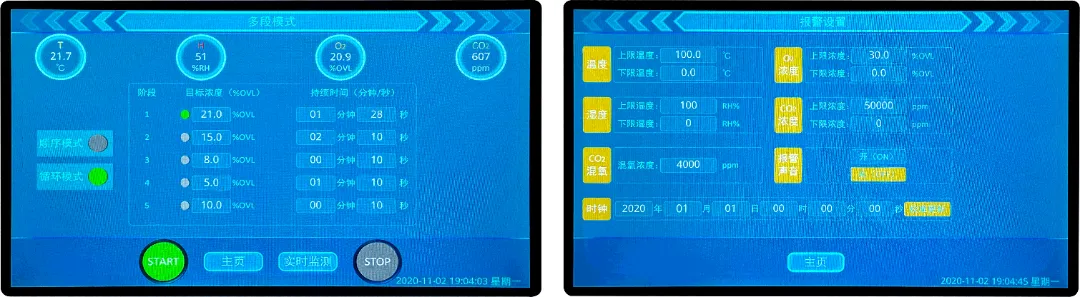
Real-time curve display: Real-time display of the changing curves of oxygen concentration, carbon dioxide, temperature and humidity.
Wide oxygen concentration range: 0% ~ 100% adjustable and measurable, easily adjust to any required oxygen concentration. The sensor is placed in the exposure chamber and can display the cabin oxygen concentration in real time with a measurement error of less than 0.1%; the theoretical service life is more than 5 years.
Real-time alarm function: A variety of alarm parameters are adjustable. When the gas concentration deviates from the preset value or the sensor signal falls off, the instrument will automatically alarm to remind the experimenter to check.
Exposure box:
Uniform and stable: The stable exposure chamber is equipped with two return fans to ensure uniform oxygen concentration at each exposure position in the chamber.
Customized service: Customized exposure chamber dimensions, digitally controlled heaters or refrigerators to change the chamber temperature, temperature control range: room temperature ± 5°C.
Unique material: The box is made of transparent reinforced acrylic material with a thickness of not less than 12mm.
Heat dissipation optimization: Equipped with aluminum alloy heat dissipation plate to accelerate the conduction of temperature inside and outside the box, effectively reducing the temperature inside the box.
Product Application
Cell culture: The constant oxygen concentration control system can accurately regulate the oxygen concentration environment during cell culture.Tissue engineering: When cultivating artificial tissues on three-dimensional biomaterial scaffolds, the oxygen concentration needs to be carefully controlled to meet the oxygen needs of different tissue cells.
Physiological and biochemical experiments: Many physiological and biochemical processes are very sensitive to changes in oxygen concentration, such as oxidative stress response and metabolic processes.
Animal experiments: It is very important to simulate specific oxygen concentration environments in animal model experiments, such as physiological and pathological changes under conditions of hypoxia and hyperoxia.
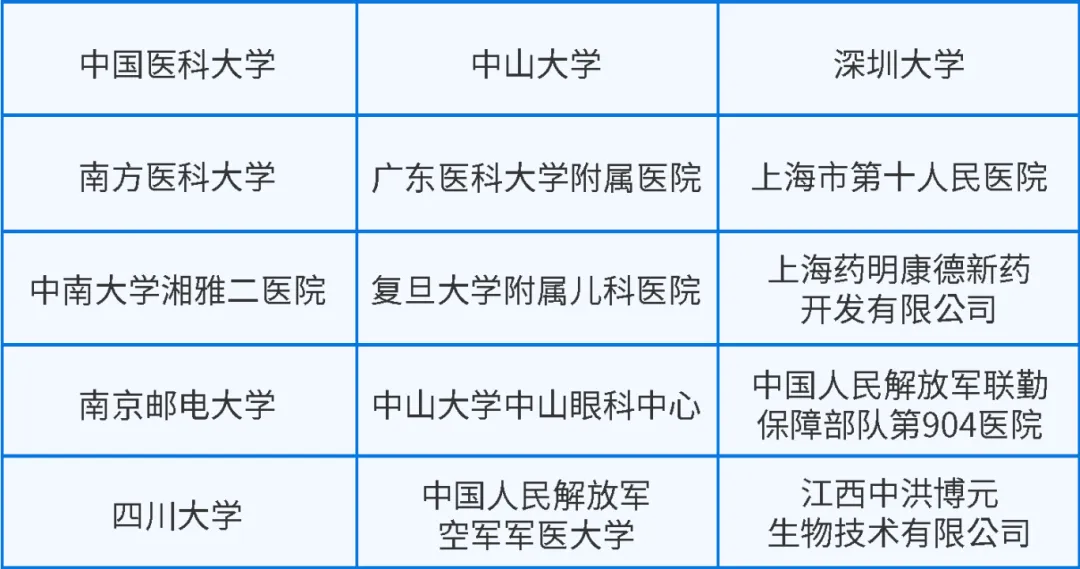
Partial user list