




Ugo Basile Mechanical Allodynia: A One-Stop Solution for Preclinical Mechanical Allodynia Research
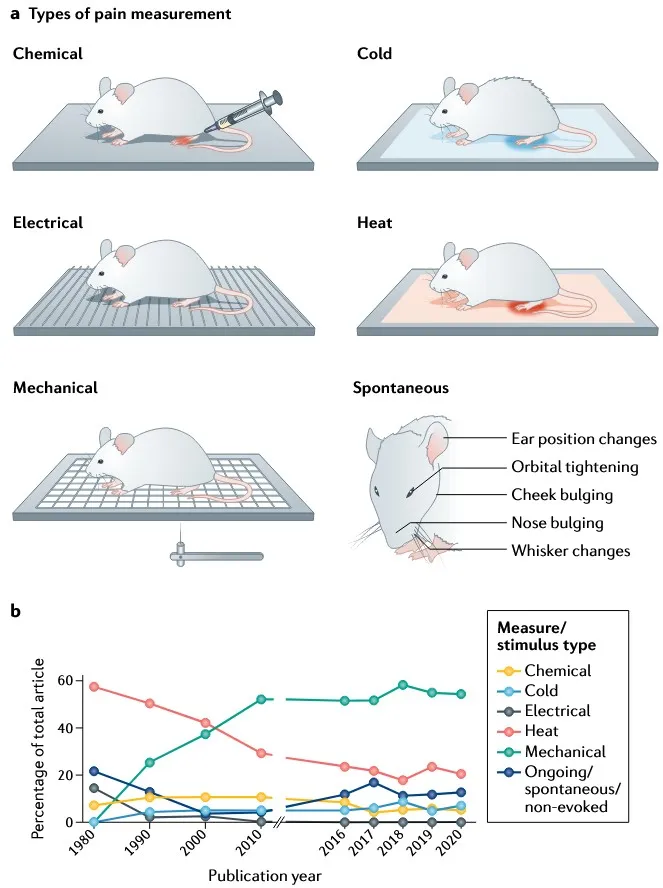
Measurement of animal pain models
Animal pain measurement/stimulation methods include cold/heat stimulation, mechanical stimulation, etc.There are different measurement methods depending on the specific pain model.Since mechanical stimulation is more stable and controllable, it has become the most commonly used method for pain measurement[2].In neuroscience research, pain mechanism analysis and analgesia technology development have always been core topics, and accurate mechanical pain measurement technology is the key to solving this problem.With over half a century of technological expertise and innovative spirit, the Italian brand Ugo Basile has become a trusted partner for researchers worldwide. Its pain management products have become benchmark tools for neuroscientists worldwide and are widely recognized. As the exclusive distributor for Ugo Basile in China, Yuyan Instruments offers a one-stop solution for animal mechanical pain measurement and assessment.
The Gold Standard: Von Frey Fibers
01. Equipment IntroductionIn the late 19th century, German physiologist Maximilian von Frey invented fibers for pain measurement. In 1983, Dixon used von Frey fibers to propose the up–down method. In 1994, Chaplan et al. further refined this method for rodent pain measurement. Currently, tens of thousands of publications have used von Frey fibers using the up–down method to measure pain thresholds, making it the gold standard for mechanical pain threshold measurement.
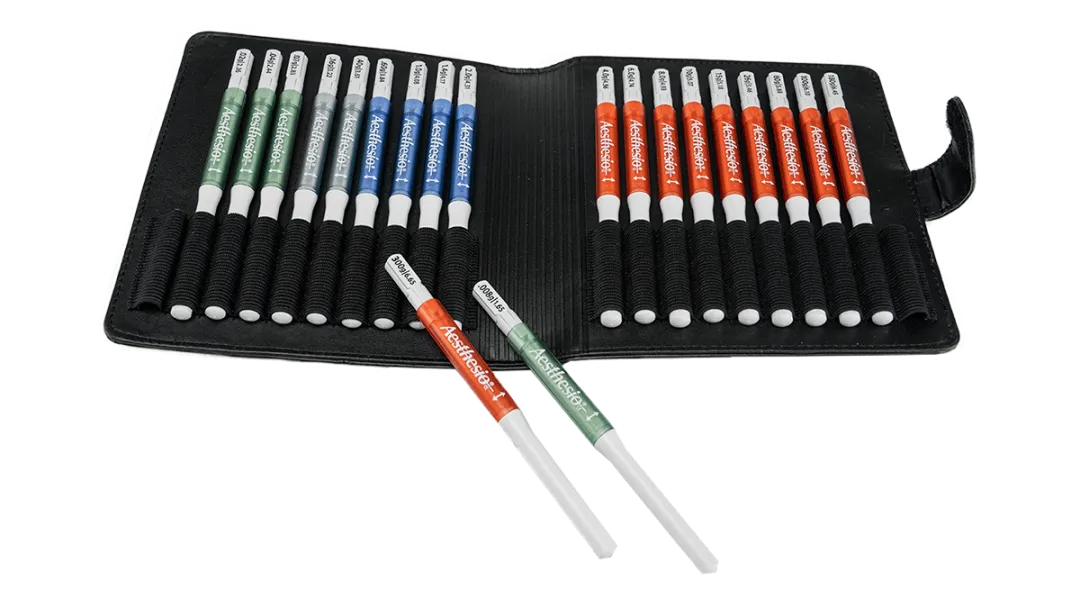
Each test kit contains 20 fibers of different specifications with a measurement range of 0.008~300g. It is suitable for measuring the 50% withdrawal threshold of mice and rats, as well as human tactile testing and perceptual diagnosis.
02. Equipment Features
1. Individual calibration, precise measurement: Each fiber is individually calibrated with a deviation of no more than 5%;
2. Comes with a handle for easy use: Each fiber comes with a test handle that can be easily opened to a 90° angle for testing;
3. Color marking for easy identification: Each handle is marked with a color according to the force value, making it easy to identify and select;
4. The handle includes a protective cover for safe storage: when not in use, the fiber filaments can be stored in the handle protective cover to ensure safety from being bent or contaminated.
03. Application Areas
1. Basic Research: Using fibers to measure the mechanical pain threshold of experimental animal models, examining the effects of specific treatments on the animals' mechanical pain perception, and exploring pain-related neural mechanisms; or monitoring the processes of nerve injury, regeneration, and repair through long-term assessment of changes in pain thresholds;
2. Drug development: Evaluate the effects of analgesics by comparing the effects of different drugs on the mechanical pain threshold of experimental animal models;
3. Clinical diagnosis: By measuring the patient's tactile perception threshold, it can assist in the diagnosis of related diseases such as diabetic peripheral neuropathy, peripheral nerve damage, central pain, etc.
04. Literature Case
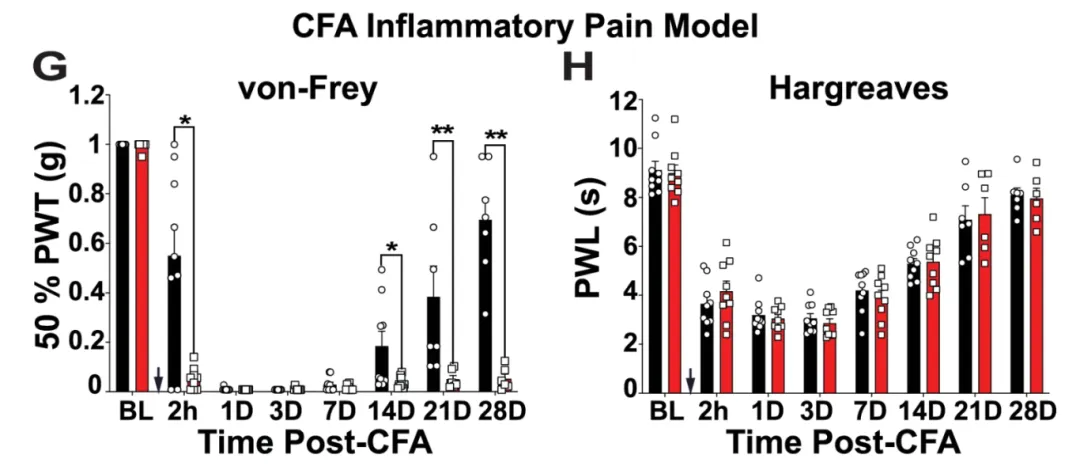
In the article, the researchers injected complete Freund's adjuvant (CFA) into the paws of normal mice and mice with Aβ-LTMRs receptor ablation to create an inflammatory pain model. They used Von Frey fibers and a plantar heat meter to measure the difference in pain perception between the two. They found that the 50% withdrawal threshold of the ablated mice was significantly reduced in both the short and long terms, and there was no significant difference in the latency of thermal pain withdrawal, indicating that the mechanical pain sensitivity of the ablated mice was increased.
Simplified solution: electronic pain meter
01. Equipment Introduction
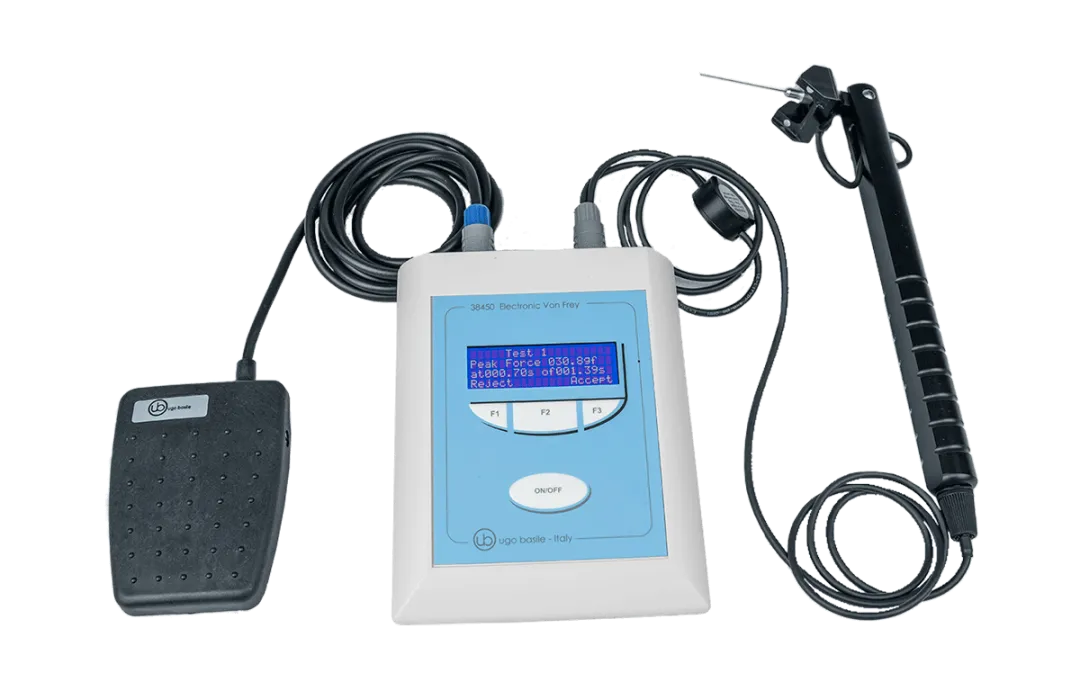
The device utilizes a handheld force sensor and a fixed rigid test head, enabling reliable results in a single test, effectively reducing measurement workload and experimenter bias. It is primarily used for pain testing on the skin surfaces of mice and rats (sole and face).
02. Equipment Features
2. The force curve can be viewed and the force speed can be adjusted: the force curve can be viewed in real time through the software to adjust the force speed to ensure uniform force;
3. Automatic detection of foot withdrawal: The device automatically identifies the foot withdrawal behavior of experimental animals and records the stimulation peak and foot withdrawal latency without manual judgment.
Fully automatic solution: dynamic plantar tester
01. Equipment Introduction
02Equipment Features
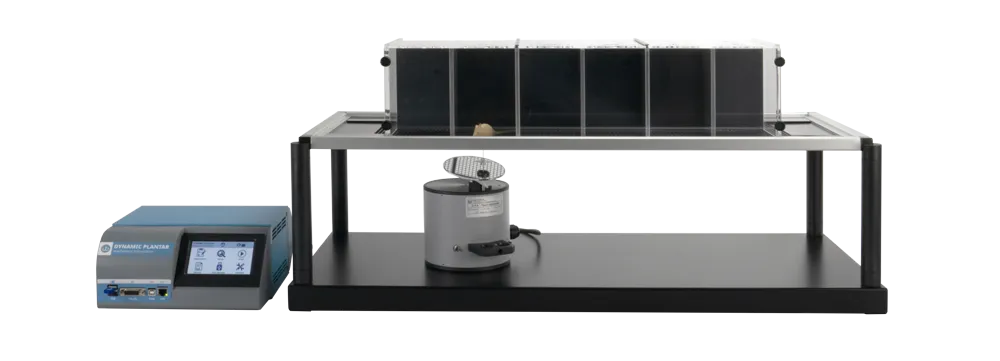
2. Automatic detection of foot withdrawal: The device automatically identifies the animal's foot withdrawal behavior and records the stimulus peak and foot withdrawal latency, eliminating the need for manual judgment.
3. High resolution: force resolution is 0.1g, time resolution is 0.1s, ensuring accurate test results;
4. Easy to locate the sole of the foot: The force sensor comes with a refraction mirror, which makes it easy to observe the sole of the experimental animal and locate it.
Rat Paw Tenderness Testing Protocol: Mechanical Tenderness Tester
01 Equipment Introduction
02. Equipment Features
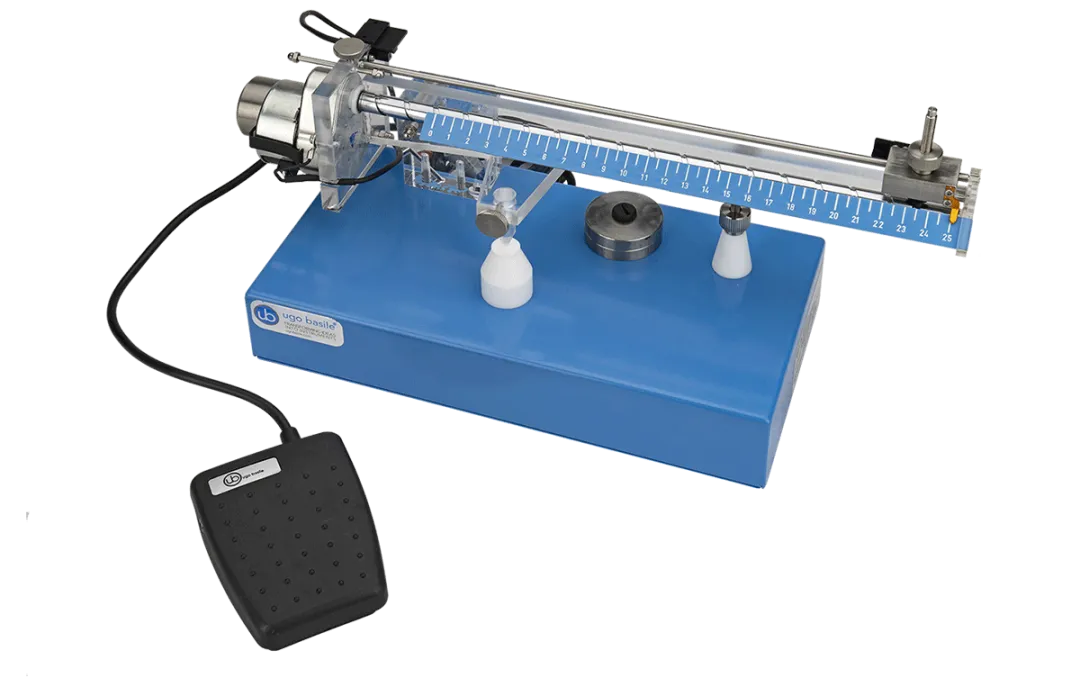
2. The pressure base is smooth to avoid damage to animals: The pressure base is made of low-friction material. When the pain threshold is reached, the animal will easily retract its feet to avoid tissue damage.
03. Application Areas
2. Drug development: Evaluate the effects of anti-inflammatory and analgesic drugs by comparing the effects of different drugs on the mechanical pain threshold of experimental animal models;
04. Literature Case
The study used an ugo basile mechanical analgesia instrument to measure the paw withdrawal latency of mice transferred with IgG from normal humans and FMS patients, proving that IgG from FMS patients can cause hyperalgesia.
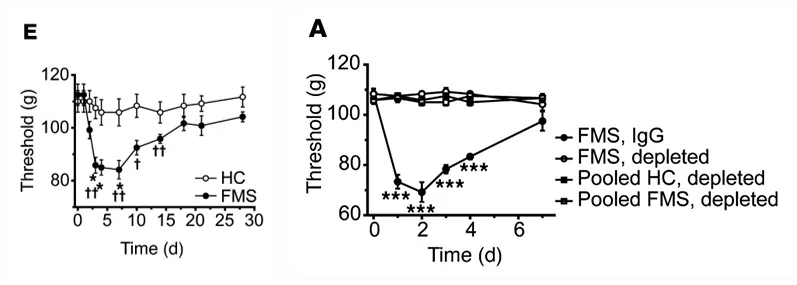
Panel E: Paw withdrawal threshold of HC mice to which IgG was transferred; Paw withdrawal threshold of FMS mice to which IgG from FMS patients was transferred;
Figure A: Legends are transferred patient IgG, IgG-depleted patient serum, IgG-depleted normal human serum, and IgG-depleted patient serum.
Joint Tenderness Testing Protocol: Pressure Application Tester
01. Equipment Introduction
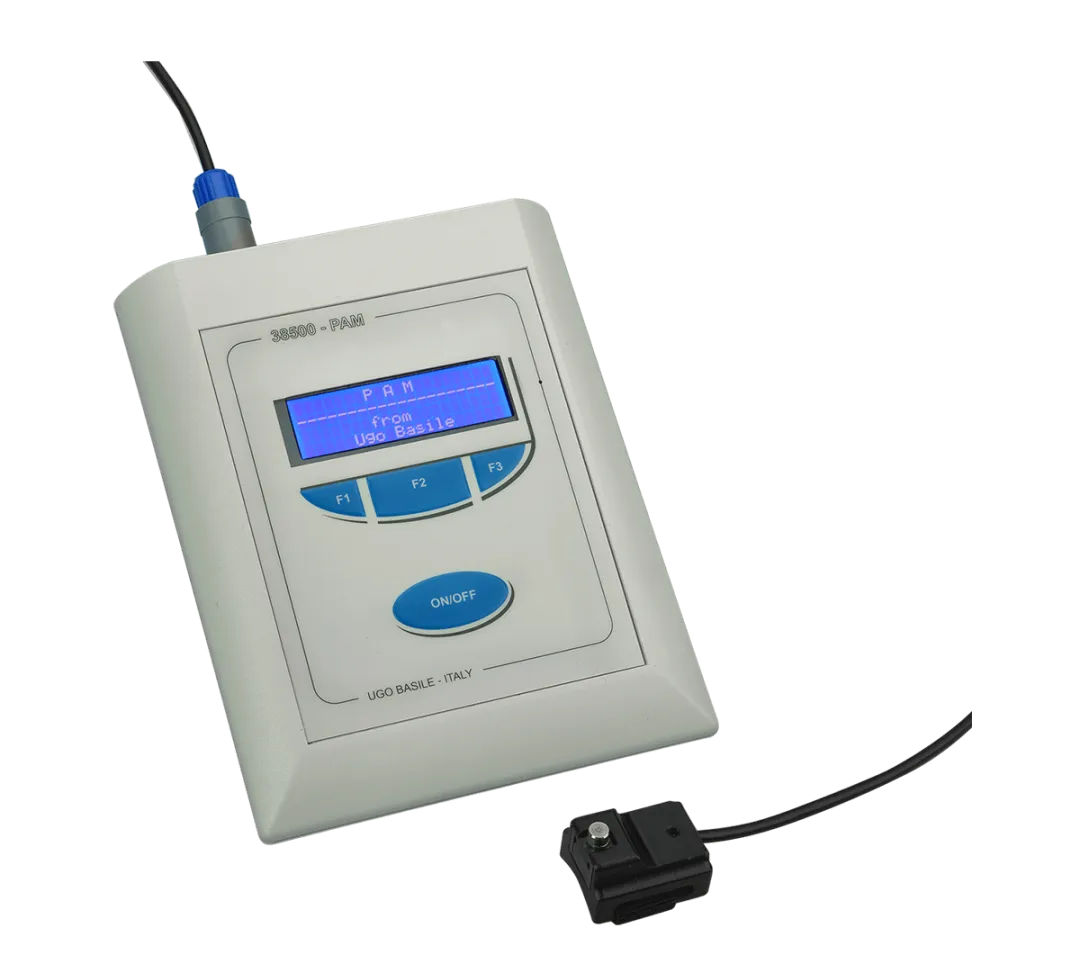
02. Equipment Features
2. The pressure base is smooth to avoid damage to animals: The pressure base is made of low-friction material. When the pain threshold is reached, the animal will easily retract its feet to avoid tissue damage.
03. Application Areas
2. Drug development: Evaluate the effects of anti-inflammatory and analgesic drugs by comparing the effects of different drugs on joint pain thresholds in experimental animal models;
04. Literature Case
In this study, the ugo basile pressure application tester was used to measure and compare the differences in the gastrocnemius pain withdrawal thresholds of normal mice, ASIC3 gene knockout mice, and mice with optogenetic activation of different receptors, proving that proprioceptors rather than nociceptors regulate acid-induced chronic pain, "muscle soreness."
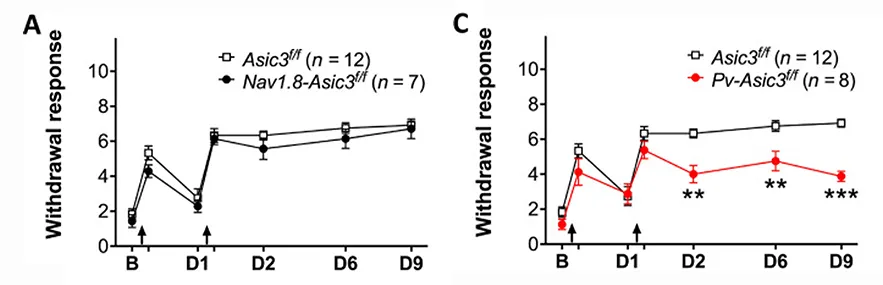
Figure A: Normal mice and nociceptor ASIC3 gene knockout mice;
Figure C: Normal mice and proprioceptor ASIC3 gene knockout mice.
Product Application Summary
Ugo Basile provides comprehensive mechanical pain measurement solutions. You can choose different measurement instruments according to your needs to facilitate new discoveries in preclinical research.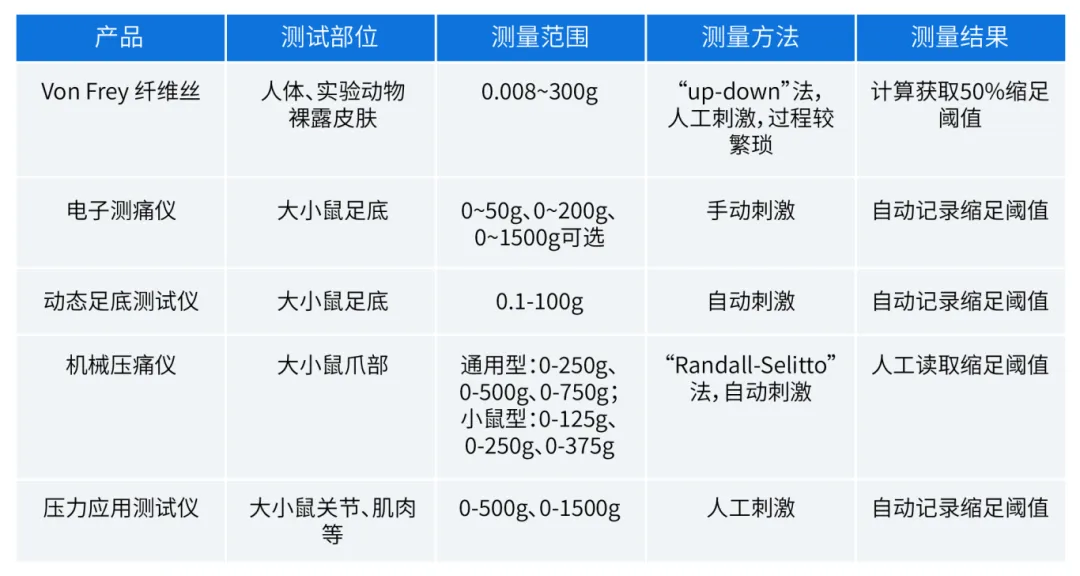
The Ugo Basile pain measurement instrument, with precision measurement as its cornerstone, builds a bridge from benchtop to bedside. As the exclusive domestic distributor of Ugo Basile, Yuyan Instruments offers the gold standard for mechanical pain measurement, including a fully automated solution for plantar pain, a classic solution for paw tenderness, and a specialized solution for joint pain. These instruments comprehensively measure mechanical pain thresholds in mice and rats, facilitating neuroscience research and analgesic drug evaluation.
References
null [1]Cao, Bo et al. “Pathology of pain and its implications for therapeutic interventions.” Signal transduction and targeted therapy vol. 9,1 155. 8 Jun. 2024, doi:10.1038/s41392-024-01845-w[2]Sadler, Katelyn E et al. “Innovations and advances in modeling and measuring pain in animals.” Nature reviews. Neuroscience vol. 23,2 (2022): 70-85. doi:10.1038/s41583-021-00536-7
[3]Gautam M, Yamada A, Yamada AI, Wu Q, Kridsada K, Ling J, Yu H, Dong P, Ma M, Gu J, Luo W. Distinct local and global functions of mouse Aβ low-threshold mechanoreceptors in mechanical nociception. Nat Commun. 2024 Apr 4;15(1):2911. doi: 10.1038/s41467-024-47245-0. Erratum in: Nat Commun. 2024 May 1;15(1):3694. doi: 10.1038/s41467-024-48095-6. PMID: 38575590; PMCID: PMC10995180.
[4]Goebel A, Krock E, Gentry C, Israel MR, Jurczak A, Urbina CM, Sandor K, Vastani N, Maurer M, Cuhadar U, Sensi S, Nomura Y, Menezes J, Baharpoor A, Brieskorn L, Sandström A, Tour J, Kadetoff D, Haglund L, Kosek E, Bevan S, Svensson CI, Andersson DA. Passive transfer of fibromyalgia symptoms from patients to mice. J Clin Invest. 2021 Jul 1;131(13):e144201. doi: 10.1172/JCI144201. PMID: 34196305; PMCID: PMC8245181.
[5]Lee, Cheng-Han et al. “A role for proprioceptors in sngception.” Science advances vol. 11,5 (2025): eabc5219. doi:10.1126/sciadv.abc5219